Daphnopsis sellowiana
Daphnopsis sellowiana · Accepted scientific name
Scientific literature: Very Sparse (2 studies) · ★☆☆☆☆
, scientifically known as Daphnopsis sellowiaana, is a remarkable medicinal shrub native to East Asian landscapes. Renowned for its potent bioactive compounds, this plant is traditionally utilized in herbal medicine to address various ailments. Its unique phytochemical profile offers significant potential for modern pharmacological research and therapeutic applications.
- Family
- Thymelaeaceae
- Native range
- Southern America
- Parts used
- Leaf
- Common names
- Not available
- Scientific synonyms
- Not available
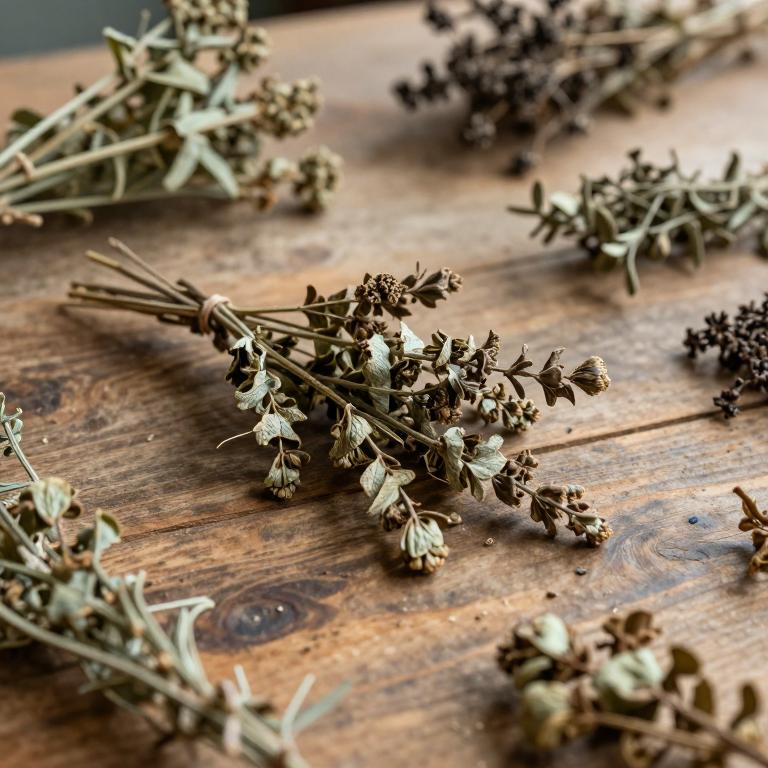
Names and Synonyms
Scientific Names
Accepted name
Daphnopsis sellowianaSources: Wikidata, Catalogue of Life
Taxonomical Classification
This plant belongs to the kingdom Plantae and is classified under the phylum Streptophyta and class Equisetopsida. Within the subclass Magnoliidae, it is ordered under Malvales and falls into the family Thymelaeaceae. Finally, it is placed in the genus Daphnopsis as the species Daphnopsis sellowiana.
| Rank | Classification |
|---|---|
| Kingdom | Plantae |
| Phylum | Streptophyta |
| Class | Equisetopsida |
| Subclass | Magnoliidae |
| Order | Malvales |
| Family | Thymelaeaceae |
| Genus | Daphnopsis |
Sources: The World Checklist of Vascular Plants (WCVP)
Distribution
This plant exhibits a specific range across the southern portions of the South American continent. Within Brazil, its presence is documented in the Southeast region. Additionally, it can be found extending into the South of Brazil. Moving further south, the species is also distributed throughout Uruguay. Consequently, its geographical footprint is primarily concentrated in these specific southern territories.
| Region | Area |
|---|---|
| Brazil | Brazil Southeast |
| Brazil | Brazil South |
| Southern South America | Uruguay |
Sources: The World Checklist of Vascular Plants (WCVP)
Botanical Identification
Ecology
The ecology of Daphnopsis sellowiana is defined by its presence in diverse forest ecosystems, specifically within the Floresta Ombrófila (equivalent to Floresta Pluvial) and the Floresta Ombrófila Mista. This species exhibits a broad altitudinal distribution, allowing it to occupy a wide variety of environmental gradients. Its elevational range extends from sea level (0 m AMSL) up to a maximum of 2600 m AMSL, demonstrating a significant capacity to adapt to different thermal and hygrometric conditions across varying mountainous and lowland landscapes.
- Elevational range max:
- 2600 m AMSL
- Elevational range min:
- 0 m AMSL
- Habitat :
- Floresta Ombrófila (= Floresta Pluvial), Floresta Ombrófila Mista
Life history
The life history of Daphnopsis sellowiaana is characterized by a perennial lifecycle, allowing the plant to persist through multiple growing seasons. As a perennial species, it avoids the rapid turnover seen in annuals or the intermediate stages of biennials, instead focusing on long-term survival and the establishment of robust structural components. This extended lifespan enables the plant to undergo repeated cycles of vegetative growth and reproductive phases, adapting its energy allocation to favorable environmental conditions over several years.
- Lifecycle :
- perennial
Morphology
The morphology of Daphnopsis sellowiaana is characterized by a woody growth habit, manifesting primarily as a shrub or a small tree that can reach a maximum height of 5 meters. It is a terrestrial plant, functioning as an independent organism rather than a parasite or an epiphyte. While its structural nature allows it to be self-supporting, it possesses characteristics consistent with self-supporting climbers or lianas in certain developmental stages. This species is not aquatic, instead occupying terrestrial habitats where its woody stems provide the necessary structural integrity for its upright or climbing form.
- Aquatic :
- terrestrial
- Climber :
- self-supporting
- Epiphyte :
- terrestrial
- Growth form :
- tree
- Growth form :
- shrub
- Parasite :
- independent
- Plant height max:
- 5 m
- Woodiness :
- woody
Sources: Global Inventory of Floras and Traits (GIFT)
Plant Parts
Daphnopsis sellowiana has 1 reported plant parts identified across 1 scientific publications and several other databases that are studied for medicinal purposes. The most consistently reported plant part include leaf.
| Plant part | Supporting sources | Consensus |
|---|---|---|
| Leaf | 1 supporting sources | ★☆☆☆☆ |
Leaf
- Journal of natural products
Chemicals
Daphnopsis sellowiana has 1 reported phytochemicals identified across 1 scientific publications and several other databases. The most consistently reported chemicals include 2'-Hydroxyflavone.
| Chemical | Supporting sources | Consensus |
|---|---|---|
| 2'-Hydroxyflavone | 1 supporting sources | ★☆☆☆☆ |
2'-Hydroxyflavone
- Journal of natural products
Preparations
Daphnopsis sellowiana has 1 reported preparations identified across 1 scientific publications and several other databases. The most consistently reported preparations include leaves.
| Preparation | Supporting sources | Consensus |
|---|---|---|
| Leaves | 1 supporting sources | ★☆☆☆☆ |
Leaves
- Journal of natural products