Purple prairie clover
Dalea purpurea · Accepted scientific name
Scientific literature: Very Sparse (14 studies) · ★☆☆☆☆
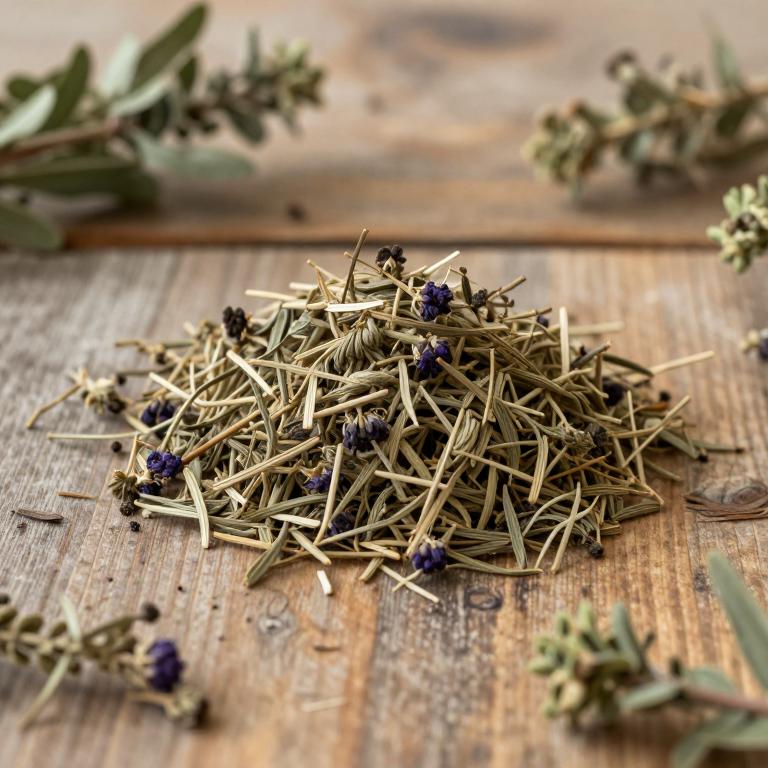
Purple prairie clover, scientifically known as Dalea purpurea, is a perennial legume native to North American prairies. Renowned for its striking violet flowers and nitrogen-fixing capabilities, this resilient plant supports biodiversity. Historically used in traditional medicine, it remains a vital component of healthy grasslands and restorative ecological landscapes.
Names and Synonyms
Common Names
- purple prairie-clover
- violet dalea
- violet prairie-clover
- purple prairie clover
Scientific Names
Accepted name
Dalea purpureaSynonyms
- Petalostemon purpureus
- Psoralea purpurea
- Kuhnistera purpurea
Regional and Traditional Names
Spanish:
- Trébol púrpura de pradera
French:
- dalée violette
Sources: Wikidata, Catalogue of Life
Taxonomical Classification
This plant belongs to the kingdom Plantae and the phylum Streptophyta, falling under the class Equisetopsida and subclass Magnoliidae. It is further classified within the order Fabales and the family Fabaceae. Ultimately, it is categorized under the genus Dalea, with the specific species being Dalea purpurea.
| Rank | Classification |
|---|---|
| Kingdom | Plantae |
| Phylum | Streptophyta |
| Class | Equisetopsida |
| Subclass | Magnoliidae |
| Order | Fabales |
| Family | Fabaceae |
| Genus | Dalea |
Sources: The World Checklist of Vascular Plants (WCVP)
Distribution
This plant exhibits a specific geographical range extending across parts of North America. In Western Canada, its distribution includes the provinces of Alberta and Saskatchewan. Moving into the Northwestern United States, the species can be found growing in Colorado. It also occupies significant portions of the landscape in Idaho. Finally, its presence is documented within the state of Montana.
| Region | Area |
|---|---|
| Western Canada | Alberta |
| Western Canada | Saskatchewan |
| Northwestern U.S.A. | Colorado |
| Northwestern U.S.A. | Idaho |
| Northwestern U.S.A. | Montana |
| Northwestern U.S.A. | Wyoming |
| North-Central U.S.A. | Illinois |
| North-Central U.S.A. | Kansas |
| North-Central U.S.A. | Minnesota |
| North-Central U.S.A. | North Dakota |
Sources: The World Checklist of Vascular Plants (WCVP)
Botanical Identification
Life history
The life history of Dalea purpurea is characterized by its classification as a perennial species, though its growth patterns can exhibit variable tendencies depending on environmental conditions and resource availability. As a perennial, the plant establishes a robust root system that allows it to persist through multiple growing seasons, providing it with the stability to re-emerge and thrive annually. While its fundamental strategy is long-lived, the plant's development can sometimes lean toward biennial-like cycles in less favorable habitats, where it focuses heavily on vegetative establishment before shifting toward reproductive maturity. Throughout its lifecycle, it undergoes seasonal transitions of growth, flowering, and senescence, utilizing its perennial nature to navigate fluctuations in moisture and temperature to ensure long-term survival and seed production.
- Lifecycle :
- perennial
Morphology
The morphology of Dalea purpurea is characterized by its growth form as a non-woody herb and specifically a forb. The plant is a self-supporting organism, meaning it does not function as a climber, liana, or vine, and it maintains an independent lifestyle rather than acting as a parasite. It is a terrestrial species, lacking aquatic or epiphytic tendencies. In terms of stature, it typically reaches an average plant height of 0.91 m.
- Aquatic :
- terrestrial
- Climber :
- self-supporting
- Epiphyte :
- terrestrial
- Growth form :
- herb
- Growth form :
- forb
- Parasite :
- independent
- Plant height mean:
- 0.91 m
- Woodiness :
- non-woody
Physiology
The physiology of Dalea purpurea is characterized by a C3 photosynthetic pathway, a metabolic strategy typical of many temperate legume species that involves the direct fixation of carbon dioxide via the enzyme RuBisCO within the mesophyll cells. This C3 mechanism allows the plant to efficiently utilize moisture and nutrients in its native environments, though it necessitates careful management of stomatal conductance to balance gas exchange with transpiration rates. Beyond carbon assimilation, the plant exhibits complex physiological adaptations related to its nitrogen-fixing capabilities, facilitated through symbiotic relationships with rhizobia in its root nodules. This nitrogen fixation provides the essential nutrients required to support the metabolic demands of its photosynthetic processes and the synthesis of secondary metabolites. The plant's physiological efficiency is further modulated by its response to seasonal temperature fluctuations and soil moisture availability, which influence its overall growth rate, reproductive development, and resource allocation strategies.
- Photosynthetic pathway :
- C3
Reproduction
The reproduction of Dalea purpurea is characterized by the production of small seeds that exhibit significant variability in their physical dimensions. The seed mass of this species typically maintains a mean value of approximately 0.0023097855 g, reflecting a specialized investment in reproductive output. Within the population, the individual seed mass ranges from a minimum of 0.0013 g to a maximum of 0.012 g. This variation in seed mass suggests a diverse range of developmental outcomes during the maturation process, influencing how the seeds are dispersed and subsequently established in their environment.
- Seed mass max:
- 0.012 g
- Seed mass mean:
- 0.0023097855 g
- Seed mass min:
- 0.0013 g
Sources: Global Inventory of Floras and Traits (GIFT)
Plant Parts
Dalea purpurea has 3 reported plant parts identified across 4 scientific publications and several other databases that are studied for medicinal purposes. The most consistently reported plant part include root, flower, stem.
| Plant part | Supporting sources | Consensus |
|---|---|---|
| Root | 2 supporting sources | ★☆☆☆☆ |
| Flower | 1 supporting sources | ★☆☆☆☆ |
| Stem | 1 supporting sources | ★☆☆☆☆ |
Root
- Phytochemistry
- Journal of natural products
Flower
- Journal of natural products
Stem
- Phytochemistry
Chemicals
Dalea purpurea has 4 reported phytochemicals identified across 4 scientific publications and several other databases. The most consistently reported chemicals include (+)-Maackiain, 6,7,8,3',4',5'-Hexamethoxyisoflavone, 7,8,3',4',5'-pentamethoxyisoflavone, Petalostemumol.
| Chemical | Supporting sources | Consensus |
|---|---|---|
| (+)-Maackiain | 1 supporting sources | ★☆☆☆☆ |
| 6,7,8,3',4',5'-Hexamethoxyisoflavone | 1 supporting sources | ★☆☆☆☆ |
| 7,8,3',4',5'-pentamethoxyisoflavone | 1 supporting sources | ★☆☆☆☆ |
| Petalostemumol | 1 supporting sources | ★☆☆☆☆ |
(+)-Maackiain
- Journal of natural products
6,7,8,3',4',5'-Hexamethoxyisoflavone
- Phytochemistry
7,8,3',4',5'-pentamethoxyisoflavone
- Phytochemistry
Petalostemumol
- Journal of natural products
Preparations
Dalea purpurea has 2 reported preparations identified across 4 scientific publications and several other databases. The most consistently reported preparations include 50% MeOH/CHCl3 extract of the roots, organic extracts.
| Preparation | Supporting sources | Consensus |
|---|---|---|
| 50% meoh/chcl3 extract of the roots | 1 supporting sources | ★☆☆☆☆ |
| Organic extracts | 1 supporting sources | ★☆☆☆☆ |
50% meoh/chcl3 extract of the roots
- Journal of natural products
Organic extracts
- Journal of natural products