Dalbergia boehmii
Dalbergia boehmii · Accepted scientific name
Scientific literature: Very Sparse (0 studies) · ★☆☆☆☆
Dalbergia boehmii is a significant medicinal plant known for its diverse pharmacological properties in traditional healing practices. In various herbal traditions, this species is specifically recognized for its potential to manage neurological conditions such as epilepsy. To harness its therapeutic benefits, the plant material is often processed into specialized decoctions. These liquid extracts are prepared by boiling the plant parts to concentrate their active medicinal compounds. Consequently, understanding its application in treating seizure disorders remains a key area of ethnobotanical interest.
- Synonyms
- Not available
- Common names
- Not available
- Family
- Fabaceae
- Distribution
- Not available
- Plant Parts
- Not available
Classification
Common Names
Dalbergia boehmii is a distinctive plant species known by several different identifiers depending on the region. It is frequently referred to by the common name Chimanda in various botanical circles. Additionally, the plant is recognized by the name large-leaved flatbean, which highlights its physical characteristics. Understanding these various monikers is essential for anyone studying its specific growth patterns and habitats. This diversity in naming reflects the wide geographic range and cultural significance of the species.
Sources: Catalogue of Life (COL)
Taxonomy
Dalbergia boehmii is a distinguished member of the kingdom Plantae. Within this vast biological kingdom, it is classified under the class Equisetopsida. Its evolutionary lineage continues through the order Fabales, showcasing its specific botanical placement. Furthermore, the species belongs to the diverse family Fabaceae, a group known for its significant ecological importance. Ultimately, this plant is defined by its membership in the genus Dalbergia, which characterizes its unique biological identity.
| Rank | Classification |
|---|---|
| Kingdom | Plantae |
| Phylum | Streptophyta |
| Class | Equisetopsida |
| Subclass | Magnoliidae |
| Order | Fabales |
| Family | Fabaceae |
| Genus | Dalbergia |
Sources: The World Checklist of Vascular Plants (WCVP)
Distribution
Geographic Regions
Dalbergia boehmii is a resilient species with a widespread distribution spanning several key regions across the African continent. In East Tropical Africa, its presence is notably established within the landscapes of both Kenya and Tanzania. Moving toward Northeast Tropical Africa, the plant can also be found throughout Ethiopia and the Sudan-South Sudan region. Its geographic reach extends further south, reaching into the diverse environments of South Tropical Africa. This broad range highlights the plant's ability to adapt to various ecological zones across much of the continent.
Sources: The World Checklist of Vascular Plants (WCVP)
Identification
Morphology
Dalbergia boehmii is a self-supporting plant that typically adopts the growth form of a tree. This species exhibits a notable range in stature, with some specimens reaching a minimum height of approximately 3.66 meters. Other individuals in the wild may grow to a minimum of 10 meters, demonstrating significant developmental flexibility. While its maximum recorded height is documented at roughly 9.14 meters, the plant's overall size can vary based on its environment. Consequently, this tree plays a diverse role in its ecosystem through its varying physical dimensions.
Sources: Global Inventory of Floras and Traits (GIFT)
Biological Activities
Compounds
Conditions
Dalbergia boehmii demonstrates significant anti-seizure effects in studies involving zebrafish larvae models. This medicinal plant specifically works to treat epilepsy by reducing seizure-induced locomotor activity. Research corroborates its ability to treat seizure frequency and alter brain activity through electrophysiological analysis. Furthermore, the plant treats immediate early gene expression to exert its biological effects. It also treats c-fos protein expression, potentially by suppressing neurons located in the midbrain regions.
Preparations
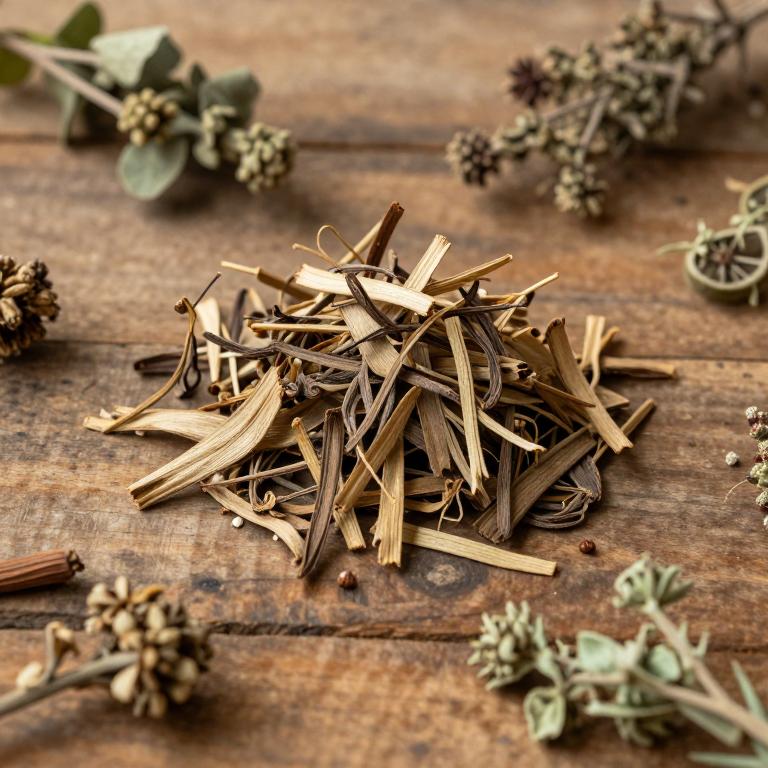
Dalbergia boehmii is prepared as decoctions to investigate its potential anti-seizure properties. These decoctions, specifically derived from the roots of the plant, were used to treat zebrafish larvae in a controlled scientific study. By incubating the larvae in these plant preparations, researchers were able to screen for significant reductions in seizure-induced locomotor activity. The study confirmed that the decoctions of Dalbergia boehmii possess notable anti-seizure effects supported by electrophysiological and gene analyses. Consequently, this specific preparation method serves as a vital link between traditional Malawian medicinal practices and modern scientific validation.