Dahlia merckii
Dahlia merckii · Accepted scientific name
Scientific literature: Very Sparse (0 studies) · ★☆☆☆☆
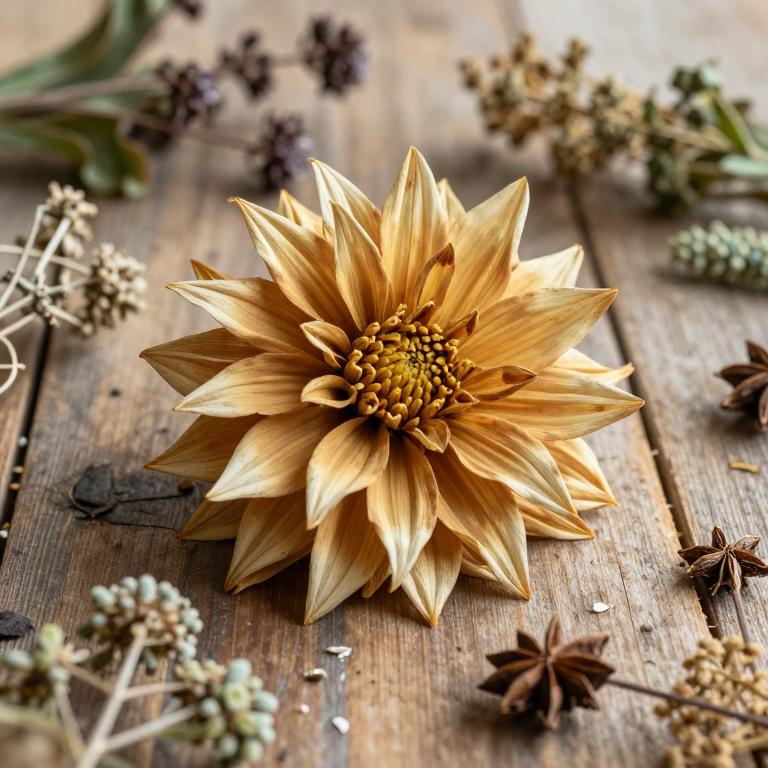
Dahlia merckii is a distinctive species of dahlia that is primarily cultivated from its small, dark seeds. These seeds serve as the fundamental starting point for growing this resilient and charming plant. When prepared correctly, the seeds can yield vibrant blooms that add significant texture to any garden landscape. Collectors often favor this species for its ability to thrive when sown directly into the soil. Understanding how to handle these seeds is the first essential step in successfully cultivating this unique variety.
- Synonyms
- Dahlia Cosmiflora · Dahlia Decaisneana · 3 more
- Common names
- Not available
- Family
- Asteraceae
- Distribution
- Southern America
- Plant Parts
- Seed
Classification
Common Names
Dahlia merckii is a versatile plant that is recognized by a variety of different names across various regions and languages. It is frequently referred to by its common English name, the Bedding Dahlia, or as the Merck-Dahlie. In Spanish-speaking contexts, enthusiasts may call it the Dalia blanca or the Dalia blanca común. Additionally, the plant is known by the name georgína Merckova, reflecting its unique botanical identity. These diverse monikers highlight the widespread popularity and cultural reach of this beautiful species.
Sources: Catalogue of Life (COL)
Synonyms
Dahlia merckii is a taxonomically complex species that has been identified by several different botanical names over time. Throughout various studies, it has been formally recognized by synonyms such as Dahlia cosmiflora and Dahlia decaisneana. Researchers have also documented its relationship to Dahlia glabrata and Dahlia minor within different classification systems. Additionally, the plant is linked to the specific form known as Dahlia scapigera f. merckii. Understanding these overlapping names is essential for anyone studying the diverse evolutionary history of this particular dahlia.
Sources: The World Checklist of Vascular Plants (WCVP)
Taxonomy
Dahlia merckii is a fascinating specimen that belongs to the vast kingdom Plantae. Within this biological realm, it is classified under the class Equisetopsida. This specific plant is a member of the order Asterales, showcasing its unique evolutionary lineage. It further resides within the diverse family Asteraceae, which is known for its striking floral displays. Ultimately, it is identified by its distinct genus, Dahlia, marking its place in the natural world.
| Rank | Classification |
|---|---|
| Kingdom | Plantae |
| Phylum | Streptophyta |
| Class | Equisetopsida |
| Subclass | Magnoliidae |
| Order | Asterales |
| Family | Asteraceae |
| Genus | Dahlia |
Sources: The World Checklist of Vascular Plants (WCVP)
Distribution
Geographic Regions
Dahlia merckii is a resilient species primarily distributed throughout Northern America and Mexico. Its presence is widely felt across various Mexican landscapes, including the central regions and the Gulf coast. This plant also thrives in the Northeast as well as the diverse environments found in the Southwest. By occupying these varied territories, the species demonstrates a remarkable ability to adapt to different climates. Ultimately, these geographic ranges highlight the expansive natural footprint of this unique Dahlia.
Sources: The World Checklist of Vascular Plants (WCVP)
Identification
Biological Activities
Compounds
Conditions
Preparations
Dahlia merckii is prepared as seeds to facilitate the isolation of specific plant defensins. These seeds serve as the biological source for extracting five distinct antifungal proteins. Researchers utilize these seed-derived peptides to study antimicrobial activity and morphological fungal distortions. The process of working with Dahlia merckii seeds allows for the identification of proteins homologous to those found in radish. Consequently, the seeds are essential for characterizing the defensive biochemical properties of this species.
Parts used
Dahlia merckii serves as a significant subject in the study of plant defensins derived from various botanical families. Researchers focused their isolation and characterization efforts on the seeds of this species to identify specific antifungal proteins. These proteins, found within the Dahlia merckii seed, demonstrate a homology to previously known radish seed defensins. By examining these peptides, scientists were able to categorize them into two distinct classes based on their antimicrobial activity and morphological impact on fungi. Ultimately, this research highlights the unique biochemical properties contained within the seed of the plant.