Cock's-foot
Dactylis glomerata · Accepted scientific name
Scientific literature: Very Sparse (7 studies) · ★☆☆☆☆
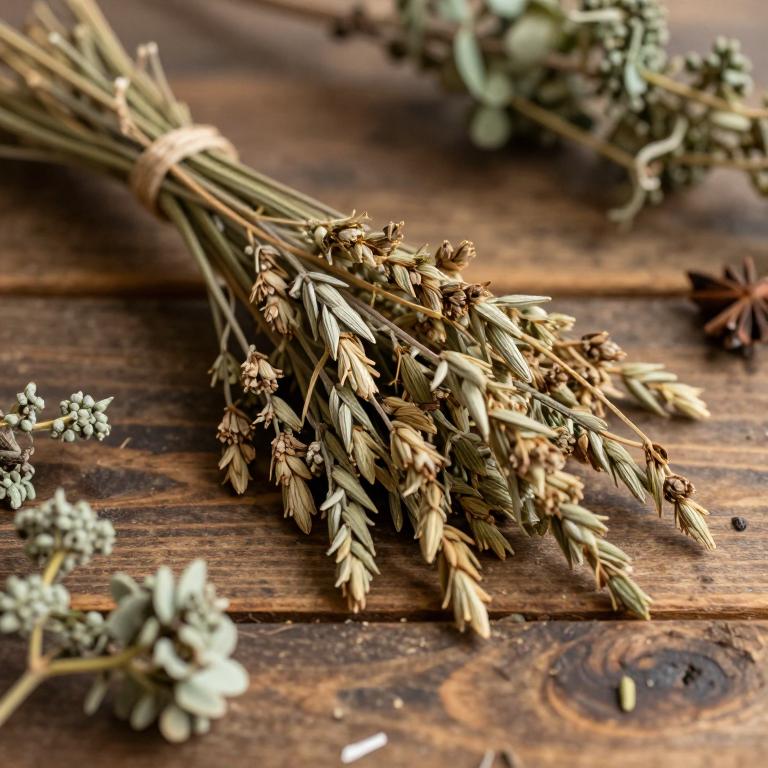
Cock's-foot, scientifically known as Dactylis glomerata, is a perennial grass valued for its traditional medicinal properties. Historically utilized in herbal remedies, it is believed to support digestive health and possess anti-inflammatory qualities. This resilient plant serves as a fascinating example of how common flora can offer therapeutic potential.
Names and Synonyms
Common Names
- cocksfoot
- orchard grass
- Cock's-Foot
- barnyard grass
- cocksfoot grass
- cockspur
- Akaroa
- Rough Cocksfoot
- cock's foot
Scientific Names
Accepted name
Dactylis glomerataSynonyms
- Koeleria dactylis
- Phalaris glomerata
- Limnetis glomerata
- Festuca glomerata
Regional and Traditional Names
Spanish:
- Dactylis glomerata var. hispanica
- Dactylis polygama
- Dactylis hispanica
- Dactylis woronowii
- Dactylis glomerata subsp aschersoniana
- Dactylis glomerata var hispanica
- Dactylis glomerata subsp. aschersoniana
- Dactylis glaucescens
- Dactylis glomerata subsp hispanica
- Pasto ovillo
- Dactylis glomerata subsp. hispanica
- Dactylis aschersoniana
- Dactylis glomerata subsp. lobata
- Dactylis glomerata subsp lobata
- jopillo
- Pasto Ovillo
- Pasto azul
- gallo
German:
- Gewöhnliches Knäuelgras
- Wiesenknaulgras
- Wiesen-Knaulgras
- Wiesen-Knäuelgras
- Knaulgras
- Wiesenknäuelgras
- Knäuelgras
- Knaulgras
- Wiesen-Knäuelgras
- Wiesen-Knaeuelgras
- Gewöhnliches Knäuelgras
French:
- Dactyle pelotonné
- Chiendent à bossettes
- Dactyle aggloméré
- Dactyle pelotonne
- dactyle vulgaire
- dactyle pelotonné
- dactyle vulgaire
- dactyle aggloméré
- gramen pelotonné
- Dactyle agglomere
Sources: Wikidata, Catalogue of Life
Taxonomical Classification
This plant belongs to the kingdom Plantae and the phylum Streptophyta. Within the class Equisetopsida and subclass Magnoliidae, it is classified under the order Poales and the family Poaceae. Finally, it is categorized under the genus Dactylis.
| Rank | Classification |
|---|---|
| Kingdom | Plantae |
| Phylum | Streptophyta |
| Class | Equisetopsida |
| Subclass | Magnoliidae |
| Order | Poales |
| Family | Poaceae |
| Genus | Dactylis |
Sources: The World Checklist of Vascular Plants (WCVP)
Distribution
This plant exhibits a distinct distribution across the northern regions of Europe. It can be found growing within the coastal and inland landscapes of Denmark. Its presence is also noted in the northern territories of Finland and the remote islands of Føroyaar. Additionally, this species inhabits the diverse environments found throughout Great Britain. Finally, the plant's range extends to the unique volcanic terrain of Iceland.
| Region | Area |
|---|---|
| Northern Europe | Denmark |
| Northern Europe | Finland |
| Northern Europe | Føroyar |
| Northern Europe | Great Britain |
| Northern Europe | Iceland |
| Northern Europe | Ireland |
| Northern Europe | Norway |
| Northern Europe | Sweden |
| Middle Europe | Austria |
| Middle Europe | Belgium |
Sources: The World Checklist of Vascular Plants (WCVP)
Botanical Identification
Ecology
The ecology of Dactylis glomerata is characterized by a remarkably broad altitudinal distribution, allowing it to colonize environments ranging from sea level (0 m AMSL) up to extreme high-altitude locations reaching 4500 m AMSL, with a mean elevational range of approximately 2836 m AMSL. This species demonstrates significant ecological plasticity, frequently establishing itself within anthropic areas (Área Antrópica), where it thrives in human-modified landscapes and disturbed habitats.
- Elevational range max:
- 4500 m AMSL
- Elevational range mean:
- 2836 m AMSL
- Elevational range min:
- 0 m AMSL
- Habitat :
- Área Antrópica
Genetics
The genetics of Dactylis glomerata are characterized by a highly complex and plastic genome, frequently exhibiting various levels of polyploidy that contribute to its evolutionary success and adaptability. The fundamental chromosomal basis of the species is defined by a haploid number of n = 7, which serves as the baseline for its diverse cytogenetic profiles. In addition to this base number, the species is known to exist in diploid, tetraploid, and even higher-order polyploid states, a phenomenon that drives significant phenotypic variation and environmental resilience. This genomic variability, driven by both autopolyploidy and allopolyploidy events, influences essential agronomic and medicinal traits, including vigor, biomass production, and the concentration of secondary metabolites. The ability of Dactylis glomerata to navigate these different ploidy levels allows for rapid genetic adaptation to diverse ecological niches.
- Ploidy :
- n
Life history
The life history of Dactylis glomerata is characterized by its classification as a perennial plant, allowing it to persist across multiple growing seasons. As a hemicryptophyte, its perennating buds are located at or near the soil surface, protected by leaf litter or other surface debris during unfavorable conditions. The plant exhibits a deciduous nature, shedding its foliage as it transitions through its seasonal cycles.
- Deciduousness :
- deciduous
- Life form :
- hemicryptophyte
- Lifecycle :
- perennial
Morphology
The morphology of Dactylis glomerata is characterized by its growth form as a non-woody, graminoid herb. This terrestrial species exhibits a self-supporting structure, functioning independently without the need for climbing or parasitic behaviors. The plant maintains an erect shoot orientation, reaching a minimum height of 0.2 m, with a maximum height of 1.4 m, resulting in a mean plant height of approximately 0.70 m. As a terrestrial organism, it does not exhibit epiphytic or aquatic tendencies, maintaining a stable, self-supporting presence in its habitat.
- Aquatic :
- terrestrial
- Climber :
- self-supporting
- Epiphyte :
- terrestrial
- Growth form :
- herb
- Growth form :
- graminoid
- Parasite :
- independent
- Plant height max:
- 1.4 m
- Plant height mean:
- 0.704666666666667 m
- Plant height min:
- 0.2 m
- Shoot orientation :
- erect
- Woodiness :
- non-woody
Physiology
The physiology of Dactylis glomerata is characterized by a C3 photosynthetic pathway, a common metabolic strategy that allows for efficient carbon fixation under moderate environmental conditions. As a non-carnivorous species, it relies entirely on autotrophic processes for nutrient acquisition rather than capturing prey. The plant's leaf morphology exhibits significant variability, with leaf lengths ranging from a minimum of 0.2 cm to a maximum of 35 cm. The leaf width is similarly diverse, spanning from a narrow 0.1 cm to a maximum of 1.4 cm, resulting in a mean leaf width of 0.5 cm. These dimensions contribute to a mean leaf size of 14.49 cm², while the plant maintains a mean Specific Leaf Area (SLA) of 247.66 cm²/g, reflecting its leaf thickness and resource allocation strategy regarding light interception and biomass density.
- Carnivory :
- non-carnivorous
- Leaf length max:
- 35 cm
- Leaf length min:
- 0.2 cm
- Leaf size mean:
- 14.49 cm²
- Leaf width max:
- 1.4 cm
- Leaf width mean:
- 0.5 cm
- Leaf width min:
- 0.1 cm
- Photosynthetic pathway :
- C3
- Specific Leaf Area (SLA) mean:
- 247.66 cm²/g
Reproduction
The reproduction of Dactylis glomerata is characterized by a sexual, bisexual reproductive system, with asexual reproduction being entirely absent. The flowering process typically begins in May and concludes in July, featuring an inflorescence structured as a panicle that can range in length from 0.008 m to 0.15 m. The pollination syndrome is abiotic, specifically relying on wind (anemophilous) for successful fertilization, as self-fertilization is noted to be absent. Following pollination, the plant produces dry fruits that vary in size, with a mean length of 0.57 cm (ranging from 0.49 cm to 0.65 cm), a mean width of 0.1 cm (0.09-0.11 cm), and a mean height of 0.055 cm (0.06 cm). Each fruit is prolific, containing between 101 and 1000 seeds. These seeds are quite small, possessing a mean mass of approximately 0.0009187 g (ranging from 0.00039 g to 0.00129 g), a consistent length and width of 1 mm and 0.5 mm respectively, and a seed volume of 1.2 mm³. Dispersal of the seeds is achieved through an anemochorous syndrome, utilizing the wind to distribute the progeny.
- Dispersal syndrome :
- anemochorous
- Flower length max:
- 0.4 cm
- Flowering time :
- May
- Flowering time :
- Jul
- Fruit dryness :
- dry
- Fruit height max:
- 0.06 cm
- Fruit height mean:
- 0.055 cm
- Fruit length max:
- 0.65 cm
- Fruit length mean:
- 0.57 cm
- Fruit length min:
- 0.49 cm
- Fruit width max:
- 0.11 cm
- Fruit width mean:
- 0.1 cm
- Fruit width min:
- 0.09 cm
- Inflorescence :
- panicle
- Inflorescence length max:
- 0.15 m
- Inflorescence length min:
- 0.008 m
- Pollination syndrome :
- wind
- Pollination syndrome :
- abiotic
- Reproduction asexual :
- absent
- Reproduction sexual :
- bisexual
- Seed length mean:
- 1 mm
- Seed mass max:
- 0.00129 g
- Seed mass mean:
- 0.000918702666666667 g
- Seed mass min:
- 0.00039 g
- Seed volume max:
- 1.2 mm³
- Seed width mean:
- 0.5 mm
- Seeds_per_fruit :
- 101-1000
- Self fertilization :
- absent
Sources: Global Inventory of Floras and Traits (GIFT)
Chemicals
Dactylis glomerata has 7 reported phytochemicals identified across 0 scientific publications and several other databases. The most consistently reported chemicals include Flavonoids, cadaverine, caffeic acid, histamine, putrescine.
| Chemical | Supporting sources | Consensus |
|---|---|---|
| Flavonoids | 1 supporting sources | ★☆☆☆☆ |
| cadaverine | 1 supporting sources | ★☆☆☆☆ |
| caffeic acid | 1 supporting sources | ★☆☆☆☆ |
| histamine | 1 supporting sources | ★☆☆☆☆ |
| putrescine | 1 supporting sources | ★☆☆☆☆ |
| spermidine | 1 supporting sources | ★☆☆☆☆ |
| spermine | 1 supporting sources | ★☆☆☆☆ |
Flavonoids
- Journal of agricultural and food chemistry
cadaverine
- Archiv fur Tierernahrung
caffeic acid
- Journal of agricultural and food chemistry
histamine
- Archiv fur Tierernahrung
putrescine
- Archiv fur Tierernahrung
spermidine
- Archiv fur Tierernahrung
spermine
- Archiv fur Tierernahrung