Fagraea fragrans
Cyrtophyllum fragrans · Accepted scientific name
Scientific literature: Very Sparse (10 studies) · ★☆☆☆☆
Fagraea fragrans, scientifically known as Cyrtophyllum fragrans, is a fragrant evergreen tree highly valued in traditional medicine. Renowned for its aromatic blossoms, this species is utilized across various cultures to treat ailments ranging from skin infections to digestive issues, showcasing its significant therapeutic potential and botanical importance in herbal remedies.
- Family
- Gentianaceae
- Native range
- Asia-Tropical
- Parts used
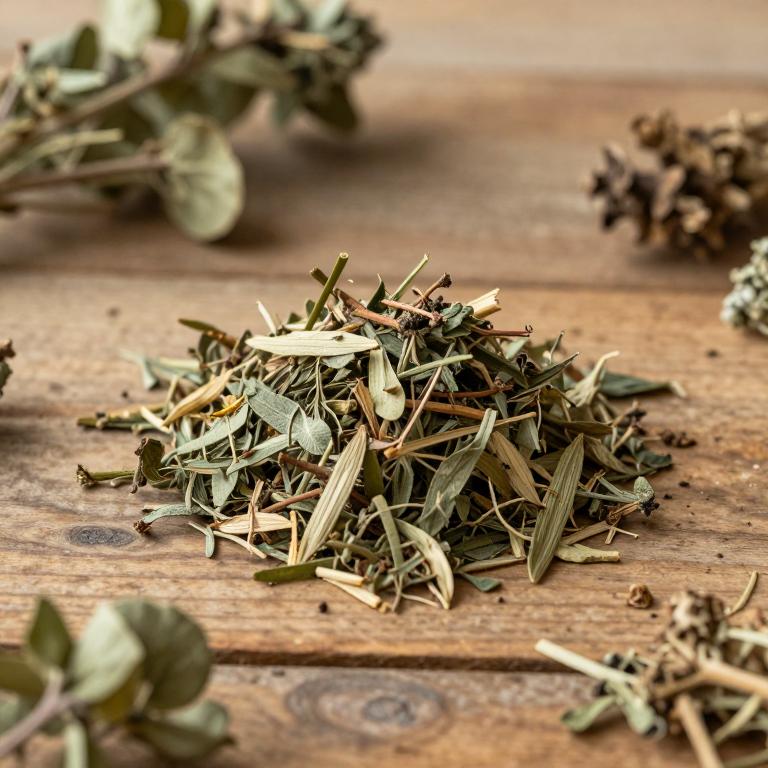
- Leaf
- Common names
- Tembusu
- Scientific synonyms
- Willughbeia Fragrans · Cyrtophyllum Peregrinum · 2 more
Names and Synonyms
Common Names
- Tembusu
Scientific Names
Accepted name
Cyrtophyllum fragransSynonyms
- Willughbeia fragrans
- Cyrtophyllum peregrinum
- Fagraea peregrina
- Fagraea fragrans
Sources: Wikidata, Catalogue of Life
Taxonomical Classification
This plant belongs to the kingdom Plantae and is classified under the phylum Streptophyta within the class Equisetopsida. As a member of the subclass Magnoliidae and the order Gentianales, it is further categorized into the family Gentianaceae. Finally, it is identified by its specific genus, Cyrtophyllum.
| Rank | Classification |
|---|---|
| Kingdom | Plantae |
| Phylum | Streptophyta |
| Class | Equisetopsida |
| Subclass | Magnoliidae |
| Order | Gentianales |
| Family | Gentianaceae |
| Genus | Cyrtophyllum |
Sources: The World Checklist of Vascular Plants (WCVP)
Distribution
This plant is widely distributed throughout the Indo-China region. Specifically, its presence can be found across the various landscapes of Cambodia and Laos. It also grows naturally within the territories of Myanmar and Thailand. Furthermore, the species extends its reach to include the Andaman Islands. This diverse range highlights its significant ecological footprint across Southeast Asia.
| Region | Area |
|---|---|
| Indo-China | Andaman Is. |
| Indo-China | Cambodia |
| Indo-China | Laos |
| Indo-China | Myanmar |
| Indo-China | Thailand |
| Indo-China | Vietnam |
| Malesia | Borneo |
| Malesia | Jawa |
| Malesia | Malaya |
| Malesia | Maluku |
Sources: The World Checklist of Vascular Plants (WCVP)
Botanical Identification
Life history
The life history of Cryptophyllum fragrans is characterized by its status as a perennial plant, allowing it to persist through multiple growing seasons rather than completing its life cycle in a single year. Throughout its lifespan, the species maintains an evergreen habit, ensuring that its foliage remains functional and present year-round rather than undergoing a seasonal shedding period.
- Deciduousness :
- evergreen
- Lifecycle :
- perennial
Morphology
The morphology of Cryptophyllum fragrans is characterized by its growth form as a woody tree, reaching significant dimensions with a mean height of approximately 25 m and a maximum potential height of up to 30 m. This species is strictly terrestrial in its habitat, functioning as an independent organism rather than acting as a parasite or an epiphyte. Unlike climbing vines or lianas, the plant is self-supporting in its structure, maintaining a robust and upright development throughout its life cycle.
- Aquatic :
- terrestrial
- Climber :
- self-supporting
- Epiphyte :
- terrestrial
- Growth form :
- tree
- Parasite :
- independent
- Plant height max:
- 30 m
- Plant height mean:
- 25 m
- Woodiness :
- woody
Physiology
The physiology of Cryptophyllum fragrans is characterized by a standard C3 photosynthetic pathway, meaning it utilizes the Calvin cycle to fix carbon dioxide directly through the enzyme RuBisCO without the specialized carbon-concentrating mechanisms found in C4 or CAM plants. This metabolic approach dictates its water-use efficiency and environmental adaptations, as the plant relies on open stomata for gas exchange during daylight hours. Furthermore, the plant does not function as a nitrogen fixer, lacking the specialized symbiotic relationships with diazotrophic bacteria (such as Rhizobium) required to convert atmospheric nitrogen into bioavailable forms, and thus depends on the uptake of nitrogenous compounds directly from the soil substrate.
- Nitrogen fixer :
- no
- Photosynthetic pathway :
- C3
Reproduction
The reproduction of Cryptophyllum fragrans is characterized by a biotic pollination syndrome, relying primarily on insects to facilitate the transfer of pollen. This insect-mediated process is central to its reproductive cycle, ensuring genetic exchange through biological agents. Following successful pollination, the plant produces seeds that are notably lightweight. The seed mass varies within a specific range, with a minimum recorded mass of 0.000095 g and a maximum of 0.00018 g. On average, the seeds maintain a mean mass of 0.0001375 g, a characteristic that likely influences their dispersal mechanisms within their natural habitat.
- Pollination syndrome :
- insect
- Pollination syndrome :
- biotic
- Seed mass max:
- 0.00018 g
- Seed mass mean:
- 0.0001375 g
- Seed mass min:
- 9.5e-05 g
Sources: Global Inventory of Floras and Traits (GIFT)
Plant Parts
Cyrtophyllum fragrans has 1 reported plant parts identified across 1 scientific publications and several other databases that are studied for medicinal purposes. The most consistently reported plant part include leaf.
| Plant part | Supporting sources | Consensus |
|---|---|---|
| Leaf | 1 supporting sources | ★☆☆☆☆ |
Leaf
- Journal of natural products
Chemicals
Cyrtophyllum fragrans has 4 reported phytochemicals identified across 1 scientific publications and several other databases. The most consistently reported chemicals include Gentiopicroside, Sweroside, Swertiamarin, fagraldehyde.
| Chemical | Supporting sources | Consensus |
|---|---|---|
| Gentiopicroside | 1 supporting sources | ★☆☆☆☆ |
| Sweroside | 1 supporting sources | ★☆☆☆☆ |
| Swertiamarin | 1 supporting sources | ★☆☆☆☆ |
| fagraldehyde | 1 supporting sources | ★☆☆☆☆ |
Gentiopicroside
- Journal of natural products
Sweroside
- Journal of natural products
Swertiamarin
- Journal of natural products
fagraldehyde
- Journal of natural products