Cyrtocarpa procera
Cyrtocarpa procera · Accepted scientific name
Scientific literature: Very Sparse (9 studies) · ★☆☆☆☆
scientifically known as Cyrtocarpa procera, is a significant medicinal plant native to tropical regions. Renowned for its diverse pharmacological properties, it is frequently utilized in traditional medicine to treat various ailments. Research continues to explore its bioactive compounds, highlighting its immense potential for developing new therapeutic treatments and herbal remedies.
- Family
- Anacardiaceae
- Native range
- Northern America
- Parts used
- Fruit
- Common names
- Not available
- Scientific synonyms
- Dasycarya Grisea · Schinus Procera · 1 more
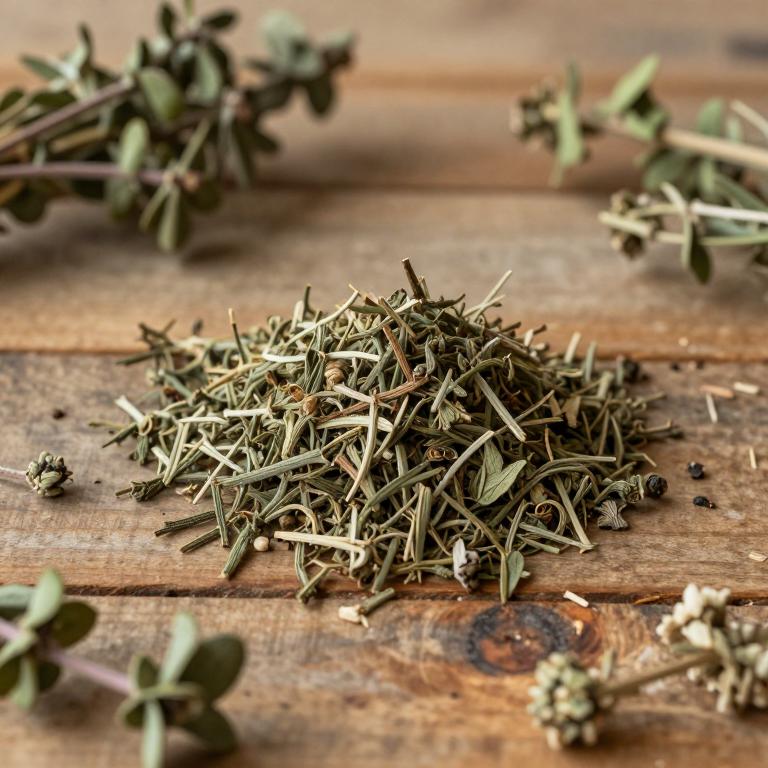
Names and Synonyms
Scientific Names
Accepted name
Cyrtocarpa proceraSynonyms
- Dasycarya grisea
- Schinus procera
- Tapirira purpusii
Regional and Traditional Names
Spanish:
- Chupandia
- Copalcolote
- chupandía
- copaljote
- Chupalcojote
- Coco de cerro
Sources: Wikidata, Catalogue of Life
Taxonomical Classification
This plant belongs to the kingdom Plantae and the phylum Streptophyta, falling under the class Equisetopsida and subclass Magnoliidae. Within the order Sapindales and the family Anacardiaceae, it is classified under the genus Cyrtocarpus. Specifically, it is identified by the scientific name Cyrtocarpus procera.
| Rank | Classification |
|---|---|
| Kingdom | Plantae |
| Phylum | Streptophyta |
| Class | Equisetopsida |
| Subclass | Magnoliidae |
| Order | Sapindales |
| Family | Anacardiaceae |
| Genus | Cyrtocarpa |
Sources: The World Checklist of Vascular Plants (WCVP)
Distribution
This plant exhibits a wide-ranging presence across various regions of Mexico. It can be found growing throughout the central part of the country in Mexico Central. The species also extends its range into the diverse landscapes of Mexico Northeast. Furthermore, its distribution includes the rugged terrains of Mexico Northwest and Mexico Southwest. Finally, the plant completes its national presence by inhabiting the tropical areas of Mexico Southeast.
| Region | Area |
|---|---|
| Mexico | Mexico Central |
| Mexico | Mexico Northeast |
| Mexico | Mexico Northwest |
| Mexico | Mexico Southwest |
| Mexico | Mexico Southeast |
Sources: The World Checklist of Vascular Plants (WCVP)
Botanical Identification
Life history
The life history of Cryptocarya procera is characterized by a perennial lifecycle, allowing the plant to persist in its environment over many years through continuous growth and seasonal cycles. As a long-lived species, it avoids the rapid turnover associated with annual or biennial plants, instead focusing on the establishment of robust woody structures that support its long-term survival. This perennial nature enables the plant to develop complex root systems and extensive canopy structures, which facilitate its ability to withstand environmental fluctuations and participate in long-term ecological processes within its habitat.
- Lifecycle :
- perennial
Morphology
The morphology of Cryptocarya procera is characterized by its robust growth form as a woody tree, reaching an average plant height of approximately 6 meters. It functions as an independent organism, neither acting as a parasite nor an epiphyte, and maintains a strictly terrestrial habitat. Although it exhibits a sturdy structure, its growth habit is categorized as self-supporting rather than acting as a liana or vine.
- Aquatic :
- terrestrial
- Climber :
- self-supporting
- Epiphyte :
- terrestrial
- Growth form :
- tree
- Parasite :
- independent
- Plant height mean:
- 6 m
- Woodiness :
- woody
Physiology
The physiology of Cryptocarya procera is characterized by a C3 photosynthetic pathway, which involves the direct fixation of carbon dioxide through the Calvin cycle without the specialized anatomical adaptations found in C4 or CAM plants. This metabolic strategy indicates that the species relies on standard enzymatic processes for carbon assimilation, typically optimized for environments where water availability and temperature allow for efficient stomatal conductance. Additionally, the plant does not function as a nitrogen fixer, meaning it lacks the symbiotic relationship with nitrogen-fixing bacteria required to convert atmospheric nitrogen into usable forms, and therefore relies on the uptake of nitrates and ammonium directly from the soil substrate to meet its nutritional requirements.
- Nitrogen fixer :
- no
- Photosynthetic pathway :
- C3
Sources: Global Inventory of Floras and Traits (GIFT)
Plant Parts
Cyrtocarpa procera has 1 reported plant parts identified across 1 scientific publications and several other databases that are studied for medicinal purposes. The most consistently reported plant part include fruit.
| Plant part | Supporting sources | Consensus |
|---|---|---|
| Fruit | 1 supporting sources | ★☆☆☆☆ |
Fruit
- BMC complementary and alternative medicine
Chemicals
Cyrtocarpa procera has 2 reported phytochemicals identified across 1 scientific publications and several other databases. The most consistently reported chemicals include citric acid, palmitic acid.
| Chemical | Supporting sources | Consensus |
|---|---|---|
| citric acid | 1 supporting sources | ★☆☆☆☆ |
| palmitic acid | 1 supporting sources | ★☆☆☆☆ |
citric acid
- BMC complementary and alternative medicine
palmitic acid
- BMC complementary and alternative medicine
Activities
Cyrtocarpa procera has 3 reported activities identified across 1 scientific publications and several other databases. The most consistently reported activities include Antibacterial, Antioxidant, Cytotoxic.
| Activity | Supporting sources | Consensus |
|---|---|---|
| Antibacterial | 1 supporting sources | ★☆☆☆☆ |
| Antioxidant | 1 supporting sources | ★☆☆☆☆ |
| Cytotoxic | 1 supporting sources | ★☆☆☆☆ |
Antibacterial
- BMC complementary and alternative medicine
Antioxidant
- BMC complementary and alternative medicine
Cytotoxic
- BMC complementary and alternative medicine
Conditions
Cyrtocarpa procera has 3 reported investigations on conditions identified across 1 scientific publications and several other databases. The most consistently reported conditions include bacterial infection, diarrhea, stomach diseases.
| Condition | Supporting sources | Consensus |
|---|---|---|
| Bacterial infection | 1 supporting sources | ★☆☆☆☆ |
| Diarrhea | 1 supporting sources | ★☆☆☆☆ |
| Stomach diseases | 1 supporting sources | ★☆☆☆☆ |
Bacterial infection
- BMC complementary and alternative medicine
Diarrhea
- BMC complementary and alternative medicine
Stomach diseases
- BMC complementary and alternative medicine
Preparations
Cyrtocarpa procera has 3 reported preparations identified across 1 scientific publications and several other databases. The most consistently reported preparations include Methanol extract, hexane, methanol subextract.
| Preparation | Supporting sources | Consensus |
|---|---|---|
| Methanol extract | 1 supporting sources | ★☆☆☆☆ |
| Hexane | 1 supporting sources | ★☆☆☆☆ |
| Methanol subextract | 1 supporting sources | ★☆☆☆☆ |
Methanol extract
- BMC complementary and alternative medicine
Hexane
- BMC complementary and alternative medicine
Methanol subextract
- BMC complementary and alternative medicine