wrinkle pod mangrove
Cynometra iripa · Accepted scientific name
Scientific literature: Very Sparse (8 studies) · ★☆☆☆☆
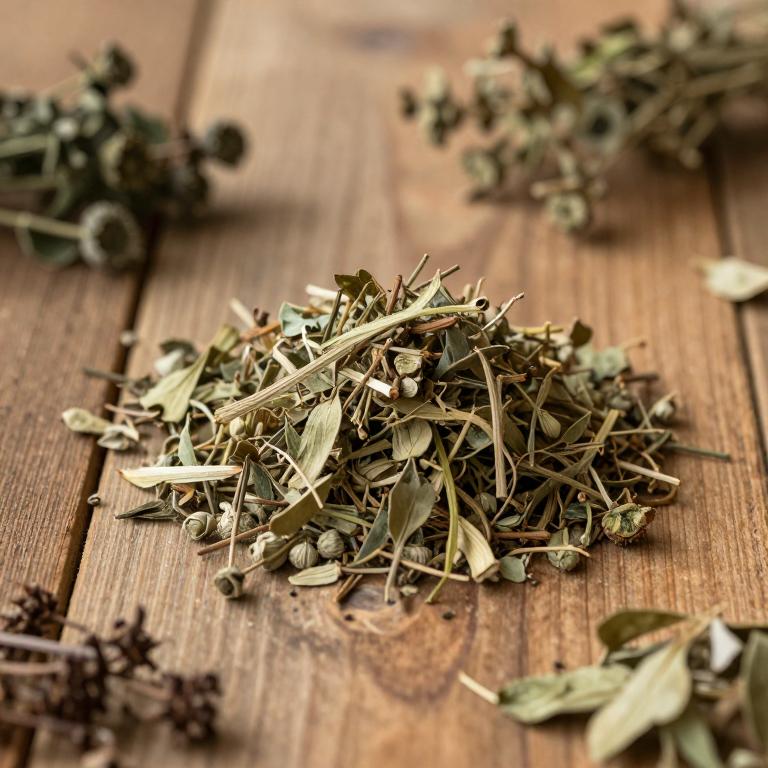
Wrinkle pod mangrove, scientifically known as Cynometrra iripa, is a versatile coastal shrub native to tropical mangrove ecosystems. Renowned for its medicinal properties, various parts of this plant are utilized in traditional medicine to treat skin ailments, inflammation, and digestive issues, offering significant ethnobotanical value for coastal communities.
- Family
- Fabaceae
- Native range
- Asia-Tropical
- Parts used
- Leaf
- Common names
- Wrinkle Pod Mangrove · Wrinkle-Pod Mangrove
- Scientific synonyms
- Cynometra Mimosoides · Cynometra Ramiflora Var. Mimosoides · 1 more
Names and Synonyms
Common Names
- wrinkle pod mangrove
- wrinkle-pod mangrove
Scientific Names
Accepted name
Cynometra iripaSynonyms
- Cynometra mimosoides
- Cynometra ramiflora var. mimosoides
- Cynometra bijuga var. mimosoides
Sources: Wikidata, Catalogue of Life
Taxonomical Classification
This plant belongs to the kingdom Plantae and the phylum Streptophyta, falling under the class Equisetopsida and subclass Magnoliidae. Within the order Fabales, it is classified under the family Fabaceae and specifically within the genus Cynometra.
| Rank | Classification |
|---|---|
| Kingdom | Plantae |
| Phylum | Streptophyta |
| Class | Equisetopsida |
| Subclass | Magnoliidae |
| Order | Fabales |
| Family | Fabaceae |
| Genus | Cynometra |
Sources: The World Checklist of Vascular Plants (WCVP)
Distribution
This plant exhibits a wide geographical distribution across several key regions of Asia. Within the Indian Subcontinent, it can be found growing in Bangladesh, India, and Sri Lanka. Its presence also extends into the Indo-China region, specifically encompassing the Andaman Islands. Additionally, the species is documented to inhabit parts of Cambodia. Together, these locations highlight the diverse habitats where the plant thrives.
| Region | Area |
|---|---|
| Indian Subcontinent | Bangladesh |
| Indian Subcontinent | India |
| Indian Subcontinent | Sri Lanka |
| Indo-China | Andaman Is. |
| Indo-China | Cambodia |
| Indo-China | Myanmar |
| Indo-China | Nicobar Is. |
| Indo-China | Thailand |
| Indo-China | Vietnam |
| Malesia | Jawa |
Sources: The World Checklist of Vascular Plants (WCVP)
Botanical Identification
Ecology
The ecology of Cynometra iripa is fundamentally defined by its specialized adaptation to halophytic vegetation, allowing it to thrive in saline environments where many other woody species would struggle to survive. It is typically found within coastal ecosystems, such as mangrove fringes or salt marshes, where it plays a structural role in the community. This species demonstrates a high tolerance for periodic salt inundation and high soil salinity, characteristic of its niche within halophytic plant assemblages. By occupying these specific coastal habitats, Cynometra iripa contributes to the stability of the shoreline and participates in the complex nutrient cycling processes typical of saline-influenced landscapes.
- Habitat :
- halophytic vegetation
Life history
The life history of Cynometrera iripa is characterized by its status as a perennial species, allowing it to establish a long-term presence within its natural ecosystem. As a perennial, the plant undergoes multiple growing seasons, maintaining its structural integrity and physiological functions over many years rather than completing its life cycle within a single season. This extended lifespan enables the plant to develop robust woody tissues and complex root systems, which facilitate its ability to persist through varying environmental conditions and contribute to the stability of its habitat over time.
- Lifecycle :
- perennial
Morphology
The morphology of Cynometra iripa is characterized by its stature as a woody tree, exhibiting a self-supporting growth habit. It functions as a terrestrial plant rather than an epiphyte, maintaining a robust and stable structure. In terms of dimension, the plant reaches an average height of approximately 6 m, though it can attain a maximum height of up to 8 m.
- Climber :
- self-supporting
- Epiphyte :
- terrestrial
- Growth form :
- tree
- Plant height max:
- 8 m
- Plant height mean:
- 6 m
- Woodiness :
- woody
Physiology
The physiology of Cynometra iripa is characterized by a C3 photosynthetic pathway, utilizing the standard Calvin cycle to fix atmospheric carbon dioxide during the light-independent reactions. In terms of its nutrient acquisition processes, the plant does not function as a nitrogen fixer, meaning it relies on the uptake of nitrates and ammonium from the soil rather than establishing symbiotic relationships with nitrogen-fixing bacteria to convert atmospheric nitrogen into bioavailable forms.
- Nitrogen fixer :
- no
- Photosynthetic pathway :
- C3
Reproduction
The reproduction of Cynometra iripa is characterized by specific seed morphological properties and a distinct dispersal strategy. The plant produces seeds with a highly consistent mass, showing no variance between its minimum, maximum, and mean values, which are all recorded at exactly 6.72 g. Regarding its dispersal mechanism, the species exhibits a complex profile that includes anemochorous, zoochorous, autochorous, and unspecialized methods, but it is primarily identified as hydrochorous, indicating that water plays a fundamental role in the movement and distribution of its seeds within its environment.
- Dispersal syndrome :
- hydrochorous
- Seed mass mean:
- 6.72 g
Sources: Global Inventory of Floras and Traits (GIFT)
Plant Parts
Cynometra iripa has 1 reported plant parts identified across 1 scientific publications and several other databases that are studied for medicinal purposes. The most consistently reported plant part include leaf.
| Plant part | Supporting sources | Consensus |
|---|---|---|
| Leaf | 1 supporting sources | ★☆☆☆☆ |
Leaf
- Molecules (Basel, Switzerland)
Chemicals
Cynometra iripa has 4 reported phytochemicals identified across 1 scientific publications and several other databases. The most consistently reported chemicals include Condensed Tannins, Flavonoids, Quercetin 3-O-glucoside, Taxifolin 3-O-rhamnoside.
| Chemical | Supporting sources | Consensus |
|---|---|---|
| Condensed Tannins | 1 supporting sources | ★☆☆☆☆ |
| Flavonoids | 1 supporting sources | ★☆☆☆☆ |
| Quercetin 3-O-glucoside | 1 supporting sources | ★☆☆☆☆ |
| Taxifolin 3-O-rhamnoside | 1 supporting sources | ★☆☆☆☆ |
Condensed Tannins
- Molecules (Basel, Switzerland)
Flavonoids
- Molecules (Basel, Switzerland)
Quercetin 3-O-glucoside
- Molecules (Basel, Switzerland)
Taxifolin 3-O-rhamnoside
- Molecules (Basel, Switzerland)