White Artichoke
Cynara cornigera · Accepted scientific name
Scientific literature: Very Sparse (5 studies) · ★☆☆☆☆
White Artichoke, scientifically known as Cynara cornigera, is a striking perennial herb renowned for its dramatic, large-scale foliage and ornamental beauty. Beyond its aesthetic appeal, this species holds significant potential in traditional medicine, valued for its unique bioactive compounds that may support digestive health and metabolic wellness.
- Family
- Asteraceae
- Native range
- Europe
- Parts used
- Not available
- Common names
- White Artichoke
- Scientific synonyms
- Cynara Sibthorpiana
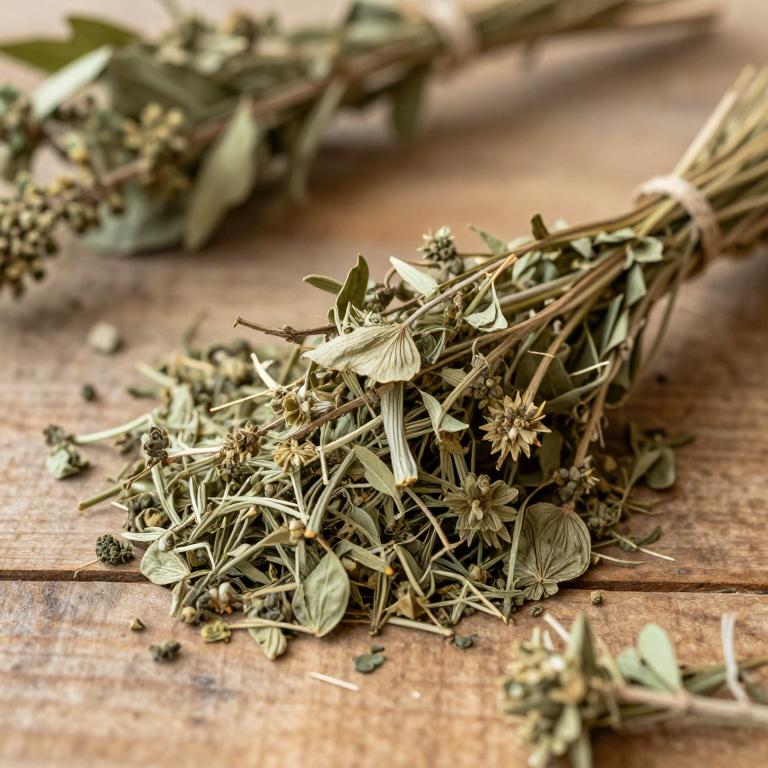
Names and Synonyms
Common Names
- White Artichoke
Scientific Names
Accepted name
Cynara cornigeraSynonyms
- Cynara sibthorpiana
Regional and Traditional Names
German:
- Wilde Artischocke
- Weiße Artischocke
Sources: Wikidata, Catalogue of Life
Taxonomical Classification
This plant belongs to the kingdom Plantae and the phylum Streptophyta, falling under the class Equisetopsida and subclass Magnoliidae. Within the order Asterales, it is classified under the family Asteraceae and is specifically identified by the genus Cynara.
| Rank | Classification |
|---|---|
| Kingdom | Plantae |
| Phylum | Streptophyta |
| Class | Equisetopsida |
| Subclass | Magnoliidae |
| Order | Asterales |
| Family | Asteraceae |
| Genus | Cynara |
Sources: The World Checklist of Vascular Plants (WCVP)
Distribution
This plant exhibits a diverse geographical range spanning across several distinct regions. Within Southeastern Europe, it can be found growing in Greece and on the island of Kriti. Its distribution extends into Northern Africa, where it inhabits the territories of Egypt and Libya. Furthermore, the species is present in Western Asia, specifically located on the island of Cyprus. Collectively, these locations highlight the Mediterranean footprint of this medicinal species.
| Region | Area |
|---|---|
| Southeastern Europe | Greece |
| Southeastern Europe | Kriti |
| Northern Africa | Egypt |
| Northern Africa | Libya |
| Western Asia | Cyprus |
| Western Asia | East Aegean Is. |
Sources: The World Checklist of Vascular Plants (WCVP)
Botanical Identification
Life history
The life history of Cynara cornigera is characterized by a perennial lifecycle, allowing the plant to persist through multiple growing seasons. In terms of its growth habit and survival strategy, it is classified as a hemicryptophyte, meaning its perennial buds are located at or just below the soil surface, protected by leaf litter or organic matter during unfavorable conditions. This life form, categorized specifically as a hemicryptophyte under both its primary and secondary morphological classifications, enables the plant to maintain structural stability and regenerative capacity over time.
- Life form :
- hemicryptophyte
- Lifecycle :
- perennial
Morphology
The morphology of Cynara cornigera is characterized by its growth form as a herb, specifically classified as a forb, which exhibits a non-woody structure. This plant is fundamentally terrestrial in its habitat, rather than being aquatic or semiaquatic. It functions as an independent organism, showing no parasitic tendencies, and possesses a self-supporting habit rather than being a climber.
- Aquatic :
- terrestrial
- Climber :
- self-supporting
- Growth form :
- herb
- Parasite :
- independent
- Woodiness :
- non-woody
Reproduction
The reproduction of Cynara cornigera is characterized by the production of seeds that exhibit a highly consistent mass profile. Based on empirical data, the seeds produced by this species possess a uniform seed mass, with the mean, maximum, and minimum values all recorded at exactly 0.02868 g. This lack of variance in seed mass suggests a highly standardized reproductive output, ensuring that each individual seed carries a precise and consistent amount of biological material for potential germination and seedling establishment.
- Seed mass mean:
- 0.02868 g
Sources: Global Inventory of Floras and Traits (GIFT)
Chemicals
Cynara cornigera has 2 reported phytochemicals identified across 0 scientific publications and several other databases. The most consistently reported chemicals include Cynarin, Cynaropicrin.
| Chemical | Supporting sources | Consensus |
|---|---|---|
| Cynarin | 1 supporting sources | ★☆☆☆☆ |
| Cynaropicrin | 1 supporting sources | ★☆☆☆☆ |
Cynarin
- Planta medica
Cynaropicrin
- Planta medica
Activities
Cynara cornigera has 1 reported activities identified across 0 scientific publications and several other databases. The most consistently reported activities include Antioxidant.
| Activity | Supporting sources | Consensus |
|---|---|---|
| Antioxidant | 1 supporting sources | ★☆☆☆☆ |
Antioxidant
- Planta medica
Preparations
Cynara cornigera has 1 reported preparations identified across 0 scientific publications and several other databases. The most consistently reported preparations include aqueous methanol plant extract.
| Preparation | Supporting sources | Consensus |
|---|---|---|
| Aqueous methanol plant extract | 1 supporting sources | ★☆☆☆☆ |
Aqueous methanol plant extract
- Planta medica