Stranglewort
Cynanchum acutum · Accepted scientific name
Scientific literature: Very Sparse (2 studies) · ★☆☆☆☆
Stranglewort, scientifically known as Cynanchum acuatum, is a versatile medicinal plant revered in traditional healing practices. Renowned for its potent bioactive compounds, it is primarily utilized for its antimicrobial, anti-inflammatory, and antioxidant properties. This botanical specimen offers significant therapeutic potential in treating various ailments through natural pharmacological pathways.
- Family
- Apocynaceae
- Native range
- Europe
- Parts used
- Not available
- Common names
- Stranglewort
- Scientific synonyms
- Solenostemma Acutum · Vincetoxicum Acutum
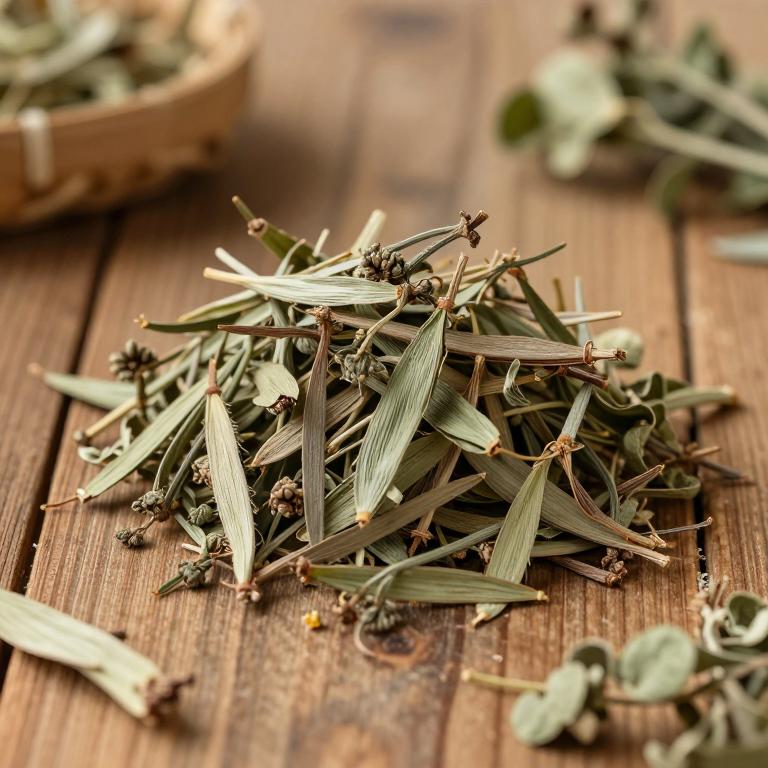
Names and Synonyms
Common Names
- Stranglewort
Scientific Names
Accepted name
Cynanchum acutumSynonyms
- Solenostemma acutum
- Vincetoxicum acutum
Regional and Traditional Names
Spanish:
- Matacán
French:
- scammonée aiguë
- Scammonée aiguë
- Scammonée de Montpellier
Sources: Wikidata, Catalogue of Life
Taxonomical Classification
This plant belongs to the kingdom Plantae and the phylum Streptophyta, falling under the class Equisetopsida and subclass Magnoliidae. Within the order Gentianaales, it is classified under the family Apocynaceae and the genus Cynanchum.
| Rank | Classification |
|---|---|
| Kingdom | Plantae |
| Phylum | Streptophyta |
| Class | Equisetopsida |
| Subclass | Magnoliidae |
| Order | Gentianales |
| Family | Apocynaceae |
| Genus | Cynanchum |
Sources: The World Checklist of Vascular Plants (WCVP)
Distribution
This plant exhibits a specific distribution pattern across the Mediterranean region. In Southwestern Europe, it can be found inhabiting various landscapes in France, Portugal, and Spain. Its presence extends to the Balearic Islands within the same southwestern territory. Additionally, the species reaches into Southeastern Europe, specifically documented in Albania. Consequently, its range spans from the Atlantic coast of the Iberian Peninsula to the Balkan Peninsula.
| Region | Area |
|---|---|
| Southwestern Europe | Baleares |
| Southwestern Europe | France |
| Southwestern Europe | Portugal |
| Southwestern Europe | Spain |
| Southeastern Europe | Albania |
| Southeastern Europe | Bulgaria |
| Southeastern Europe | Greece |
| Southeastern Europe | Italy |
| Southeastern Europe | Kriti |
| Southeastern Europe | Romania |
Sources: The World Checklist of Vascular Plants (WCVP)
Botanical Identification
Ecology
The ecology of Cynanchum acuminatum is characterized by a highly adaptable distribution across diverse terrains and varying altitudes. It thrives in a wide range of habitats, frequently colonizing disturbed or moisture-rich environments such as crop fields, sand dunes, irrigation channels, rivers, and sandy soils. This adaptability allows it to occupy niches ranging from riparian zones to agricultural landscapes. In terms of altitudinal distribution, the species exhibits significant vertical range, occurring from sea level (0 m AMSL) up to a maximum elevation of 2800 m AMSL, with a mean elevational presence around 1200 m AMSL.
- Elevational range max:
- 2800 m AMSL
- Elevational range mean:
- 1200 m AMSL
- Elevational range min:
- 0 m AMSL
- Habitat :
- crop fields, dunes, irrigation channals, rivers, sand
Life history
The life history of Cynanchum acutum is characterized by its perennial lifecycle, allowing the plant to persist through multiple growing seasons. In terms of its structural growth patterns and survival strategies, it is classified as a hemicryptophyte, a life form where the perennating buds are located at the soil surface or just beneath it, protected by leaf litter or soil during unfavorable conditions. This hemicryptophytic nature, consistent across its biological classification, enables the plant to maintain long-term stability within its ecological niche.
- Life form :
- hemicryptophyte
- Lifecycle :
- perennial
Morphology
The morphology of Cynanchum acuminatum is characterized by its growth habit as a non-woody herb, specifically functioning as an obligatory climber. This plant exhibits a scandent shoot orientation, allowing it to navigate its environment by climbing rather than growing erect or prostrate. While it can occupy various ecological niches ranging from aquatic and semiaquatic to terrestrial habitats, it primarily functions as a terrestrial organism and an independent species, rather than an epiphyte or a parasite. The shoots are capable of reaching a maximum length of 400 cm, facilitating its spread as a climbing vine or liana through its specialized growth form.
- Aquatic :
- terrestrial
- Climber :
- self-supporting
- Climber :
- obligatory
- Epiphyte :
- terrestrial
- Growth form :
- herb
- Parasite :
- independent
- Shoot length max:
- 400 cm
- Shoot orientation :
- scandent
- Woodiness :
- non-woody
Physiology
The physiology of Cynanchum acuminatum is characterized by a C3 photosynthetic pathway, which dictates its metabolic processes and carbon fixation strategies. Its foliage exhibits a distinct morphological structure, featuring leaves that are arranged in an opposite pattern along the stem. The leaves are linear in form with entire margins, lacking both thorns and spines. In terms of dimensional growth, the leaves typically range from a minimum length of 2 cm to a maximum length of 7.5 cm, while their width fluctuates between a minimum of 1.2 cm and a maximum of 6.5 cm.
- Leaf arrangement :
- opposite
- Leaf form :
- linear
- Leaf length max:
- 7.5 cm
- Leaf length min:
- 2 cm
- Leaf margin :
- entire
- Leaf spines :
- no
- Leaf thorns :
- no
- Leaf width max:
- 6.5 cm
- Leaf width min:
- 1.2 cm
- Photosynthetic pathway :
- C3
Reproduction
The reproduction of Cynanchum acutum is characterized by its bisexual nature, facilitating sexual reproduction within its flowering structures. The plant enters its flowering period starting in June and continues through August, though the timing can be variable. During this phase, it produces pink flowers that typically measure between 0.49 cm and 0.72 cm in length. Following successful pollination, the plant develops brown fruits that vary in size, with a minimum length of 7.5 cm and a maximum length of 18 cm, while the width of these fruits ranges from 0.7 cm to 0.9 cm. The resulting seeds are quite small, possessing a mean mass of approximately 0.00446 g, with individual seed masses ranging from a minimum of 0.00117 g to a maximum of 0.010409 g.
- Flower colour :
- pink
- Flower length max:
- 0.72 cm
- Flower length min:
- 0.49 cm
- Flowering time :
- Jun
- Flowering time :
- Aug
- Fruit colour :
- brown
- Fruit length max:
- 18 cm
- Fruit length min:
- 7.5 cm
- Fruit width max:
- 0.9 cm
- Fruit width min:
- 0.7 cm
- Reproduction sexual :
- bisexual
- Seed mass max:
- 0.010409 g
- Seed mass mean:
- 0.00445966666666667 g
- Seed mass min:
- 0.00117 g
Sources: Global Inventory of Floras and Traits (GIFT)
Chemicals
Cynanchum acutum has 2 reported phytochemicals identified across 0 scientific publications and several other databases. The most consistently reported chemicals include Flavonoids, Tannins.
| Chemical | Supporting sources | Consensus |
|---|---|---|
| Flavonoids | 1 supporting sources | ★☆☆☆☆ |
| Tannins | 1 supporting sources | ★☆☆☆☆ |
Flavonoids
- Phytotherapy research : PTR
Tannins
- Phytotherapy research : PTR