java citronella
Cymbopogon winterianus · Accepted scientific name
Scientific literature: Very Extensive (242 studies) · ★★★★★
Java citronella, scientifically known as Cymbopogon winterianus, is a highly aromatic perennial grass prized for its potent essential oil. Rich in citronellal, it serves as a powerful natural insect repellent and antimicrobial agent. Widely cultivated in tropical regions, this versatile plant is essential in perfumery and therapeutic aromatherapy.
- Family
- Poaceae
- Native range
- Asia-Temperate
- Parts used
- Leaf · Root
- Common names
- Cymbopogon Grass
- Scientific synonyms
- Not available
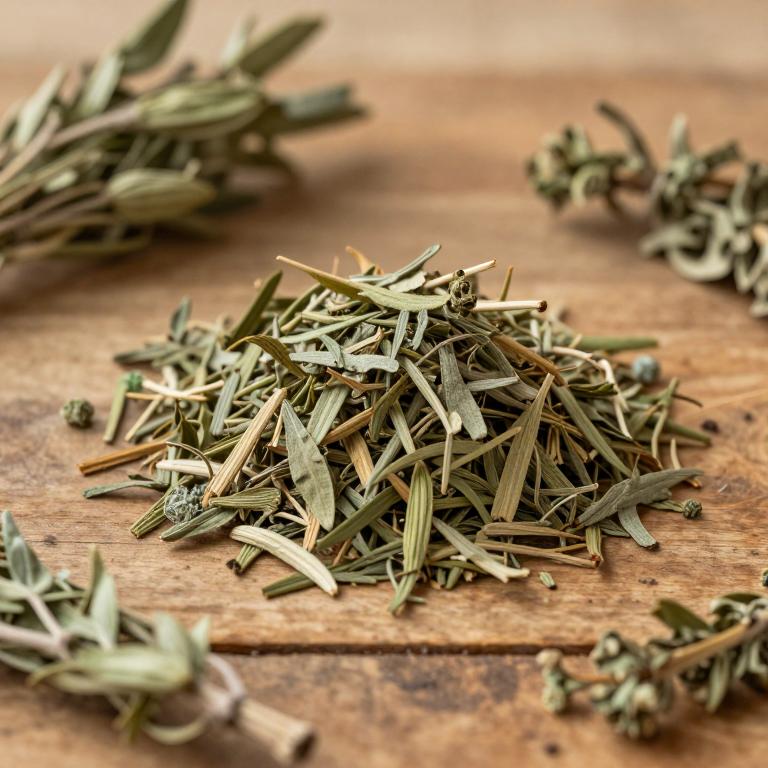
Names and Synonyms
Common Names
- cymbopogon grass
Scientific Names
Accepted name
Cymbopogon winterianusRegional and Traditional Names
French:
- Citronnelle de Java
Sources: Wikidata, Catalogue of Life
Taxonomical Classification
This plant belongs to the kingdom Plantae and is classified under the phylum Streptophyta and class Equisetopsida. Within the subclass Magnoliidae and order Poales, it is a member of the family Poaceae. Specifically, its taxonomic identity is defined by the genus Cymbopogon.
| Rank | Classification |
|---|---|
| Kingdom | Plantae |
| Phylum | Streptophyta |
| Class | Equisetopsida |
| Subclass | Magnoliidae |
| Order | Poales |
| Family | Poaceae |
| Genus | Cymbopogon |
Sources: The World Checklist of Vascular Plants (WCVP)
Distribution
This plant exhibits a widespread presence across several key regions in Asia. Within China, it can be found throughout the South-Central, Southeast, and Hainan areas. Its distribution also extends significantly into the Indian Subcontinent. Specifically, the species is documented to grow in India. Additionally, it is found naturally within the island nation of Sri Lanka.
| Region | Area |
|---|---|
| China | China South-Central |
| China | Hainan |
| China | China Southeast |
| Indian Subcontinent | India |
| Indian Subcontinent | Sri Lanka |
| Malesia | Borneo |
| Malesia | Jawa |
| Malesia | Sumatera |
| Central America | Costa Rica |
| Central America | El Salvador |
Sources: The World Checklist of Vascular Plants (WCVP)
Botanical Identification
Ecology
The ecology of Cymbopogon winterianus is characterized by its specific preference for high-altitude environments, typically occupying montane ecosystems. It thrives within a distinct vertical distribution, specifically situated in the mid-to-high montane zones where environmental conditions are stabilized by altitude. The species is found within an elevational range that begins at a minimum of 1500 m AMSL and extends up to a maximum of 2000 m AMSL. This specific altitudinal niche suggests an adaptation to the cooler temperatures, increased moisture availability, and particular soil compositions found in these highland regions, which play a critical role in its growth patterns and natural distribution.
- Elevational range max:
- 2000 m AMSL
- Elevational range min:
- 1500 m AMSL
Life history
The life history of Cymbopogon winterianus is characterized by its status as a perennial plant, ensuring its presence in its natural habitat over multiple growing seasons. It adopts a hemicryptophyte life form, meaning its perennating buds are located at the soil surface, protected by leaf litter or organic matter during unfavorable conditions. This plant maintains an evergreen deciduousness, allowing it to retain its foliage and continue physiological processes throughout much of its life cycle without the seasonal loss of leaves typical of deciduous species.
- Deciduousness :
- evergreen
- Life form :
- hemicryptophyte
- Lifecycle :
- perennial
Morphology
The morphology of Cymbopogon winterianus is characterized by its graminoid growth form, functioning as a non-woody herb. This plant is strictly terrestrial in its habitat, lacking any aquatic or epiphytic tendencies, and grows as an independent organism without parasitic associations. It is a self-supporting species, meaning it does not exhibit climbing or vining behaviors. In terms of stature, the plant reaches an average height of approximately 2 meters.
- Aquatic :
- terrestrial
- Climber :
- self-supporting
- Epiphyte :
- terrestrial
- Growth form :
- herb
- Growth form :
- graminoid
- Parasite :
- independent
- Plant height mean:
- 2 m
- Woodiness :
- non-woody
Physiology
The physiology of Cymbopogon winterianus is characterized by a highly efficient carbon fixation mechanism and a specific nutrient acquisition profile. The plant utilizes the C4 photosynthetic pathway, a specialized metabolic adaptation that allows for enhanced CO2 concentration within bundle sheath cells, thereby minimizing photorespiration and optimizing water-use efficiency in high-temperature and high-light environments. In terms of nutrient cycling and symbiotic associations, the species does not function as a nitrogen fixer, meaning it lacks the biological machinery to convert atmospheric nitrogen into usable forms and instead relies on the uptake of nitrogenous compounds available within the soil substrate.
- Nitrogen fixer :
- no
- Photosynthetic pathway :
- C4
Sources: Global Inventory of Floras and Traits (GIFT)
Plant Parts
Cymbopogon winterianus has 2 reported plant parts identified across 4 scientific publications and several other databases that are studied for medicinal purposes. The most consistently reported plant part include leaf, root.
| Plant part | Supporting sources | Consensus |
|---|---|---|
| Leaf | 2 supporting sources | ★☆☆☆☆ |
| Root | 2 supporting sources | ★☆☆☆☆ |
Leaf
- Journal of ethnopharmacology
- Bioinformatics and biology insights
Root
- Journal of ethnopharmacology
- Bioinformatics and biology insights
Chemicals
Cymbopogon winterianus has 48 reported phytochemicals identified across 4 scientific publications and several other databases. The most consistently reported chemicals include CITRONELLAL, Citronellol, GERANIOL, Terpenes, 2-HEXEN-1-OL.
| Chemical | Supporting sources | Consensus |
|---|---|---|
| CITRONELLAL | 5 supporting sources | ★★★☆☆ |
| Citronellol | 4 supporting sources | ★★☆☆☆ |
| GERANIOL | 3 supporting sources | ★★☆☆☆ |
| Terpenes | 2 supporting sources | ★☆☆☆☆ |
| 2-HEXEN-1-OL | 1 supporting sources | ★☆☆☆☆ |
| 2-Hexen-1-al | 1 supporting sources | ★☆☆☆☆ |
| ALPHA-PINENE | 1 supporting sources | ★☆☆☆☆ |
| Antioxidant | 1 supporting sources | ★☆☆☆☆ |
| BETA-ELEMENE | 1 supporting sources | ★☆☆☆☆ |
| Bisabolene | 1 supporting sources | ★☆☆☆☆ |
CITRONELLAL
- Dr. Duke
- Molecules (Basel, Switzerland)
- Phytochemical analysis : PCA
- Scientific reports
- Antibiotics (Basel, Switzerland)
Citronellol
- Dr. Duke
- Molecules (Basel, Switzerland)
- Phytochemical analysis : PCA
- Basic & clinical pharmacology & toxicology
GERANIOL
- Dr. Duke
- Molecules (Basel, Switzerland)
- Phytochemical analysis : PCA
Terpenes
- FEBS open bio
- Scientific reports
2-HEXEN-1-OL
- Dr. Duke
2-Hexen-1-al
- Dr. Duke
ALPHA-PINENE
- Dr. Duke
Antioxidant
- Journal of food science and technology
BETA-ELEMENE
- Dr. Duke
Bisabolene
- Dr. Duke
Activities
Cymbopogon winterianus has 165 reported activities identified across 4 scientific publications and several other databases. The most consistently reported activities include Antibacterial, Antioxidant, Antiviral, ACE-Inhibitor, Acaricide.
| Activity | Supporting sources | Consensus |
|---|---|---|
| Antibacterial | 2 supporting sources | ★☆☆☆☆ |
| Antioxidant | 2 supporting sources | ★☆☆☆☆ |
| Antiviral | 2 supporting sources | ★☆☆☆☆ |
| ACE-Inhibitor | 1 supporting sources | ★☆☆☆☆ |
| Acaricide | 1 supporting sources | ★☆☆☆☆ |
| Aldose-Reductase-Inhibitor | 1 supporting sources | ★☆☆☆☆ |
| Allelochemic | 1 supporting sources | ★☆☆☆☆ |
| Allergenic | 1 supporting sources | ★☆☆☆☆ |
| Analgesic | 1 supporting sources | ★☆☆☆☆ |
| Anesthetic | 1 supporting sources | ★☆☆☆☆ |
Antibacterial
- Dr. Duke
- Scientific reports
Antioxidant
- Dr. Duke
- Journal of food science and technology
Antiviral
- Dr. Duke
- Scientific reports
ACE-Inhibitor
- Dr. Duke
Acaricide
- Dr. Duke
Aldose-Reductase-Inhibitor
- Dr. Duke
Allelochemic
- Dr. Duke
Allergenic
- Dr. Duke
Analgesic
- Dr. Duke
Anesthetic
- Dr. Duke
Conditions
Cymbopogon winterianus has 6 reported investigations on conditions identified across 4 scientific publications and several other databases. The most consistently reported conditions include Enterococcus faecalis, Escherichia coli, Gram-positive bacteria, antihypertensive, antiviral.
| Condition | Supporting sources | Consensus |
|---|---|---|
| Enterococcus faecalis | 1 supporting sources | ★☆☆☆☆ |
| Escherichia coli | 1 supporting sources | ★☆☆☆☆ |
| Gram-positive bacteria | 1 supporting sources | ★☆☆☆☆ |
| Antihypertensive | 1 supporting sources | ★☆☆☆☆ |
| Antiviral | 1 supporting sources | ★☆☆☆☆ |
| Epilepsy | 1 supporting sources | ★☆☆☆☆ |
Enterococcus faecalis
- Antibiotics (Basel, Switzerland)
Escherichia coli
- Journal of ethnopharmacology
Gram-positive bacteria
- Scientific reports
Antihypertensive
- Basic & clinical pharmacology & toxicology
Antiviral
- Scientific reports
Epilepsy
- Neurological sciences : official journal of the Italian Neurological Society and of the Italian Society of Clinical Neurophysiology
Preparations
Cymbopogon winterianus has 4 reported preparations identified across 4 scientific publications and several other databases. The most consistently reported preparations include essential oil, Essential oils, Oils, essential oils.
| Preparation | Supporting sources | Consensus |
|---|---|---|
| Essential oil | 2 supporting sources | ★☆☆☆☆ |
| Essential oils | 1 supporting sources | ★☆☆☆☆ |
| Oils | 1 supporting sources | ★☆☆☆☆ |
| Essential oils | 1 supporting sources | ★☆☆☆☆ |
Essential oil
- Molecules (Basel, Switzerland)
- Scientific reports
Essential oils
- Journal of ethnopharmacology
Oils
- Fitoterapia
Essential oils
- Parasitology research