kachi grass
Cymbopogon giganteus · Accepted scientific name
Scientific literature: Very Sparse (14 studies) · ★☆☆☆☆
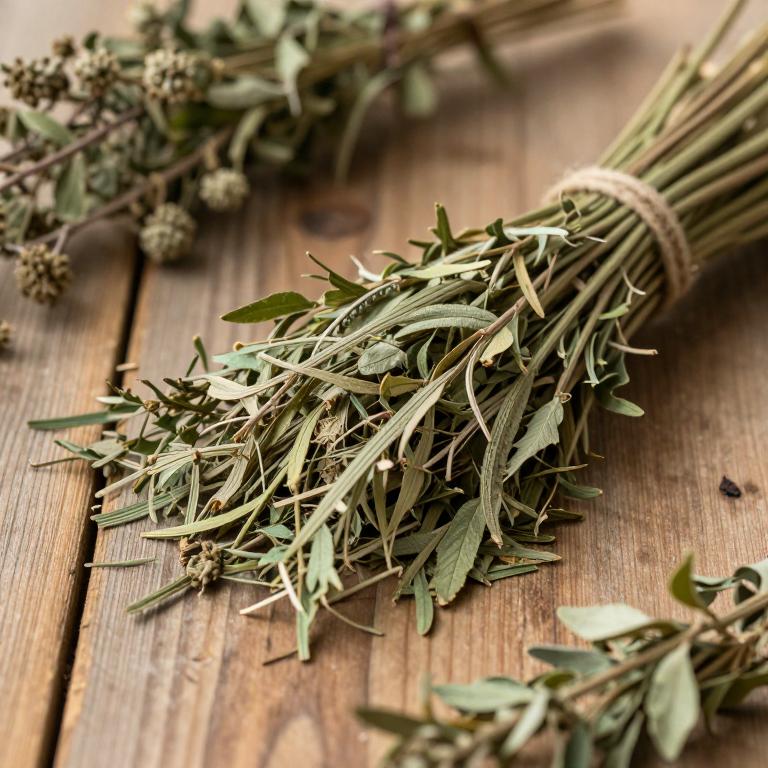
Kachi grass, scientifically known as Cymbopogon giganteus, is a perennial aromatic grass widely recognized for its potent medicinal properties. Native to tropical regions, it is prized in traditional medicine for its essential oils, which offer powerful antimicrobial, anti-inflammatory, and antioxidant benefits, making it a vital natural healing resource.
- Family
- Poaceae
- Native range
- Africa
- Parts used
- Leaf
- Common names
- Kachi Grass
- Scientific synonyms
- Cymbopogon Giganteus Var. Inermis · Cymbopogon Connatus Var. Benearmatus · 1 more
Names and Synonyms
Common Names
- kachi grass
Scientific Names
Accepted name
Cymbopogon giganteusSynonyms
- Cymbopogon giganteus var. inermis
- Cymbopogon connatus var. benearmatus
- Cymbopogon caesius subsp. giganteus
Sources: Wikidata, Catalogue of Life
Taxonomical Classification
This plant belongs to the kingdom Plantae and is classified under the phylum Streptophyta and the class Equisetopsida. Within the subclass Magnoliidae and the order Poales, it is a member of the family Poaceae. Finally, it is identified by its specific genus, Cymbopogon.
| Rank | Classification |
|---|---|
| Kingdom | Plantae |
| Phylum | Streptophyta |
| Class | Equisetopsida |
| Subclass | Magnoliidae |
| Order | Poales |
| Family | Poaceae |
| Genus | Cymbopogon |
Sources: The World Checklist of Vascular Plants (WCVP)
Distribution
This plant is primarily distributed throughout the West Tropical Africa region. Specifically, it can be found growing in the country of Benin. Its natural habitat also extends into the territory of Burkina. Furthermore, the species is documented to exist within the borders of Gambia and Ghana. Finally, its geographical range includes the coastal nation of Guinea-Bissau.
| Region | Area |
|---|---|
| West Tropical Africa | Benin |
| West Tropical Africa | Burkina |
| West Tropical Africa | Gambia |
| West Tropical Africa | Ghana |
| West Tropical Africa | Guinea-Bissau |
| West Tropical Africa | Guinea |
| West Tropical Africa | Ivory Coast |
| West Tropical Africa | Mali |
| West Tropical Africa | Mauritania |
| West Tropical Africa | Nigeria |
Sources: The World Checklist of Vascular Plants (WCVP)
Botanical Identification
Life history
The life history of Cymbopogon giganteus is characterized by its status as a perennial plant, allowing it to persist through multiple growing seasons. Structurally, it functions as a hemicryptophyte, a growth form where the perennating buds are located at or just below the soil surface, protected by leaf litter or surface debris. This hemicryptophytic life form ensures its survival and ability to regenerate following seasonal environmental changes.
- Life form :
- hemicryptophyte
- Lifecycle :
- perennial
Morphology
The morphology of Cymbopogon giganteus is characterized by its growth form as a non-woody herb, specifically categorized as a graminoid. This plant is a self-supporting species that reaches a mean height of 2 m, though it can attain a maximum height of up to 2.5 m. It is a terrestrial organism, functioning as an independent grower that does not exhibit parasitic behavior or epiphytic tendencies.
- Aquatic :
- terrestrial
- Climber :
- self-supporting
- Epiphyte :
- terrestrial
- Growth form :
- herb
- Parasite :
- independent
- Plant height max:
- 2.5 m
- Plant height mean:
- 2 m
- Woodiness :
- non-woody
Physiology
The physiology of Cymbopogon giganteus is characterized by a highly efficient metabolic framework adapted for survival in high-temperature and high-light environments. It utilizes the C4 photosynthetic pathway, which allows the plant to concentrate carbon dioxide around the enzyme Rubisco, thereby minimizing photorespiration and maximizing water-use efficiency compared to C3 plants. This specialized carbon fixation mechanism enables rapid biomass production even under significant evaporative demand. Furthermore, regarding its nutrient acquisition processes, the plant is not a nitrogen fixer, meaning it lacks the symbiotic relationship with diazotrophic bacteria required to convert atmospheric nitrogen into usable forms, and instead relies on the uptake of nitrates and ammonium from the soil substrate to support its physiological growth and development.
- Nitrogen fixer :
- no
- Photosynthetic pathway :
- C4
Reproduction
The reproduction of Cymbopogon giganteus is characterized by abiotic pollination mechanisms, primarily driven by wind, which facilitates the transfer of pollen between plants. The seeds produced by this species are notably small, with a mean seed mass of 0.00099 g, though individual seed weights vary within a specific range from a minimum of 0.00055 g to a maximum of 0.00143 g. Regarding the movement of offspring, the plant exhibits an unspecialized dispersal syndrome, suggesting that its seeds are not heavily reliant on a specific biological or physical vector for distribution.
- Dispersal syndrome :
- unspecialized
- Pollination syndrome :
- wind
- Pollination syndrome :
- abiotic
- Seed mass max:
- 0.00143 g
- Seed mass mean:
- 0.00099 g
- Seed mass min:
- 0.00055 g
Sources: Global Inventory of Floras and Traits (GIFT)
Plant Parts
Cymbopogon giganteus has 1 reported plant parts identified across 1 scientific publications and several other databases that are studied for medicinal purposes. The most consistently reported plant part include leaf.
| Plant part | Supporting sources | Consensus |
|---|---|---|
| Leaf | 1 supporting sources | ★☆☆☆☆ |
Leaf
- Heliyon
Chemicals
Cymbopogon giganteus has 10 reported phytochemicals identified across 1 scientific publications and several other databases. The most consistently reported chemicals include Epicatechin, Flavonoids, LIMONENE, Luteolin 8-C-glucosid, cis-Carveol.
| Chemical | Supporting sources | Consensus |
|---|---|---|
| Epicatechin | 1 supporting sources | ★☆☆☆☆ |
| Flavonoids | 1 supporting sources | ★☆☆☆☆ |
| LIMONENE | 1 supporting sources | ★☆☆☆☆ |
| Luteolin 8-C-glucosid | 1 supporting sources | ★☆☆☆☆ |
| cis-Carveol | 1 supporting sources | ★☆☆☆☆ |
| cis-p-Mentha-1(7),8-dien-2-ol | 1 supporting sources | ★☆☆☆☆ |
| cis-p-mentha-2,8-dienol | 1 supporting sources | ★☆☆☆☆ |
| trans-Carveol | 1 supporting sources | ★☆☆☆☆ |
| trans-p-Mentha-2,8-dienol | 1 supporting sources | ★☆☆☆☆ |
| trans-p-mentha-1(7),8-dien-2-ol | 1 supporting sources | ★☆☆☆☆ |
Epicatechin
- Heliyon
Flavonoids
- Heliyon
LIMONENE
- Journal of ethnopharmacology
Luteolin 8-C-glucosid
- Heliyon
cis-Carveol
- Journal of ethnopharmacology
cis-p-Mentha-1(7),8-dien-2-ol
- Journal of ethnopharmacology
cis-p-mentha-2,8-dienol
- Journal of ethnopharmacology
trans-Carveol
- Journal of ethnopharmacology
trans-p-Mentha-2,8-dienol
- Journal of ethnopharmacology
trans-p-mentha-1(7),8-dien-2-ol
- Journal of ethnopharmacology
Conditions
Cymbopogon giganteus has 3 reported investigations on conditions identified across 1 scientific publications and several other databases. The most consistently reported conditions include Plasmodium falciparum, fevers, headaches.
| Condition | Supporting sources | Consensus |
|---|---|---|
| Plasmodium falciparum | 1 supporting sources | ★☆☆☆☆ |
| Fevers | 1 supporting sources | ★☆☆☆☆ |
| Headaches | 1 supporting sources | ★☆☆☆☆ |
Plasmodium falciparum
- Journal of ethnopharmacology
Fevers
- Journal of ethnopharmacology
Headaches
- Journal of ethnopharmacology
Preparations
Cymbopogon giganteus has 2 reported preparations identified across 1 scientific publications and several other databases. The most consistently reported preparations include boiled water extracts, methanol extracts.
| Preparation | Supporting sources | Consensus |
|---|---|---|
| Boiled water extracts | 1 supporting sources | ★☆☆☆☆ |
| Methanol extracts | 1 supporting sources | ★☆☆☆☆ |
Boiled water extracts
- East African medical journal
Methanol extracts
- Heliyon