Cochin lemongrass
Cymbopogon flexuosus · Accepted scientific name
Scientific literature: Very Extensive (233 studies) · ★★★★★
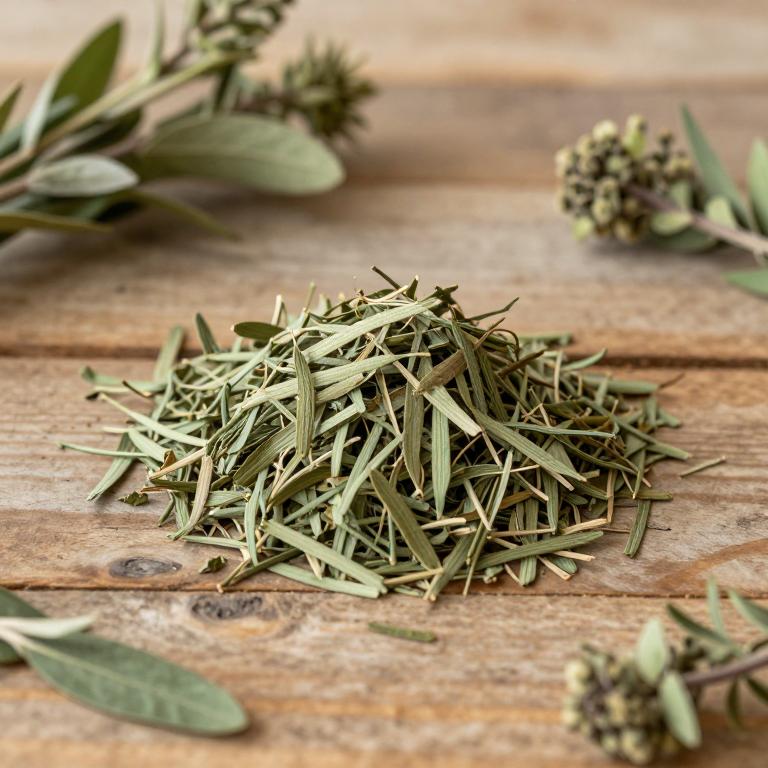
Cochin lemongrass, scientifically known as Cymbopogon flexuosus, is a perennial aromatic grass highly valued in traditional medicine. Renowned for its potent essential oils, it offers significant antibacterial, antifungal, and digestive benefits. This versatile plant serves as a natural remedy for inflammation and stress, widely used in holistic wellness.
Names and Synonyms
Common Names
- Cochin lemongrass
- East Indian lemongrass
- Malabar grass
- Malabar lemongrass
- Cochin grass
Scientific Names
Accepted name
Cymbopogon flexuosusSynonyms
- Andropogon nardus subsp. flexuosus
- Cymbopogon flexuosus var. arunachalis
- Andropogon flexuosus
- Cymbopogon flexuosus var. assamensis
- Andropogon ampliflorus
- Cymbopogon flexuosus var. sikkimensis
- Cymbopogon flexuosus var. coimbatorensis
Regional and Traditional Names
Spanish:
- Andropogon flexuosus
- Andropogon ampliflorus
- Andropogon nardus subsp flexuosus
- Andropogon nardus subsp. flexuosus
- Cymbopogon travancorensis
- pasto de Malabar
German:
- Malabargras
- ostindisches Lemongras
French:
- herbe de Malabar
- lemongrass
- verveine des Indes
- Citronnelle des Indes orientales
- Herbe de Cochin
Sources: Wikidata, Catalogue of Life
Taxonomical Classification
This plant belongs to the kingdom Plantae and is classified under the phylum Streptophyta and the class Equisetopsida. Within the subclass Magnoliidae and the order Poales, it is a member of the family Poaceae. Specifically, it is categorized under the genus Cymbopogon.
| Rank | Classification |
|---|---|
| Kingdom | Plantae |
| Phylum | Streptophyta |
| Class | Equisetopsida |
| Subclass | Magnoliidae |
| Order | Poales |
| Family | Poaceae |
| Genus | Cymbopogon |
Sources: The World Checklist of Vascular Plants (WCVP)
Distribution
This plant exhibits a broad geographical distribution across several distinct regions of the world. In Northern Africa, it can be found specifically within the borders of Egypt. Its presence is also highly notable throughout the Western Indian Ocean, including Mauritius, Madagascar, and the Seychelles. Additionally, the species extends its reach into Asia, specifically within South-Central China. These diverse locations highlight the wide ecological range of Cymbopogon flexuosus.
| Region | Area |
|---|---|
| Northern Africa | Egypt |
| Western Indian Ocean | Mauritius |
| Western Indian Ocean | Madagascar |
| Western Indian Ocean | Seychelles |
| China | China South-Central |
| Indian Subcontinent | Assam |
| Indian Subcontinent | Bangladesh |
| Indian Subcontinent | East Himalaya |
| Indian Subcontinent | India |
| Indian Subcontinent | Nepal |
Sources: The World Checklist of Vascular Plants (WCVP)
Botanical Identification
Ecology
The ecology of Cymbopogon flexuosus is characterized by a specific altitudinal distribution that dictates its habitat preferences and environmental interactions. This species thrives across a broad vertical gradient, occupying diverse ecological niches ranging from lower foothills to higher montane regions. Its elevational range begins at a minimum of 300 m AMSL and extends up to a maximum of 1600 m AMSL, with a mean elevational presence centered around 1000 m AMSL. This distribution suggests that the plant is well-adapted to varying atmospheric pressures, temperature fluctuations, and moisture regimes associated with different mountain altitudes, allowing it to persist in a variety of terrain types within its ecological zone.
- Elevational range max:
- 1600 m AMSL
- Elevational range mean:
- 1000 m AMSL
- Elevational range min:
- 300 m AMSL
Life history
The life history of Cymbopogon flexuosus is characterized by its status as a perennial organism, allowing it to persist through multiple growing seasons rather than completing its cycle within a single year. In terms of its growth habit and survival strategy, the plant is classified as a hemicryptophyte, meaning its perennuating buds are located at or just below the soil surface, typically protected by leaf litter or surface debris during unfavorable environmental conditions. This life form, consistent with its categorization as a hemicryptophyte under multiple morphological assessments, enables the species to effectively navigate seasonal transitions and maintain long-term stability within its ecological niche.
- Life form :
- hemicryptophyte
- Lifecycle :
- perennial
Morphology
The morphology of Cymbopogon flexuosus is characterized by its growth form as a non-woody, graminoid herb. This plant is strictly terrestrial in its habitat and functions as an independent organism, lacking any parasitic tendencies. It is a self-supporting species, neither a climber nor a vine, and does not exhibit epiphytic behavior. In terms of stature, the plant reaches a maximum height of approximately 3 m, with a mean height consistent with this dimension.
- Aquatic :
- terrestrial
- Climber :
- self-supporting
- Epiphyte :
- terrestrial
- Growth form :
- herb
- Growth form :
- graminoid
- Parasite :
- independent
- Plant height mean:
- 3 m
- Woodiness :
- non-woody
Physiology
The physiology of Cymbopogon flexuosus is characterized by a highly efficient carbon fixation mechanism, utilizing the C4 photosynthetic pathway rather than the C3 or CAM pathways. This specialized metabolic route allows the plant to concentrate carbon dioxide around the enzyme Rubisco, significantly reducing photorespiration and enabling efficient growth even under high temperatures and intense light conditions. Regarding its nutrient acquisition processes, the species does not function as a nitrogen fixer, meaning it lacks the symbiotic relationship with nitrogen-fixing bacteria required to convert atmospheric nitrogen into bioavailable forms and must instead rely on the uptake of nitrates or ammonium from the soil.
- Nitrogen fixer :
- no
- Photosynthetic pathway :
- C4
Sources: Global Inventory of Floras and Traits (GIFT)
Plant Parts
Cymbopogon flexuosus has 1 reported plant parts identified across 1 scientific publications and several other databases that are studied for medicinal purposes. The most consistently reported plant part include leaf.
| Plant part | Supporting sources | Consensus |
|---|---|---|
| Leaf | 1 supporting sources | ★☆☆☆☆ |
Leaf
- Chemistry & biodiversity
Chemicals
Cymbopogon flexuosus has 37 reported phytochemicals identified across 1 scientific publications and several other databases. The most consistently reported chemicals include Citral, GERANIOL, 3,5,6-TRICHLORO-2-PYRIDINOL, Arundoin, BETA-SITOSTEROL.
| Chemical | Supporting sources | Consensus |
|---|---|---|
| Citral | 4 supporting sources | ★★☆☆☆ |
| GERANIOL | 2 supporting sources | ★☆☆☆☆ |
| 3,5,6-TRICHLORO-2-PYRIDINOL | 1 supporting sources | ★☆☆☆☆ |
| Arundoin | 1 supporting sources | ★☆☆☆☆ |
| BETA-SITOSTEROL | 1 supporting sources | ★☆☆☆☆ |
| Borneol | 1 supporting sources | ★☆☆☆☆ |
| CATALASE | 1 supporting sources | ★☆☆☆☆ |
| CITRONELLAL | 1 supporting sources | ★☆☆☆☆ |
| Caryophyllene | 1 supporting sources | ★☆☆☆☆ |
| Caryophyllene oxide | 1 supporting sources | ★☆☆☆☆ |
Citral
- Dr. Duke
- Chemistry & biodiversity
- TAG. Theoretical and applied genetics. Theoretische und angewandte Genetik
- The Plant journal : for cell and molecular biology
GERANIOL
- Dr. Duke
- Zeitschrift fur Naturforschung. C, Journal of biosciences
3,5,6-TRICHLORO-2-PYRIDINOL
- Journal of hazardous materials
Arundoin
- Dr. Duke
BETA-SITOSTEROL
- Dr. Duke
Borneol
- Dr. Duke
CATALASE
- Frontiers in plant science
CITRONELLAL
- Dr. Duke
Caryophyllene
- Zeitschrift fur Naturforschung. C, Journal of biosciences
Caryophyllene oxide
- Chemistry & biodiversity
Activities
Cymbopogon flexuosus has 171 reported activities identified across 1 scientific publications and several other databases. The most consistently reported activities include Antioxidant, Antibacterial, (-)-Chronotropic, (-)-Inotropic, ACE-Inhibitor.
| Activity | Supporting sources | Consensus |
|---|---|---|
| Antioxidant | 4 supporting sources | ★★☆☆☆ |
| Antibacterial | 2 supporting sources | ★☆☆☆☆ |
| (-)-Chronotropic | 1 supporting sources | ★☆☆☆☆ |
| (-)-Inotropic | 1 supporting sources | ★☆☆☆☆ |
| ACE-Inhibitor | 1 supporting sources | ★☆☆☆☆ |
| AChE-Inhibitor | 1 supporting sources | ★☆☆☆☆ |
| Acaricide | 1 supporting sources | ★☆☆☆☆ |
| Aldose-Reductase-Inhibitor | 1 supporting sources | ★☆☆☆☆ |
| Allelochemic | 1 supporting sources | ★☆☆☆☆ |
| Allergenic | 1 supporting sources | ★☆☆☆☆ |
Antioxidant
- Dr. Duke
- Chemistry & biodiversity
- Scientific reports
- Journal of food biochemistry
Antibacterial
- Dr. Duke
- Chemistry & biodiversity
(-)-Chronotropic
- Dr. Duke
(-)-Inotropic
- Dr. Duke
ACE-Inhibitor
- Dr. Duke
AChE-Inhibitor
- Dr. Duke
Acaricide
- Dr. Duke
Aldose-Reductase-Inhibitor
- Dr. Duke
Allelochemic
- Dr. Duke
Allergenic
- Dr. Duke
Conditions
Cymbopogon flexuosus has 11 reported investigations on conditions identified across 1 scientific publications and several other databases. The most consistently reported conditions include salinity stress, Escherichia coli, Staphylococcus aureus, antioxidant, breast cancer.
| Condition | Supporting sources | Consensus |
|---|---|---|
| Salinity stress | 2 supporting sources | ★☆☆☆☆ |
| Escherichia coli | 1 supporting sources | ★☆☆☆☆ |
| Staphylococcus aureus | 1 supporting sources | ★☆☆☆☆ |
| Antioxidant | 1 supporting sources | ★☆☆☆☆ |
| Breast cancer | 1 supporting sources | ★☆☆☆☆ |
| Colon cancer | 1 supporting sources | ★☆☆☆☆ |
| Dandruff | 1 supporting sources | ★☆☆☆☆ |
| Lipid peroxidation | 1 supporting sources | ★☆☆☆☆ |
| Lung cancer | 1 supporting sources | ★☆☆☆☆ |
| Ovarian cancer | 1 supporting sources | ★☆☆☆☆ |
Salinity stress
- Scientific reports
- Frontiers in plant science
Escherichia coli
- Chemistry & biodiversity
Staphylococcus aureus
- Chemistry & biodiversity
Antioxidant
- Scientific reports
Breast cancer
- Current topics in medicinal chemistry
Colon cancer
- Current topics in medicinal chemistry
Dandruff
- Journal of ethnopharmacology
Lipid peroxidation
- Journal of hazardous materials
Lung cancer
- Current topics in medicinal chemistry
Ovarian cancer
- Current topics in medicinal chemistry
Preparations
Cymbopogon flexuosus has 4 reported preparations identified across 1 scientific publications and several other databases. The most consistently reported preparations include essential oil, essential oils, herbal teas, lemongrass essential oils.
| Preparation | Supporting sources | Consensus |
|---|---|---|
| Essential oil | 1 supporting sources | ★☆☆☆☆ |
| Essential oils | 1 supporting sources | ★☆☆☆☆ |
| Herbal teas | 1 supporting sources | ★☆☆☆☆ |
| Lemongrass essential oils | 1 supporting sources | ★☆☆☆☆ |
Essential oil
- Scientific reports
Essential oils
- Brazilian journal of microbiology : [publication of the Brazilian Society for Microbiology]
Herbal teas
- Journal of food biochemistry
Lemongrass essential oils
- Chemistry & biodiversity