Cymbopogon commutatus
Cymbopogon commutatus · Accepted scientific name
Scientific literature: Very Extensive (207 studies) · ★★★★★
Cymbopogon commutatus, scientifically known as Cymbopogon commutatus, is a fragrant perennial grass prized in traditional medicine. Often referred to as lemongrass, it contains essential oils with potent antimicrobial and anti-inflammatory properties. It is widely utilized to soothe digestive issues, reduce fever, and promote relaxation through its citrusy aroma.
- Family
- Poaceae
- Native range
- Africa
- Parts used
- Not available
- Common names
- Not available
- Scientific synonyms
- Cymbopogon Parkeri · Andropogon Commutatus · 9 more
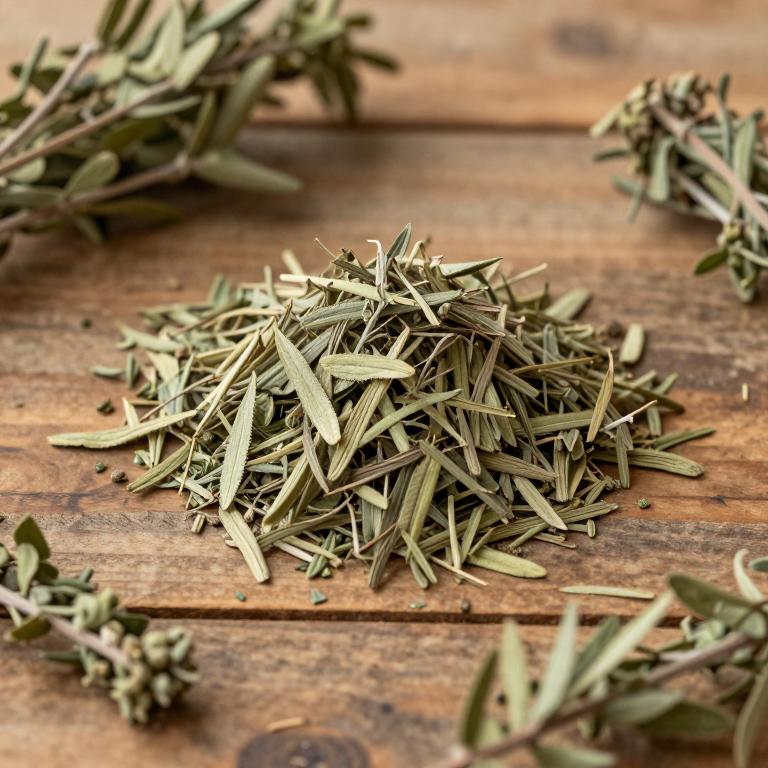
Names and Synonyms
Scientific Names
Accepted name
Cymbopogon commutatusSynonyms
- Cymbopogon parkeri
- Andropogon commutatus
- Gymnanthelia commutata
- Andropogon commutatus var. flavicundus
- Cymbopogon commutatus var. jammuensis
- Andropogon commutatus var. violaceus
- Cymbopogon divaricatus
- Andropogon floccosus
- Cymbopogon floccosus
- Sorghum commutatum
- Cymbopogon parkeri var. jammuensis
Sources: Wikidata, Catalogue of Life
Taxonomical Classification
This plant belongs to the kingdom Plantae and the phylum Streptophyta, falling under the class Equisetopsida and subclass Magnoliidae. Within the order Poales and family Poaceae, it is specifically classified under the genus Cymbopogon.
| Rank | Classification |
|---|---|
| Kingdom | Plantae |
| Phylum | Streptophyta |
| Class | Equisetopsida |
| Subclass | Magnoliidae |
| Order | Poales |
| Family | Poaceae |
| Genus | Cymbopogon |
Sources: The World Checklist of Vascular Plants (WCVP)
Distribution
This plant exhibits a broad geographical distribution across several key regions of the African continent. In West Tropical Africa, it can be found growing in the territories of Mauritania and Senegal. Moving toward the eastern parts of the continent, its range extends into Northeast Tropical Africa. Specifically, it is documented in the countries of Chad and Djibouti. Finally, its presence is also confirmed within the borders of Eritrea.
| Region | Area |
|---|---|
| West Tropical Africa | Mauritania |
| West Tropical Africa | Senegal |
| Northeast Tropical Africa | Chad |
| Northeast Tropical Africa | Djibouti |
| Northeast Tropical Africa | Eritrea |
| Northeast Tropical Africa | Ethiopia |
| Northeast Tropical Africa | Somalia |
| Northeast Tropical Africa | Sudan-South Sudan |
| East Tropical Africa | Kenya |
| East Tropical Africa | Tanzania |
Sources: The World Checklist of Vascular Plants (WCVP)
Botanical Identification
Ecology
The ecology of Cymbopogon commutatus is characterized by its specific niche within montane and sub-montane landscapes, where it thrives across a defined altitudinal gradient. This species is typically found at elevations ranging from a minimum of 600 m AMSL to a maximum of 1400 m AMSL. Within this vertical range, the plant adapts to the varying climatic conditions, moisture levels, and soil compositions inherent to these mid-elevation zones. Its presence is often tied to the specific environmental stressors and resource availability found between these two thresholds, making its distribution highly dependent on the topographic and atmospheric profiles of its habitat.
- Elevational range max:
- 1400 m AMSL
- Elevational range min:
- 600 m AMSL
Life history
The life history of Cymbopogon commutatus is characterized by its status as a perennial plant, allowing it to persist through multiple growing seasons. It adopts a hemicryptophyte life form, meaning its perennating buds are located at the soil surface, protected by leaf litter or organic matter during unfavorable conditions. This hemicryptophytic growth habit, consistent across its morphological classifications, ensures the plant's long-term survival and ability to regenerate within its ecological niche.
- Life form :
- hemicryptophyte
- Lifecycle :
- perennial
Morphology
The morphology of Cymbopogon commutatus is characterized by a graminoid growth form, specifically functioning as a non-woody herb. The plant is self-supporting rather than acting as a climber, liana, or vine, and it grows as an independent organism without parasitic behavior. It is a terrestrial species, lacking aquatic or epiphytic tendencies. In terms of stature, the plant reaches a height ranging from a minimum of 1.2 m to a maximum of 1.5 m.
- Aquatic :
- terrestrial
- Climber :
- self-supporting
- Epiphyte :
- terrestrial
- Growth form :
- herb
- Parasite :
- independent
- Plant height max:
- 1.5 m
- Plant height min:
- 1.2 m
- Woodiness :
- non-woody
Physiology
The physiology of Cymbopogon commutatus is fundamentally defined by its efficient carbon fixation mechanism, specifically utilizing the C4 photosynthetic pathway. Unlike C3 plants, this species employs a specialized anatomical and biochemical arrangement known as Kranz anatomy, which allows for the spatial separation of initial carbon fixation and the subsequent Calvin cycle. This physiological adaptation enables the plant to concentrate carbon dioxide around the enzyme RuBisCO within bundle sheath cells, significantly minimizing photorespiration and increasing water-use efficiency. By utilizing PEP carboxylase to fix atmospheric CO2 into four-carbon organic acids in the mesophyll cells, Cymbopogon commutatus can maintain high rates of photosynthesis even under high temperatures and limited water availability, making it highly resilient in arid or semi-arid environments.
- Photosynthetic pathway :
- C4
Reproduction
The reproduction of Cymbopogon commutatus is characterized by a flowering cycle that exhibits significant temporal flexibility. The flowering period for this species is highly variable, as it does not adhere to a rigid seasonal constraint. Specifically, the flowering start and end points can occur at any time throughout the year, spanning from January through December. Because the onset and conclusion of the blooming phase are variable, the plant's reproductive window can shift depending on environmental conditions, making the specific months of flowering unpredictable across different geographical or climatic contexts.
- Flowering time :
- Apr
Sources: Global Inventory of Floras and Traits (GIFT)
Chemicals
Cymbopogon commutatus has 46 reported phytochemicals identified across 0 scientific publications and several other databases. The most consistently reported chemicals include GERANIOL, GERANYL ACETATE, 6-METHYL-5-HEPTEN-2-ONE, BETA-SITOSTEROL, BORNYL ACETATE.
| Chemical | Supporting sources | Consensus |
|---|---|---|
| GERANIOL | 3 supporting sources | ★★☆☆☆ |
| GERANYL ACETATE | 2 supporting sources | ★☆☆☆☆ |
| 6-METHYL-5-HEPTEN-2-ONE | 1 supporting sources | ★☆☆☆☆ |
| BETA-SITOSTEROL | 1 supporting sources | ★☆☆☆☆ |
| BORNYL ACETATE | 1 supporting sources | ★☆☆☆☆ |
| Butyl acetate | 1 supporting sources | ★☆☆☆☆ |
| CAMPESTEROL | 1 supporting sources | ★☆☆☆☆ |
| Car-3-ene | 1 supporting sources | ★☆☆☆☆ |
| Cryptomeridiol | 1 supporting sources | ★☆☆☆☆ |
| DECANE | 1 supporting sources | ★☆☆☆☆ |
GERANIOL
- Dr. Duke
- Chemistry & biodiversity
- Natural product research
GERANYL ACETATE
- Dr. Duke
- Chemistry & biodiversity
6-METHYL-5-HEPTEN-2-ONE
- Dr. Duke
BETA-SITOSTEROL
- Dr. Duke
BORNYL ACETATE
- Dr. Duke
Butyl acetate
- Dr. Duke
CAMPESTEROL
- Dr. Duke
Car-3-ene
- Dr. Duke
Cryptomeridiol
- Dr. Duke
DECANE
- Dr. Duke
Activities
Cymbopogon commutatus has 152 reported activities identified across 0 scientific publications and several other databases. The most consistently reported activities include (-)-Chronotropic, (-)-Inotropic, ACE-Inhibitor, AChE-Inhibitor, Acaricide.
| Activity | Supporting sources | Consensus |
|---|---|---|
| (-)-Chronotropic | 1 supporting sources | ★☆☆☆☆ |
| (-)-Inotropic | 1 supporting sources | ★☆☆☆☆ |
| ACE-Inhibitor | 1 supporting sources | ★☆☆☆☆ |
| AChE-Inhibitor | 1 supporting sources | ★☆☆☆☆ |
| Acaricide | 1 supporting sources | ★☆☆☆☆ |
| Aldose-Reductase-Inhibitor | 1 supporting sources | ★☆☆☆☆ |
| Allelochemic | 1 supporting sources | ★☆☆☆☆ |
| Allelopathic | 1 supporting sources | ★☆☆☆☆ |
| Allergenic | 1 supporting sources | ★☆☆☆☆ |
| Analgesic | 1 supporting sources | ★☆☆☆☆ |
(-)-Chronotropic
- Dr. Duke
(-)-Inotropic
- Dr. Duke
ACE-Inhibitor
- Dr. Duke
AChE-Inhibitor
- Dr. Duke
Acaricide
- Dr. Duke
Aldose-Reductase-Inhibitor
- Dr. Duke
Allelochemic
- Dr. Duke
Allelopathic
- Dr. Duke
Allergenic
- Dr. Duke
Analgesic
- Dr. Duke
Conditions
Cymbopogon commutatus has 4 reported investigations on conditions identified across 0 scientific publications and several other databases. The most consistently reported conditions include Staphylococcus aureus, cardiac hypertrophy, cardiac toxicity, malaria.
| Condition | Supporting sources | Consensus |
|---|---|---|
| Staphylococcus aureus | 1 supporting sources | ★☆☆☆☆ |
| Cardiac hypertrophy | 1 supporting sources | ★☆☆☆☆ |
| Cardiac toxicity | 1 supporting sources | ★☆☆☆☆ |
| Malaria | 1 supporting sources | ★☆☆☆☆ |
Staphylococcus aureus
- Antibiotics (Basel, Switzerland)
Cardiac hypertrophy
- Natural product research
Cardiac toxicity
- Natural product research
Malaria
- Journal of ethnopharmacology
Preparations
Cymbopogon commutatus has 4 reported preparations identified across 0 scientific publications and several other databases. The most consistently reported preparations include EO, dichloromethane extracts, mosquito repellent, soap.
| Preparation | Supporting sources | Consensus |
|---|---|---|
| Eo | 1 supporting sources | ★☆☆☆☆ |
| Dichloromethane extracts | 1 supporting sources | ★☆☆☆☆ |
| Mosquito repellent | 1 supporting sources | ★☆☆☆☆ |
| Soap | 1 supporting sources | ★☆☆☆☆ |
Eo
- Antibiotics (Basel, Switzerland)
Dichloromethane extracts
- Journal of ethnopharmacology
Mosquito repellent
- Chemistry & biodiversity
Soap
- Chemistry & biodiversity