Lemon Grass
Cymbopogon ambiguus · Accepted scientific name
Scientific literature: Very Sparse (5 studies) · ★☆☆☆☆
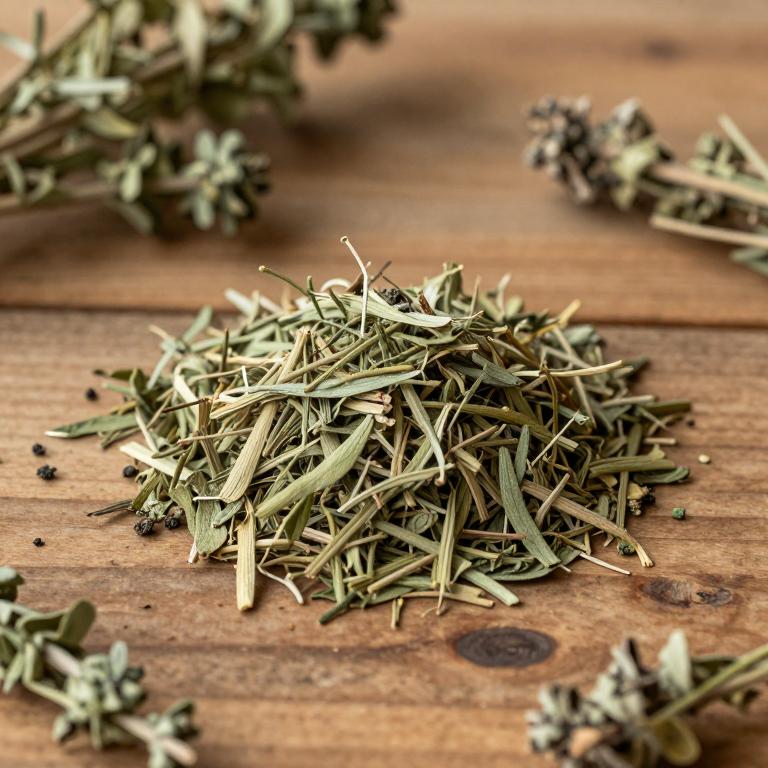
Lemon Grass, scientifically known as Cymbopogon ambiguus, is a versatile aromatic grass renowned for its refreshing citrus scent. Widely used in traditional medicine and culinary arts, it possesses powerful antimicrobial, anti-inflammatory, and antioxidant properties. This potent botanical serves as a natural remedy for digestion, fever, and various skin ailments.
- Family
- Poaceae
- Native range
- Asia-Tropical
- Parts used
- Not available
- Common names
- Lemon Grass
- Scientific synonyms
- Cymbopogon Exaltatus Var. Ambiguus · Andropogon Exaltatus Var. Ambiguus
Names and Synonyms
Common Names
- Lemon Grass
Scientific Names
Accepted name
Cymbopogon ambiguusSynonyms
- Cymbopogon exaltatus var. ambiguus
- Andropogon exaltatus var. ambiguus
Sources: Wikidata, Catalogue of Life
Taxonomical Classification
This plant belongs to the kingdom Plantae and is classified under the phylum Streptophyta and the class Equisetopsida. Within the subclass Magnoliidae and order Poales, it is a member of the family Poaceae. Its taxonomic identity is further defined by its placement within the genus Cymbopogon.
| Rank | Classification |
|---|---|
| Kingdom | Plantae |
| Phylum | Streptophyta |
| Class | Equisetopsida |
| Subclass | Magnoliidae |
| Order | Poales |
| Family | Poaceae |
| Genus | Cymbopogon |
Sources: The World Checklist of Vascular Plants (WCVP)
Distribution
This plant exhibits a broad geographical distribution across several distinct regions. Within the Malesia zone, it can be found throughout the Lesser Sunda Islands. Its presence extends significantly into Australia, where it inhabits the Northern Territory and Queensland. Additionally, the species is located in the southern parts of the continent, specifically within South Australia. Finally, its range reaches as far as the coastal and inland areas of New South Wales.
| Region | Area |
|---|---|
| Malesia | Lesser Sunda Is. |
| Australia | New South Wales |
| Australia | Northern Territory |
| Australia | Queensland |
| Australia | South Australia |
| Australia | Western Australia |
Sources: The World Checklist of Vascular Plants (WCVP)
Botanical Identification
Life history
The life history of Cymbopogon ambiguus is characterized by a perennial lifecycle, allowing the plant to persist through multiple growing seasons. In terms of its structural development and survival strategy, it is classified as a hemicryptophyte, a life form where the perennating buds are located at the soil surface or just below it, protected by leaf litter or soil. This hemicryptophytic growth habit ensures its resilience and long-term establishment within its natural habitat.
- Life form :
- hemicryptophyte
- Lifecycle :
- perennial
Morphology
The morphology of Cymbopogon ambiguus is characterized by a graminoid growth form, functioning as a non-woody herb. This plant is primarily terrestrial in its ecological habit, though it may exist within semiaquatic or aquatic contexts depending on environmental conditions. As a self-supporting species, it does not exhibit climbing behaviors such as a liana or vine, nor does it function as an epiphyte or a parasite, maintaining an independent life cycle. In terms of physical dimensions, the plant's stature is variable, with a height ranging from a minimum of 0.3 m to a maximum of 5 m.
- Aquatic :
- terrestrial
- Climber :
- self-supporting
- Epiphyte :
- terrestrial
- Growth form :
- herb
- Growth form :
- graminoid
- Parasite :
- independent
- Plant height max:
- 5 m
- Plant height min:
- 0.3 m
- Woodiness :
- non-woody
Physiology
The physiology of Cymbopogon ambiguus is characterized by specific morphological dimensions that govern its structural development and surface area for metabolic processes. The leaf architecture exhibits notable variability, with leaf lengths ranging from a minimum of 0.3 cm to a maximum of 0.8 cm. Complementing this longitudinal dimension, the leaf width is highly constrained, reaching a maximum value of only 0.1 cm, resulting in a narrow, linear profile. These specific measurements indicate a specialized growth pattern where the leaf's slender geometry likely plays a critical role in its physiological efficiency and environmental adaptation.
- Leaf length max:
- 0.8 cm
- Leaf length min:
- 0.3 cm
- Leaf width max:
- 0.1 cm
Reproduction
Reproduction in Cymbopogon ambiguus is characterized by the production of highly uniform seeds, which serve as the primary vehicle for its propagation. Detailed morphological analysis reveals that the seeds possess a remarkably consistent mass, with a measured mean seed mass of 0.0013 g. This consistency is absolute across the sampled population, as both the maximum and minimum recorded seed mass values are identical at 0.0013 g. Such a narrow distribution in seed weight suggests a highly stabilized reproductive strategy, ensuring that each individual unit of dispersal carries a precise and predictable amount of nutrient reserves to support early seedling development.
- Seed mass mean:
- 0.0013 g
Sources: Global Inventory of Floras and Traits (GIFT)
Chemicals
Cymbopogon ambiguus has 3 reported phytochemicals identified across 0 scientific publications and several other databases. The most consistently reported chemicals include 5-HT, COLLAGEN, EPN.
| Chemical | Supporting sources | Consensus |
|---|---|---|
| 5-HT | 1 supporting sources | ★☆☆☆☆ |
| COLLAGEN | 1 supporting sources | ★☆☆☆☆ |
| EPN | 1 supporting sources | ★☆☆☆☆ |
5-HT
- Life sciences
COLLAGEN
- Life sciences
EPN
- Life sciences
Conditions
Cymbopogon ambiguus has 1 reported investigations on conditions identified across 0 scientific publications and several other databases. The most consistently reported conditions include headache.
| Condition | Supporting sources | Consensus |
|---|---|---|
| Headache | 1 supporting sources | ★☆☆☆☆ |
Headache
- Life sciences
Preparations
Cymbopogon ambiguus has 1 reported preparations identified across 0 scientific publications and several other databases. The most consistently reported preparations include Extracts.
| Preparation | Supporting sources | Consensus |
|---|---|---|
| Extracts | 1 supporting sources | ★☆☆☆☆ |
Extracts
- Life sciences