Cymbocarpum anethoides
Cymbocarpum anethoides · Accepted scientific name
Scientific literature: Very Sparse (9 studies) · ★☆☆☆☆
, scientifically known as Cymbocarpum anehoitides, is a medicinal plant valued for its unique therapeutic properties. Primarily recognized for its aromatic qualities, this species is utilized in traditional medicine to address various ailments. Exploring its bioactive compounds offers significant potential for developing new treatments in modern pharmacological research and herbal studies.
- Family
- Apiaceae
- Native range
- Asia-Temperate
- Parts used
- Flower · Fruit
- Common names
- Not available
- Scientific synonyms
- Anethum Cymbocarpum · Tragosma Foetidum
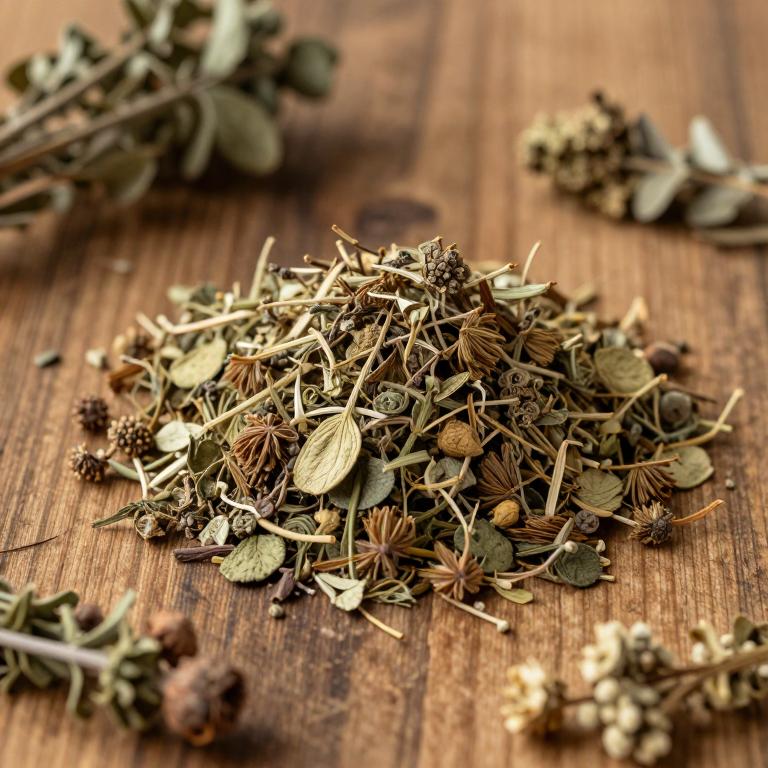
Names and Synonyms
Scientific Names
Accepted name
Cymbocarpum anethoidesSynonyms
- Anethum cymbocarpum
- Tragosma foetidum
Sources: Wikidata
Taxonomical Classification
This plant belongs to the kingdom Plantae and the phylum Streptophyta, specifically classified under the class Equisetopsida and subclass Magnoliidae. Within the order Apiales, it is a member of the family Apiaceae. Its taxonomic identity is further defined by its placement in the genus Cymbocarpum.
| Rank | Classification |
|---|---|
| Kingdom | Plantae |
| Phylum | Streptophyta |
| Class | Equisetopsida |
| Subclass | Magnoliidae |
| Order | Apiales |
| Family | Apiaceae |
| Genus | Cymbocarpum |
Sources: The World Checklist of Vascular Plants (WCVP)
Distribution
This plant exhibits a specific geographical distribution across several key regions in Western Asia and the Caucasus. Within the Caucasus, its presence is notably documented in the Transcaucasus area. Moving further into Western Asia, the species can be found inhabiting the landscapes of Iran. Additionally, the plant is distributed across various parts of Türkiye. These locations define the primary natural range where this medicinal species occurs.
| Region | Area |
|---|---|
| Caucasus | Transcaucasus |
| Western Asia | Iran |
| Western Asia | Türkiye |
Sources: The World Checklist of Vascular Plants (WCVP)
Botanical Identification
Ecology
The ecology of Cymbocarpum anethoides is defined by its ability to thrive in rugged and exposed environments, specifically within mountainous terrains, expansive steppes, and various stony places. It is well-adapted to these diverse landscapes, where it often occupies niches characterized by rocky substrates and open, sun-drenched habitats. The plant's presence in both high-altitude mountain regions and the vast, semi-arid stretches of the steppe suggests a resilience to fluctuating temperature gradients and varying moisture availability. By colonizing stony areas, it demonstrates a specialized capacity to establish itself in nutrient-poor or unstable soils where competition from denser vegetation may be limited, allowing it to persist within these distinct ecological zones.
- Habitat :
- mountains, steppe, stony places
Life history
The life history of Cymbocarpum anethoides is characterized by a variable lifecycle, which can manifest as an annual, biennial, or perennial plant depending on the environmental conditions and ecological niche it occupies. This adaptability allows the species to navigate fluctuating resource availability within its habitat. During its growth stages, the plant progresses through distinct developmental phases, transitioning from germination and vegetative expansion to reproductive maturity. The variability in its lifespan suggests a flexible survival strategy, where the plant may complete its entire life cycle within a single growing season in more transient environments or persist over multiple years in more stable, favorable conditions.
- Lifecycle :
- annual
Morphology
The morphology of Cymbocarpum anethoides is characterized by its growth form as a herb, exhibiting a non-woody structure throughout its development. The plant maintains a relatively low profile, with a height that typically ranges from a minimum of 0.05 m to a maximum of 0.35 m.
- Growth form :
- herb
- Plant height max:
- 0.35 m
- Plant height min:
- 0.05 m
- Woodiness :
- non-woody
Reproduction
The reproduction of Cymbocarpum anethoides is characterized by a specific seasonal flowering window that dictates its reproductive cycle. The flowering process typically commences in June and reaches its conclusion in July. While the timing of these reproductive stages can be variable depending on environmental conditions, the primary period for flower development and subsequent pollination is concentrated within these two months.
- Flowering time :
- Jun
- Flowering time :
- Jul
Sources: Global Inventory of Floras and Traits (GIFT)
Plant Parts
Cymbocarpum anethoides has 3 reported plant parts identified across 3 scientific publications and several other databases that are studied for medicinal purposes. The most consistently reported plant part include flower, fruit, root.
| Plant part | Supporting sources | Consensus |
|---|---|---|
| Flower | 1 supporting sources | ★☆☆☆☆ |
| Fruit | 1 supporting sources | ★☆☆☆☆ |
| Root | 1 supporting sources | ★☆☆☆☆ |
Flower
- Natural product research
Fruit
- Natural product research
Root
- Natural product research
Chemicals
Cymbocarpum anethoides has 3 reported phytochemicals identified across 3 scientific publications and several other databases. The most consistently reported chemicals include 2-Dodecenoic acid, n-Decanal, n-Dodecanal.
| Chemical | Supporting sources | Consensus |
|---|---|---|
| 2-Dodecenoic acid | 1 supporting sources | ★☆☆☆☆ |
| n-Decanal | 1 supporting sources | ★☆☆☆☆ |
| n-Dodecanal | 1 supporting sources | ★☆☆☆☆ |
2-Dodecenoic acid
- Natural product research
n-Decanal
- Natural product research
n-Dodecanal
- Natural product research