Cyclotrichium origanifolium
Cyclotrichium origanifolium · Accepted scientific name
Scientific literature: Very Sparse (7 studies) · ★☆☆☆☆
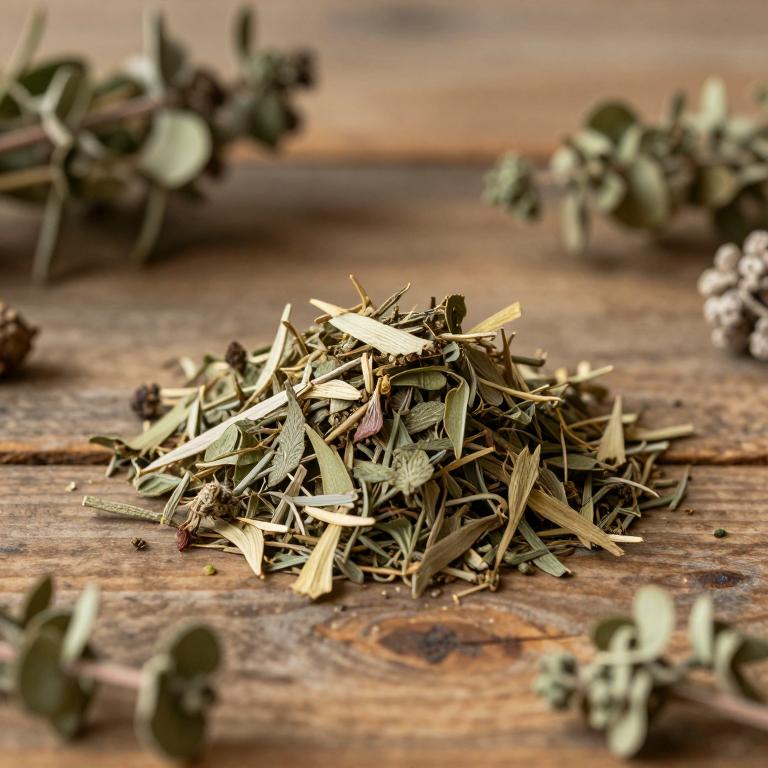
, scientifically known as Cyclotrichium origanifolium, is a remarkable medicinal plant cherished for its potent therapeutic properties. Renowned for its unique phytochemical profile, this species offers significant potential in traditional healing practices. Exploring its bioactive compounds provides vital insights into developing natural remedies for various health and wellness applications.
- Family
- Lamiaceae
- Native range
- Asia-Temperate
- Parts used
- Not available
- Common names
- Not available
- Scientific synonyms
- Melissa Origanifolia · Clinopodium Origanifolium · 7 more
Names and Synonyms
Scientific Names
Accepted name
Cyclotrichium origanifoliumSynonyms
- Melissa origanifolia
- Clinopodium origanifolium
- Satureja florida
- Clinopodium floridum
- Satureja labillardierei
- Calamintha labillardierei
- Cyclotrichium floridum
- Calamintha glomerulosa
- Calamintha florida
Sources: Wikidata
Taxonomical Classification
This plant belongs to the kingdom Plantae and the phylum Streptophyta, specifically classified within the class Equisetopsida and subclass Magnoliidae. It is further categorized under the order Lamiales and the family Lamiaceae. Finally, its taxonomic identity is defined by its placement within the genus Cyclotrichium.
| Rank | Classification |
|---|---|
| Kingdom | Plantae |
| Phylum | Streptophyta |
| Class | Equisetopsida |
| Subclass | Magnoliidae |
| Order | Lamiales |
| Family | Lamiaceae |
| Genus | Cyclotrichium |
Sources: The World Checklist of Vascular Plants (WCVP)
Distribution
This plant, known as Cyclotrichium origanifolium, exhibits a specific geographical range within the Western Asian region. Its natural habitat is primarily concentrated in the territories of Lebanon and Syria. Furthermore, the species is also widely distributed across the landscape of Türkiye. These locations represent the core areas where the plant can be found growing in the wild. Consequently, its presence is closely tied to the distinct environmental conditions of these Western Asian nations.
| Region | Area |
|---|---|
| Western Asia | Lebanon-Syria |
| Western Asia | Türkiye |
Sources: The World Checklist of Vascular Plants (WCVP)
Botanical Identification
Life history
The life history of Cyclotrichium origanifolium is characterized by its classification as a chamaephyte, a life form that dictates its survival strategy and growth pattern. Specifically, it functions as a chamaephyte in both its primary growth habit and its structural classification, meaning its perennating buds are located close to the soil surface, often just above it. This positioning allows the plant to remain protected from harsh environmental conditions, such as freezing temperatures or grazing, while still maintaining the ability to emerge and flourish during favorable growing seasons. By utilizing this chamaephyte strategy, the plant optimizes its resource allocation to maintain low-growing, resilient structures that can withstand seasonal fluctuations in its habitat.
- Life form :
- chamaephyte
Morphology
The morphology of Cyclotrichium origanifolium is characterized by its specific growth habit and ecological positioning. It functions as a self-supporting climber, utilizing its structural development to ascend without requiring external hosts for mechanical support. In terms of its nutritional strategy, the plant is entirely independent, functioning as a non-parasitic organism that maintains its own metabolic processes. Furthermore, it is a terrestrial species, establishing its root systems and growth within the soil rather than occupying an epiphytic niche.
- Climber :
- self-supporting
- Epiphyte :
- terrestrial
- Parasite :
- independent
Reproduction
The reproduction of Cyclotrichium origanifolium is characterized by the production of exceptionally small seeds, which play a critical role in its dispersal and establishment within its ecological niche. Quantitative analysis of its reproductive output reveals a highly uniform seed morphology, with the seed mass exhibiting no variance across measured samples. The seed mass is consistently recorded at a mean value of 0.00036 g, a figure that is identically reflected in both the minimum and maximum recorded values (0.00036 g). This extreme consistency in seed mass suggests a highly stabilized reproductive strategy, ensuring that each offspring is equipped with a standardized amount of nutrient reserves for germination.
- Seed mass mean:
- 0.00036 g
Sources: Global Inventory of Floras and Traits (GIFT)
Chemicals
Cyclotrichium origanifolium has 5 reported phytochemicals identified across 0 scientific publications and several other databases. The most consistently reported chemicals include ERIODICTYOL, Isosakuranetin, apigenin, luteolin, naringenin.
| Chemical | Supporting sources | Consensus |
|---|---|---|
| ERIODICTYOL | 1 supporting sources | ★☆☆☆☆ |
| Isosakuranetin | 1 supporting sources | ★☆☆☆☆ |
| apigenin | 1 supporting sources | ★☆☆☆☆ |
| luteolin | 1 supporting sources | ★☆☆☆☆ |
| naringenin | 1 supporting sources | ★☆☆☆☆ |
ERIODICTYOL
- Pharmacognosy magazine
Isosakuranetin
- Pharmacognosy magazine
apigenin
- Pharmacognosy magazine
luteolin
- Pharmacognosy magazine
naringenin
- Pharmacognosy magazine
Conditions
Cyclotrichium origanifolium has 1 reported investigations on conditions identified across 0 scientific publications and several other databases. The most consistently reported conditions include Pseudomonas aeruginosa.
| Condition | Supporting sources | Consensus |
|---|---|---|
| Pseudomonas aeruginosa | 1 supporting sources | ★☆☆☆☆ |
Pseudomonas aeruginosa
- Chemical biology & drug design
Preparations
Cyclotrichium origanifolium has 2 reported preparations identified across 0 scientific publications and several other databases. The most consistently reported preparations include ethanol extract, methanol extract.
| Preparation | Supporting sources | Consensus |
|---|---|---|
| Ethanol extract | 1 supporting sources | ★☆☆☆☆ |
| Methanol extract | 1 supporting sources | ★☆☆☆☆ |
Ethanol extract
- Chemical biology & drug design
Methanol extract
- Chemical biology & drug design