Ciclospermum leptophyllum
Cyclospermum leptophyllum · Accepted scientific name
Scientific literature: Very Sparse (10 studies) · ★☆☆☆☆
Cyclospermum leptophyllum, scientifically known as Cyclospermum leptophyllum, is a versatile medicinal plant belonging to the Cucurbitaceae family. Renowned for its therapeutic potential, it contains bioactive compounds used in traditional medicine to treat various ailments. This study explores its pharmacological properties, phytochemical composition, and significant healing applications in herbalism.
- Family
- Apiaceae
- Native range
- Europe
- Parts used
- Not available
- Common names
- Not available
- Scientific synonyms
- Ptychotis Leptophylla · Selinum Leptophyllum · 5 more
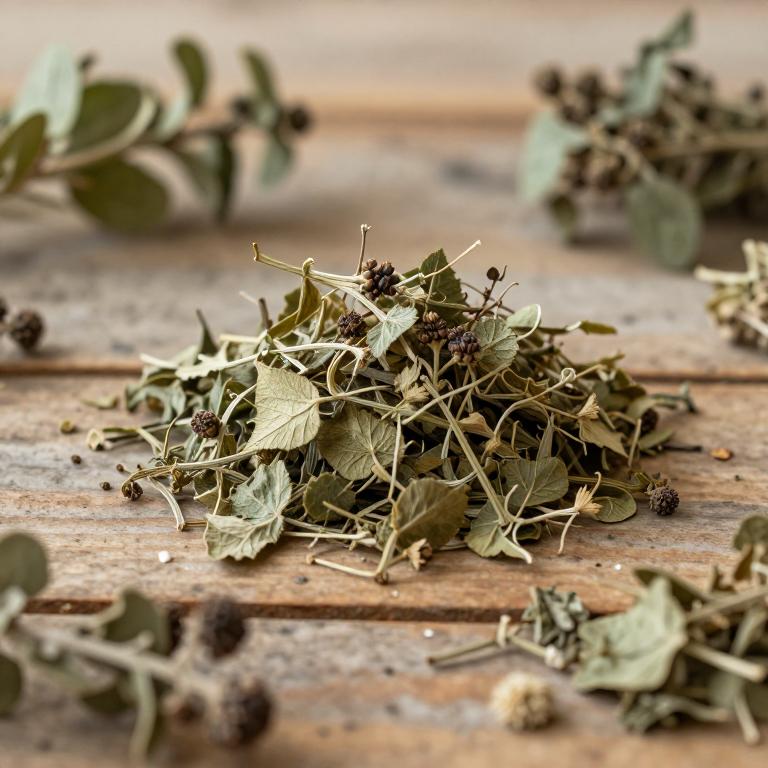
Names and Synonyms
Scientific Names
Accepted name
Cyclospermum leptophyllumSynonyms
- Ptychotis leptophylla
- Selinum leptophyllum
- Aethusa leptophylla
- Apium ammi var. leptophyllum
- Helosciadium leptophyllum
- Pimpinella leptophylla
- Apium leptophyllum
Regional and Traditional Names
Spanish:
- Apium leptophyllum
- Apium tenuifolium
- Cyclospermum ammi
Sources: Wikidata, Catalogue of Life
Taxonomical Classification
This plant belongs to the kingdom Plantae and is classified under the phylum Streptophyta within the class Equisetopsida. As a member of the subclass Magnoliidae and the order Apiales, it is specifically nested within the family Apiaceae. Its taxonomic identity is further defined by its placement in the genus Cyclospermum.
| Rank | Classification |
|---|---|
| Kingdom | Plantae |
| Phylum | Streptophyta |
| Class | Equisetopsida |
| Subclass | Magnoliidae |
| Order | Apiales |
| Family | Apiaceae |
| Genus | Cyclospermum |
Sources: The World Checklist of Vascular Plants (WCVP)
Distribution
This plant exhibits a diverse presence across several distinct regions of the European continent. In Northern Europe, its range extends into the territory of Great Britain. Moving into Middle Europe, it can be found within the borders of Belgium, Germany, and the Czechia-Slovakia region. The distribution further extends into Southwestern Europe, specifically reaching the island of Corse. These varied locations highlight the plant's ability to inhabit multiple climatic zones across the continent.
| Region | Area |
|---|---|
| Northern Europe | Great Britain |
| Middle Europe | Belgium |
| Middle Europe | Czechia-Slovakia |
| Middle Europe | Germany |
| Southwestern Europe | Corse |
| Southwestern Europe | France |
| Southwestern Europe | Portugal |
| Southwestern Europe | Sardegna |
| Southwestern Europe | Spain |
| Southeastern Europe | Albania |
Sources: The World Checklist of Vascular Plants (WCVP)
Botanical Identification
Ecology
The ecology of Cyclospermum leptophyllum is characterized by its remarkable adaptability to diverse altitudinal gradients, spanning an elevational range from sea level (0 m AMSL) up to high-altitude environments reaching 4000 m AMSL. This broad distribution allows the species to colonize various topographical zones, though it shows a notable tendency to inhabit anthropogenic areas (Área Antrópicamente), often flourishing in disturbed landscapes or environments modified by human activity.
- Elevational range max:
- 4000 m AMSL
- Elevational range min:
- 0 m AMSL
- Habitat :
- Área Antrópica
Life history
The life history of Cyclospermum leptophyllum is characterized by its status as an annual plant, meaning it completes its entire biological cycle—from germination to seed production—within a single growing season. As a therophyte, it survives unfavorable environmental conditions primarily through its seeds, which remain dormant until conditions become suitable for the next generation. This plant exhibits a deciduous nature, shedding its foliage as part of its seasonal cycle. Its biological strategy is defined by this rapid lifecycle and its classification as a therophyte, allowing it to effectively colonize open spaces and respond quickly to seasonal shifts in its habitat.
- Deciduousness :
- deciduous
- Life form :
- therophyte
- Lifecycle :
- annual
Morphology
The morphology of Cyclospermum leptophyllum is characterized by a growth form classified as a non-woody herb and specifically a forb. This plant typically exhibits a terrestrial habit, functioning as an independent organism rather than a parasite or an epiphyte. In terms of stature, it is a relatively low-growing species, with a plant height ranging from a minimum of 0.05 m to a maximum of 1.2 m. The shoot orientation is predominantly ascending, and while it possesses climbing tendencies, it is categorized as a self-supporting climber rather than an obligatory vine or liana.
- Aquatic :
- terrestrial
- Climber :
- self-supporting
- Epiphyte :
- terrestrial
- Growth form :
- herb
- Growth form :
- forb
- Parasite :
- independent
- Plant height max:
- 1.2 m
- Plant height min:
- 0.05 m
- Shoot orientation :
- ascending
- Woodiness :
- non-woody
Physiology
The physiology of Cyclospermum leptophyllum is characterized by a C3 photosynthetic pathway, which governs its carbon fixation processes. The plant exhibits a distinct leaf morphology, featuring filiform leaf forms that are arranged in an alternate pattern along the stem. These narrow leaves typically measure between 2.5 cm and 4 cm in length, with a highly slender width ranging from a minimum of 0.05 cm to a maximum of 0.1 cm. Despite its delicate appearance, the plant does not exhibit succulence, maintaining standard water storage mechanisms rather than specialized fleshy tissues. Furthermore, Cyclospermum leptophyllum does not function as a nitrogen fixer, relying on external soil nutrients rather than symbiotic nitrogen-fixing bacteria to support its metabolic requirements.
- Leaf arrangement :
- alternate
- Leaf form :
- filiform
- Leaf length max:
- 4 cm
- Leaf length min:
- 2.5 cm
- Leaf width max:
- 0.1 cm
- Leaf width min:
- 0.05 cm
- Nitrogen fixer :
- no
- Photosynthetic pathway :
- C3
- Succulence :
- no
Reproduction
The reproduction of Cyclospermum leptophyllum is primarily sexual, characterized by bisexual flowers that facilitate the production of offspring. The flowering period for this species is highly variable, spanning nearly the entire year from March through to January. The inflorescence is structured as an umbel, featuring white flowers that are subject to biotic pollination, specifically via an insect pollination syndrome. Notably, self-fertilization is absent in this species, necessitating cross-pollination. The resulting fruits are small, measuring approximately 0.2 cm in both length and width, and they contain a high volume of seeds, typically ranging between 101 and 1000 seeds per fruit. These seeds are quite lightweight, with a mean mass of approximately 0.0002478335 g, ranging from a minimum of 5.7e-05 g to a maximum of 0.00036 g. Regarding seed movement, the plant utilizes an unspecialized dispersal syndrome, with evidence of anthropochorous dispersal, meaning seeds are often spread through human activity. Asexual reproduction is absent in this plant.
- Dispersal syndrome :
- unspecialized
- Dispersal syndrome :
- anthropochorous
- Flower colour :
- white
- Flowering time :
- Mar
- Flowering time :
- Jan
- Fruit length mean:
- 0.2 cm
- Fruit width mean:
- 0.2 cm
- Inflorescence :
- umbel
- Pollination syndrome :
- insect
- Pollination syndrome :
- biotic
- Reproduction asexual :
- absent
- Reproduction sexual :
- bisexual
- Seed mass max:
- 0.00036 g
- Seed mass mean:
- 0.0002478335 g
- Seed mass min:
- 5.7e-05 g
- Seeds_per_fruit :
- 101-1000
- Self fertilization :
- absent
Sources: Global Inventory of Floras and Traits (GIFT)
Chemicals
Cyclospermum leptophyllum has 9 reported phytochemicals identified across 0 scientific publications and several other databases. The most consistently reported chemicals include Carvacrol methyl ether, Caryophyllene oxide, Cumin aldehyde, Germacrene D, LIMONENE.
| Chemical | Supporting sources | Consensus |
|---|---|---|
| Carvacrol methyl ether | 1 supporting sources | ★☆☆☆☆ |
| Caryophyllene oxide | 1 supporting sources | ★☆☆☆☆ |
| Cumin aldehyde | 1 supporting sources | ★☆☆☆☆ |
| Germacrene D | 1 supporting sources | ★☆☆☆☆ |
| LIMONENE | 1 supporting sources | ★☆☆☆☆ |
| P-CYMENE | 1 supporting sources | ★☆☆☆☆ |
| Thymohydroquinone dimethyl ether | 1 supporting sources | ★☆☆☆☆ |
| Thymol methyl ether | 1 supporting sources | ★☆☆☆☆ |
| trans-Ocimene | 1 supporting sources | ★☆☆☆☆ |
Carvacrol methyl ether
- Natural product research
Caryophyllene oxide
- Natural product research
Cumin aldehyde
- Natural product research
Germacrene D
- Natural product research
LIMONENE
- Natural product research
P-CYMENE
- Natural product research
Thymohydroquinone dimethyl ether
- Natural product research
Thymol methyl ether
- Natural product research
trans-Ocimene
- Natural product research
Preparations
Cyclospermum leptophyllum has 2 reported preparations identified across 0 scientific publications and several other databases. The most consistently reported preparations include Plant extracts, essential oils.
| Preparation | Supporting sources | Consensus |
|---|---|---|
| Plant extracts | 1 supporting sources | ★☆☆☆☆ |
| Essential oils | 1 supporting sources | ★☆☆☆☆ |
Plant extracts
- Evidence-based complementary and alternative medicine : eCAM
Essential oils
- Pharmaceutical biology