Abuta amara
Cyclea peltata · Accepted scientific name
Scientific literature: Very Sparse (13 studies) · ★☆☆☆☆
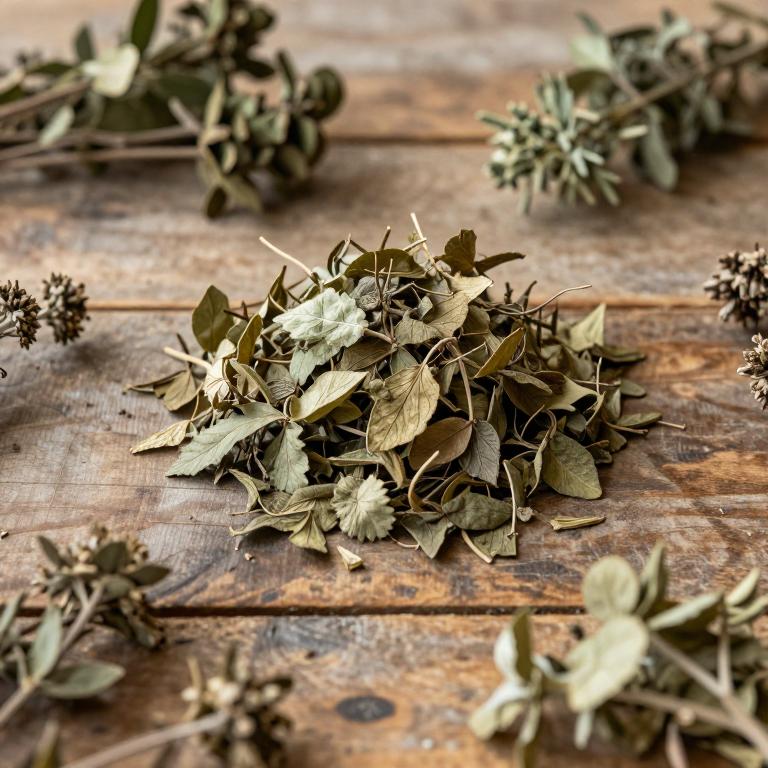
Abuta amara, scientifically known as Cyclea peltata, is a versatile climbing shrub renowned for its extensive ethnobotanical significance. Widely utilized in traditional African medicine, this plant possesses potent bioactive compounds. It is frequently employed to treat various ailments, including skin infections, inflammation, and digestive issues, showcasing its therapeutic potential.
- Family
- Menispermaceae
- Native range
- Asia-Tropical
- Parts used
- Leaf
- Common names
- Not available
- Scientific synonyms
- Cyclea Peltata Var. Arnottii · Merione Peltata · 11 more
Names and Synonyms
Scientific Names
Accepted name
Cyclea peltataSynonyms
- Cyclea peltata var. arnottii
- Merione peltata
- Menispermum peltatum
- Rhaptomeris burmanni
- Cocculus burmanni
- Stephania burmanni
- Cocculus peltatus
- Clypea burmanni
- Cyclea discolor
- Cyclea arnottii
- Cyclea burmanni
- Cyclea versicolor
- Dioscorea peltata
Sources: Wikidata
Taxonomical Classification
This plant belongs to the kingdom Plantae and the phylum Streptophyta, falling under the class Equisetopsida and subclass Magnoliidae. Within the order Ranunculales, it is classified under the family Menispermaceae. Finally, it is identified by the genus Cyclea, specifically as the species Cyclea peltata.
| Rank | Classification |
|---|---|
| Kingdom | Plantae |
| Phylum | Streptophyta |
| Class | Equisetopsida |
| Subclass | Magnoliidae |
| Order | Ranunculales |
| Family | Menispermaceae |
| Genus | Cyclea |
Sources: The World Checklist of Vascular Plants (WCVP)
Distribution
This plant exhibits a wide geographical distribution across several regions of South and Southeast Asia. Within the Indian Subcontinent, it can be found growing in India, Bangladesh, and Sri Lanka. Specifically, its presence is also noted in the state of Assam. Furthermore, the species extends its range into the Indo-China region, particularly within the Andaman Islands. Together, these locations highlight the diverse habitats where this medicinal plant thrives.
| Region | Area |
|---|---|
| Indian Subcontinent | Assam |
| Indian Subcontinent | Bangladesh |
| Indian Subcontinent | India |
| Indian Subcontinent | Sri Lanka |
| Indo-China | Andaman Is. |
| Indo-China | Cambodia |
| Indo-China | Myanmar |
| Indo-China | Nicobar Is. |
| Indo-China | Vietnam |
Sources: The World Checklist of Vascular Plants (WCVP)
Plant Parts
Cyclea peltata has 1 reported plant parts identified across 2 scientific publications and several other databases that are studied for medicinal purposes. The most consistently reported plant part include leaf.
| Plant part | Supporting sources | Consensus |
|---|---|---|
| Leaf | 2 supporting sources | ★☆☆☆☆ |
Leaf
- Journal of cosmetic dermatology
- Journal of advanced pharmaceutical technology & research
Chemicals
Cyclea peltata has 5 reported phytochemicals identified across 2 scientific publications and several other databases. The most consistently reported chemicals include Flavonoids, Saponins, Tannins, Phenolic acid, Phytosterols.
| Chemical | Supporting sources | Consensus |
|---|---|---|
| Flavonoids | 2 supporting sources | ★☆☆☆☆ |
| Saponins | 2 supporting sources | ★☆☆☆☆ |
| Tannins | 2 supporting sources | ★☆☆☆☆ |
| Phenolic acid | 1 supporting sources | ★☆☆☆☆ |
| Phytosterols | 1 supporting sources | ★☆☆☆☆ |
Flavonoids
- Journal of cosmetic dermatology
- Journal of advanced pharmaceutical technology & research
Saponins
- Journal of cosmetic dermatology
- Journal of advanced pharmaceutical technology & research
Tannins
- Journal of cosmetic dermatology
- Journal of advanced pharmaceutical technology & research
Phenolic acid
- Journal of cosmetic dermatology
Phytosterols
- Journal of advanced pharmaceutical technology & research
Conditions
Cyclea peltata has 3 reported investigations on conditions identified across 2 scientific publications and several other databases. The most consistently reported conditions include E. coli, hyperglycemia, wound healing.
| Condition | Supporting sources | Consensus |
|---|---|---|
| E. coli | 1 supporting sources | ★☆☆☆☆ |
| Hyperglycemia | 1 supporting sources | ★☆☆☆☆ |
| Wound healing | 1 supporting sources | ★☆☆☆☆ |
E. coli
- Asian Pacific journal of tropical medicine
Hyperglycemia
- Indian journal of experimental biology
Wound healing
- Journal of cosmetic dermatology
Preparations
Cyclea peltata has 4 reported preparations identified across 2 scientific publications and several other databases. The most consistently reported preparations include ethanolic extract, herbal shampoo formulations, petroleum ether extract, plant extracts.
| Preparation | Supporting sources | Consensus |
|---|---|---|
| Ethanolic extract | 1 supporting sources | ★☆☆☆☆ |
| Herbal shampoo formulations | 1 supporting sources | ★☆☆☆☆ |
| Petroleum ether extract | 1 supporting sources | ★☆☆☆☆ |
| Plant extracts | 1 supporting sources | ★☆☆☆☆ |
Ethanolic extract
- Journal of advanced pharmaceutical technology & research
Herbal shampoo formulations
- Journal of cosmetic dermatology
Petroleum ether extract
- Journal of advanced pharmaceutical technology & research
Plant extracts
- Journal of cosmetic dermatology