zamia palm
Cycas media · Accepted scientific name
Scientific literature: Very Sparse (8 studies) · ★☆☆☆☆
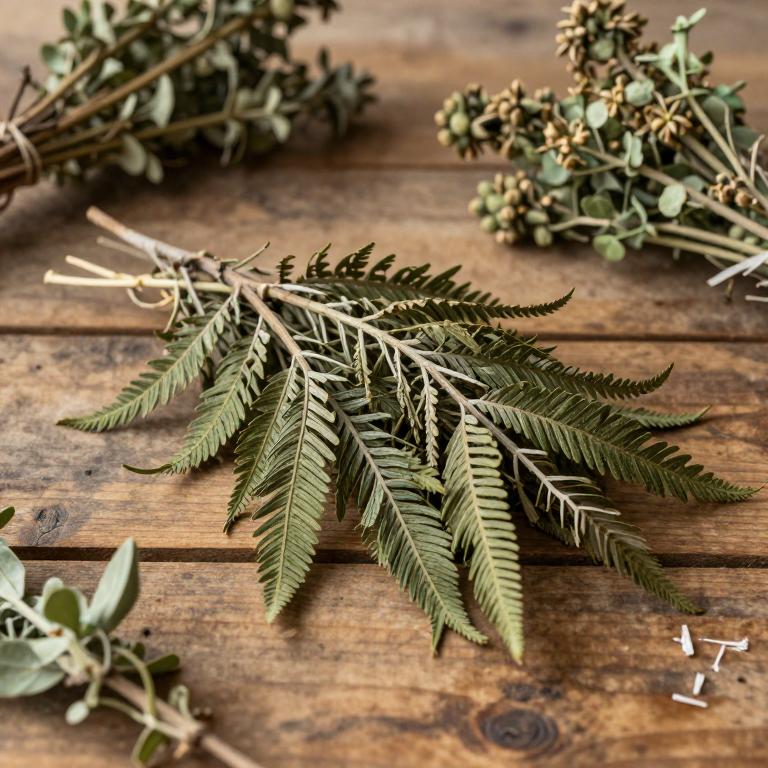
Zamia palm, scientifically known as Cycas media, is a fascinating gymnosperm belonging to the Cycadaceae family. Renowned for its striking, architectural foliage and prehistoric appearance, this slow-growing plant is cherished in both ornamental landscaping and traditional ethnobotany. It serves as a resilient symbol of ancient botanical evolution.
- Family
- Cycadaceae
- Native range
- Australasia
- Parts used
- Not available
- Common names
- Queensland Cycas · Cycad-Palm · 7 more
- Scientific synonyms
- Not available
Names and Synonyms
Common Names
- Queensland cycas
- cycad-palm
- nut-palm
- tree-zamia
- zamia-nut
- zamia-nut-palm
- Australian nut palm
- Zamia palm
- Australian Sago
Scientific Names
Accepted name
Cycas mediaSources: Wikidata, Catalogue of Life
Taxonomical Classification
This plant belongs to the kingdom Plantae and the phylum Streptophyta, falling under the class Equisetopsida and subclass Cycadidae. It is further classified within the order Cycadales and the family Cycadaceae. Finally, its taxonomic hierarchy concludes with the genus Cycas, to which the species Cycas media belongs.
| Rank | Classification |
|---|---|
| Kingdom | Plantae |
| Phylum | Streptophyta |
| Class | Equisetopsida |
| Subclass | Cycadidae |
| Order | Cycadales |
| Family | Cycadaceae |
| Genus | Cycas |
Sources: The World Checklist of Vascular Plants (WCVP)
Distribution
This plant, known scientifically as Cycas media, exhibits a very specific and restricted geographical range. Its natural habitat is primarily located within the continent of Australia. Within this vast landmass, the species is found specifically in the state of Queensland. This localized distribution suggests that the plant thrives under particular environmental conditions unique to this region. Consequently, understanding its presence in Queensland is essential for studying its ecological role and conservation needs.
| Region | Area |
|---|---|
| Australia | Queensland |
Sources: The World Checklist of Vascular Plants (WCVP)
Botanical Identification
Life history
The life history of Cycas media is characterized by a long-lived perennial lifecycle, ensuring its persistence within its natural habitat over many years. As a plant that exhibits both phanerophyte and nanophanerophyte life forms, it typically develops significant woody structures or stems that elevate its photosynthetic organs above the ground, though its growth habit can vary depending on environmental conditions and developmental stages. Throughout its existence, the species maintains an evergreen deciduousness, meaning it retains its lush, green foliage year-round without a seasonal shedding period.
- Deciduousness :
- evergreen
- Life form :
- nanophanerophyte
- Life form :
- phanerophyte
- Lifecycle :
- perennial
Morphology
The morphology of Cycas media is characterized by a shrub-like growth form, exhibiting a woody structure throughout its development. The plant reaches a mean height of approximately 3 m and functions as a self-supporting organism, requiring no external support for its vertical progression. It is an independent species that does not exhibit parasitic behavior, maintaining a terrestrial existence rather than growing as an epiphyte.
- Climber :
- self-supporting
- Epiphyte :
- terrestrial
- Growth form :
- shrub
- Parasite :
- independent
- Plant height mean:
- 3 m
- Woodiness :
- woody
Physiology
The physiology of Cycas media is characterized by specialized metabolic processes adapted to its gymnospermous nature, particularly regarding its nutritional strategies and reproductive cycles. A defining physiological feature is its relationship with cyanobacteria, often housed within specialized coralloid roots; however, while these associations facilitate nutrient uptake, the plant is not classified as a nitrogen fixer in the sense of possessing the independent enzymatic machinery to convert atmospheric nitrogen into usable forms without these symbiotic intermediaries. In terms of its primary metabolic functions, the plant utilizes a slow-growing photosynthetic mechanism typical of cycads, often involving a large, starch-heavy stem that serves as a primary storage organ for carbohydrates. Its water regulation and mineral transport are governed by a primitive vascular system that manages transpiration rates to survive in seasonally dry environments. Furthermore, its reproductive physiology involves the production of large, energy-intensive megasporophylls and microsporophylls, driven by complex hormonal signaling that regulates the transition from vegetative growth to the development of specialized reproductive structures.
- Nitrogen fixer :
- no
Sources: Global Inventory of Floras and Traits (GIFT)
Chemicals
Cycas media has 2 reported phytochemicals identified across 0 scientific publications and several other databases. The most consistently reported chemicals include Ginkgetin, SOTETSUFLAVONE.
| Chemical | Supporting sources | Consensus |
|---|---|---|
| Ginkgetin | 1 supporting sources | ★☆☆☆☆ |
| SOTETSUFLAVONE | 1 supporting sources | ★☆☆☆☆ |
Ginkgetin
- Antibiotics (Basel, Switzerland)
SOTETSUFLAVONE
- Antibiotics (Basel, Switzerland)
Activities
Cycas media has 4 reported activities identified across 0 scientific publications and several other databases. The most consistently reported activities include Antibacterial, Antiproliferative, Antitumor, Cytotoxic.
| Activity | Supporting sources | Consensus |
|---|---|---|
| Antibacterial | 2 supporting sources | ★☆☆☆☆ |
| Antiproliferative | 1 supporting sources | ★☆☆☆☆ |
| Antitumor | 1 supporting sources | ★☆☆☆☆ |
| Cytotoxic | 1 supporting sources | ★☆☆☆☆ |
Antibacterial
- Molecules (Basel, Switzerland)
- Antibiotics (Basel, Switzerland)
Antiproliferative
- Molecules (Basel, Switzerland)
Antitumor
- Molecules (Basel, Switzerland)
Cytotoxic
- Molecules (Basel, Switzerland)
Conditions
Cycas media has 1 reported investigations on conditions identified across 0 scientific publications and several other databases. The most consistently reported conditions include tumor necrosis factor-alpha.
| Condition | Supporting sources | Consensus |
|---|---|---|
| Tumor necrosis factor-alpha | 1 supporting sources | ★☆☆☆☆ |
Tumor necrosis factor-alpha
- Antibiotics (Basel, Switzerland)
Preparations
Cycas media has 1 reported preparations identified across 0 scientific publications and several other databases. The most consistently reported preparations include methanolic extract.
| Preparation | Supporting sources | Consensus |
|---|---|---|
| Methanolic extract | 1 supporting sources | ★☆☆☆☆ |
Methanolic extract
- Molecules (Basel, Switzerland)