Girgensohnia fruticulosa
Cyathobasis fruticulosa · Accepted scientific name
Scientific literature: Very Sparse (5 studies) · ★☆☆☆☆
Girgensohnia fruticulosa, scientifically known as Cyathobasis fruticulososa, is a distinctive medicinal shrub native to the high-altitude ecosystems of South America. Renowned for its unique botanical properties, this plant is traditionally utilized in various folk remedies to treat diverse ailments, offering valuable insights into the potential for modern pharmacological research.
- Family
- Amaranthaceae
- Native range
- Asia-Temperate
- Parts used
- Not available
- Common names
- Not available
- Scientific synonyms
- Girgensohnia Fruticulosa
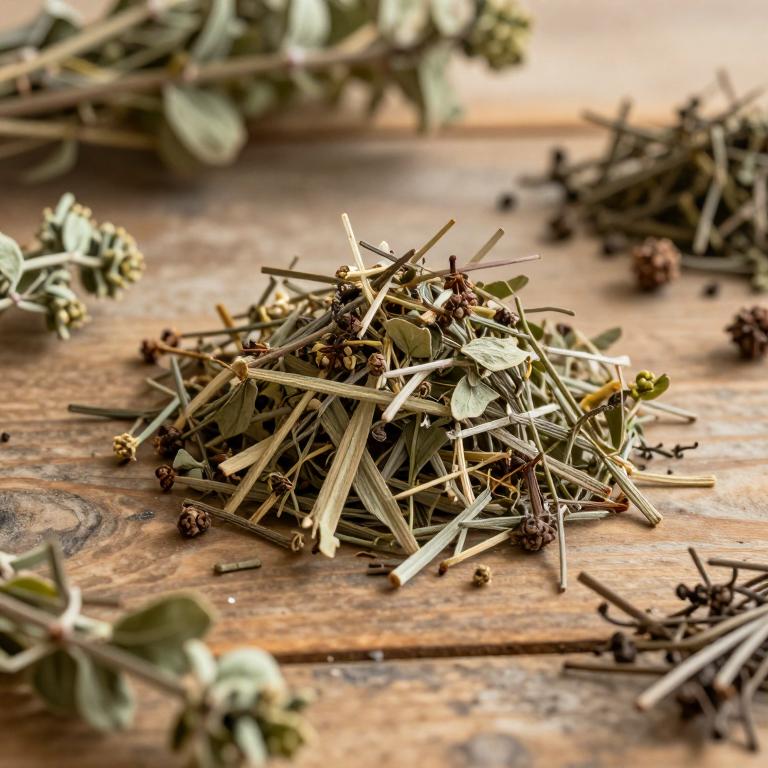
Names and Synonyms
Scientific Names
Accepted name
Cyathobasis fruticulosaSynonyms
- Girgensohnia fruticulosa
Regional and Traditional Names
German:
- Girgensohnia fruticulosa
French:
- Girgensohnia fruticulosa
Sources: Wikidata
Taxonomical Classification
This plant belongs to the kingdom Plantae and the phylum Streptophyta, falling under the class Equisetopsida and subclass Magnoliidae. Within the order Caryophyllales, it is classified under the family Amaranthaceae. Finally, it is identified by the genus Cyathobasis.
| Rank | Classification |
|---|---|
| Kingdom | Plantae |
| Phylum | Streptophyta |
| Class | Equisetopsida |
| Subclass | Magnoliidae |
| Order | Caryophyllales |
| Family | Amaranthaceae |
| Genus | Cyathobasis |
Sources: The World Checklist of Vascular Plants (WCVP)
Distribution
This plant exhibits a very specific and localized geographical distribution. It is primarily found within the region of Western Asia. More specifically, its presence is documented in the country of Türkiye. This limited range suggests that the species may be endemic to certain habitats within this territory. Consequently, its occurrence is highly concentrated rather than widespread across the continent.
| Region | Area |
|---|---|
| Western Asia | Türkiye |
Sources: The World Checklist of Vascular Plants (WCVP)
Botanical Identification
Morphology
The morphology of Cyathobasis fruticulosa is characterized by its growth form as a non-woody herb, typically presenting as a forb or subshrub within its natural habitat. As a non-woody species, it lacks a lignified stem structure, instead maintaining a relatively soft and flexible vegetative body.
- Growth form :
- herb
- Woodiness :
- non-woody
Physiology
The physiology of Cyathobasis fruticulosa is characterized by its specialized metabolic adaptations to environmental conditions, most notably its efficient carbon fixation strategy. This species utilizes a C4 photosynthetic pathway, a sophisticated mechanism that allows it to concentrate carbon dioxide around the enzyme Rubisco, thereby minimizing photorespiration and maximizing water-use efficiency. Unlike plants following the standard C3 pathway, the C4 metabolism in Cyathobasis fruticulosa involves a spatial separation of initial CO2 fixation and the subsequent Calvin cycle, typically occurring within specialized bundle sheath cells. This physiological trait enables the plant to maintain high photosynthetic rates even under elevated temperatures and limited water availability, providing a significant competitive advantage in its specific ecological niche.
- Photosynthetic pathway :
- C4
Sources: Global Inventory of Floras and Traits (GIFT)
Chemicals
Cyathobasis fruticulosa has 3 reported phytochemicals identified across 0 scientific publications and several other databases. The most consistently reported chemicals include N-methyl-N-formyl-4-hydroxy-beta-phenylethylamine, beta-Carboline, tryptamine.
| Chemical | Supporting sources | Consensus |
|---|---|---|
| N-methyl-N-formyl-4-hydroxy-beta-phenylethylamine | 1 supporting sources | ★☆☆☆☆ |
| beta-Carboline | 1 supporting sources | ★☆☆☆☆ |
| tryptamine | 1 supporting sources | ★☆☆☆☆ |
N-methyl-N-formyl-4-hydroxy-beta-phenylethylamine
- Journal of natural products
beta-Carboline
- Journal of natural products
tryptamine
- Journal of natural products