Cyanthus lobatus
Cyananthus lobatus · Accepted scientific name
Scientific literature: Very Sparse (6 studies) · ★☆☆☆☆
Cyananthus lobatus, scientifically known as Cyananthus lobatus, is a stunning perennial herb native to the high-altitude regions of the Himalayas. Renowned for its vibrant blue flowers, this medicinal plant is valued in traditional practices for its unique therapeutic properties, offering potential benefits in treating various ailments within herbal medicine.
- Family
- Campanulaceae
- Native range
- Asia-Temperate
- Parts used
- Not available
- Common names
- Cyanthus Lobatus
- Scientific synonyms
- Cyananthus Hayanus · Cyananthus Lobatus F. Albiflorus · 2 more
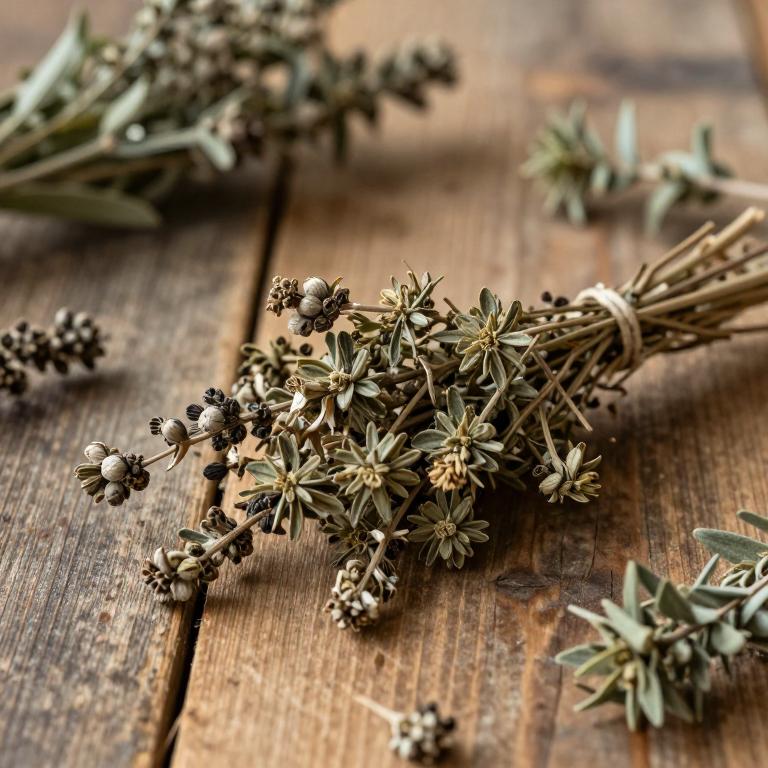
Names and Synonyms
Common Names
- Cyanthus lobatus
Scientific Names
Accepted name
Cyananthus lobatusSynonyms
- Cyananthus hayanus
- Cyananthus lobatus f. albiflorus
- Cyananthus lobatus var. farreri
- Cyananthus farreri
Regional and Traditional Names
German:
- gelappte Blauröhre
Sources: Wikidata, Catalogue of Life
Taxonomical Classification
This plant, Cyananthus lobatus, belongs to the kingdom Plantae and the phylum Streptophyta. Within the class Equisetopsida and subclass Magnoliidae, it is classified under the order Asterales and the family Campanulaceae. Finally, it is categorized under the genus Cyananthus.
| Rank | Classification |
|---|---|
| Kingdom | Plantae |
| Phylum | Streptophyta |
| Class | Equisetopsida |
| Subclass | Magnoliidae |
| Order | Asterales |
| Family | Campanulaceae |
| Genus | Cyananthus |
Sources: The World Checklist of Vascular Plants (WCVP)
Distribution
This plant exhibits a wide geographical distribution across several key regions in Asia. Within China, it can be found throughout the South-Central areas as well as in the Tibet region. Moving toward the Indian Subcontinent, its presence is noted in the state of Assam. It also inhabits parts of Bangladesh, extending its reach across that territory. Finally, the species is commonly documented within the East Himalaya region.
| Region | Area |
|---|---|
| China | China South-Central |
| China | Tibet |
| Indian Subcontinent | Assam |
| Indian Subcontinent | Bangladesh |
| Indian Subcontinent | East Himalaya |
| Indian Subcontinent | India |
| Indian Subcontinent | Nepal |
| Indian Subcontinent | West Himalaya |
| Indo-China | Myanmar |
Sources: The World Checklist of Vascular Plants (WCVP)
Botanical Identification
Ecology
The ecology of Cyananthus lobatus is defined by its specialized niche within high-altitude montane environments, where it thrives across a distinct vertical gradient. This species is typically found inhabiting rocky substrates and crevices in alpine or sub-alpine zones, maintaining a specific elevational range that spans from a minimum of 2800 m AMSL to a maximum of 4900 m AMSL. Its presence within these high-elevation belts suggests an adaptation to cool temperatures, intense ultraviolet radiation, and the specific moisture regimes characteristic of high-mountain terrains. By occupying this broad altitudinal spectrum, the plant demonstrates a resilient ecological capacity to persist in various microclimates within the upper reaches of its mountain habitat.
- Elevational range max:
- 4900 m AMSL
- Elevational range min:
- 2800 m AMSL
Life history
The life history of Cyananthus lobatus is characterized by its classification as a hemicryptophyte, a growth form where the perennating buds are located at or just below the soil surface, often protected by leaf litter or substrate. Within this botanical framework, it exhibits specific life form dynamics consistent with being a hemicryptophyte, which allows it to survive seasonal variations by maintaining its vital reproductive and vegetative structures at the ground level. This life history strategy is particularly well-suited to its specialized ecological niche, where it manages its life cycle through the seasonal emergence of foliage from these protected buds. As a hemicryptophyte, the plant balances the ability to perennialize through underground or surface-level bud protection while navigating the environmental stresses of its specific habitat.
- Life form :
- hemicryptophyte
Morphology
The morphology of Cyananthus lobatus is characterized by its growth form as a herb, which lacks any significant woodiness and is classified as a non-woody plant. It functions as an independent organism, showing no parasitic tendencies, and maintains a terrestrial lifestyle rather than being an epiphyte. In terms of its structural habit, the plant acts as a self-supporting climber, utilizing its own structure to navigate its environment.
- Climber :
- self-supporting
- Epiphyte :
- terrestrial
- Growth form :
- herb
- Parasite :
- independent
- Woodiness :
- non-woody
Sources: Global Inventory of Floras and Traits (GIFT)
Chemicals
Cyananthus lobatus has 6 reported phytochemicals identified across 0 scientific publications and several other databases. The most consistently reported chemicals include Hexadecanoic acid, Massoia lactone, NONADECANOL, NONANAL, PENTACOSANE.
| Chemical | Supporting sources | Consensus |
|---|---|---|
| Hexadecanoic acid | 1 supporting sources | ★☆☆☆☆ |
| Massoia lactone | 1 supporting sources | ★☆☆☆☆ |
| NONADECANOL | 1 supporting sources | ★☆☆☆☆ |
| NONANAL | 1 supporting sources | ★☆☆☆☆ |
| PENTACOSANE | 1 supporting sources | ★☆☆☆☆ |
| non-3-en-2-one | 1 supporting sources | ★☆☆☆☆ |
Hexadecanoic acid
- Natural product research
Massoia lactone
- Natural product research
NONADECANOL
- Natural product research
NONANAL
- Natural product research
PENTACOSANE
- Natural product research
non-3-en-2-one
- Natural product research