golden dodder
Cuscuta campestris · Accepted scientific name
Scientific literature: Very Sparse (18 studies) · ★☆☆☆☆
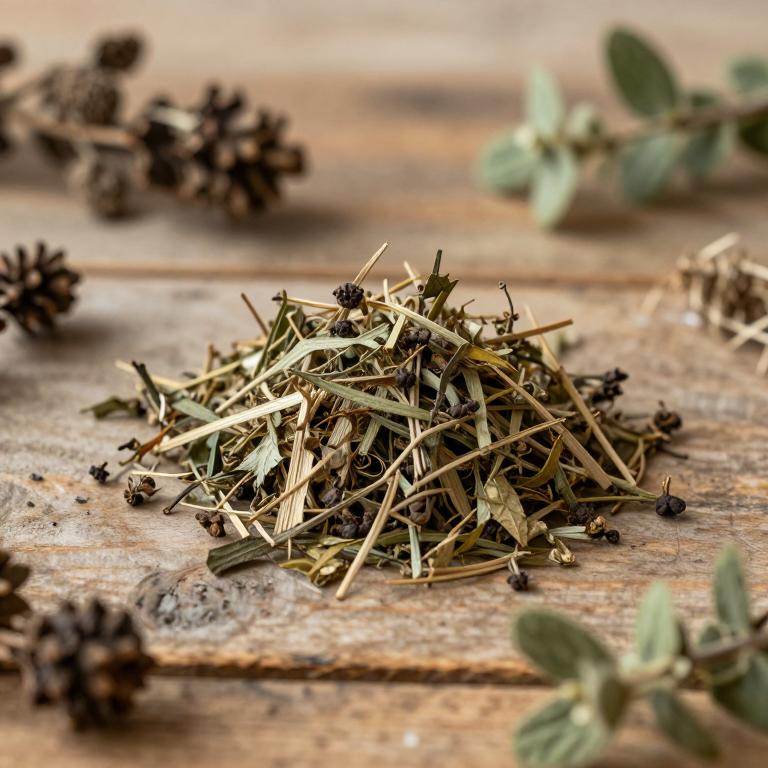
Golden dodder, scientifically known as Cuscuta campestris, is a parasitic plant characterized by its leafless, thread-like stems. Lacking chlorophyll, it survives by extracting nutrients from host plants. Beyond its biological nature, it holds significant ethnobotanical importance, being utilized in various traditional medicinal practices for its unique therapeutic properties.
Names and Synonyms
Common Names
- field dodder
- Yellow Dodder
- common dodder
- dodder
- golden dodder
- prairie dodder
- western field dodder
- love-vine
Scientific Names
Accepted name
Cuscuta campestrisSynonyms
- Cuscuta arvensis var. capsici
- Cuscuta gymnocarpa subsp. deflexa
- Cuscuta kamelorum
- Grammica campestris
- Cuscuta arvensis var. calycina
- Cuscuta pentagona var. calycina
- Cuscuta pentagona var. subulata
Regional and Traditional Names
Spanish:
- fideo
- Cabellos de ángel
German:
- Nordamerikanische Seide
- Grosse Kleeseide
- nordamerikanische Seide
- Feld-Seide
- Grosse Kleeseide
French:
- cuscute champêtre
- cuscute des champs
- Cheveux du diable
- Cuscute champêtre
Sources: Wikidata, Catalogue of Life
Taxonomical Classification
This plant belongs to the kingdom Plantae and the phylum Streptophyta, falling under the class Equisetopsida and subclass Magnoliidae. Within the order Solanales, it is classified under the family Convolvulaceae. Finally, it is identified by the genus Cuscuta, specifically as the species Cuscuta campestris.
| Rank | Classification |
|---|---|
| Kingdom | Plantae |
| Phylum | Streptophyta |
| Class | Equisetopsida |
| Subclass | Magnoliidae |
| Order | Solanales |
| Family | Convolvulaceae |
| Genus | Cuscuta |
Sources: The World Checklist of Vascular Plants (WCVP)
Distribution
This plant exhibits a broad geographical presence across several key regions of the European continent. In Northern Europe, its distribution includes the territories of Great Britain and Ireland. Moving toward Middle Europe, the species can be found growing within the borders of Austria. It also maintains a presence in Belgium, further extending its range across the central part of the continent. Finally, its distribution reaches into the region of Czechia-Slovakia, completing this specific geographical pattern.
| Region | Area |
|---|---|
| Northern Europe | Great Britain |
| Northern Europe | Ireland |
| Middle Europe | Austria |
| Middle Europe | Belgium |
| Middle Europe | Czechia-Slovakia |
| Middle Europe | Germany |
| Middle Europe | Hungary |
| Middle Europe | Netherlands |
| Middle Europe | Poland |
| Middle Europe | Switzerland |
Sources: The World Checklist of Vascular Plants (WCVP)
Botanical Identification
Ecology
The ecology of Cuscuta campesestris is characterized by its adaptability to diverse environments, ranging from sea level up to an elevation of 2125 m AMSL. It is frequently found colonizing anthropogenic landscapes, particularly within crop fields, where it thrives by utilizing available vegetation as a substrate. This broad elevational range allows the species to inhabit various climatic zones, provided there is a sufficient density of host plants to support its parasitic lifestyle.
- Elevational range max:
- 2125 m AMSL
- Elevational range min:
- 0 m AMSL
- Habitat :
- crop fields
Life history
The life history of Cuscuta campestris is characterized by an annual lifecycle, meaning it completes its entire developmental process from germination to seed production within a single growing season. As a therophyte, the plant survives the unfavorable seasons primarily in the form of seeds, which remain dormant in the soil until environmental conditions become suitable for growth. Its morphological existence is strictly deciduous, shedding its specialized twining stems once the reproductive cycle is complete or when environmental stress occurs. This rapid, seasonal strategy allows the organism to efficiently exploit host resources during its brief period of active growth before returning to a seed state.
- Deciduousness :
- deciduous
- Life form :
- therophyte
- Lifecycle :
- annual
Morphology
The morphology of Cuscuta campestris is characterized by its growth form as a non-woody herb that functions as an obligatory parasite. It exhibits a scandent shoot orientation, spreading through a vine-like habit that relies on host plants rather than being self-supporting or independent. The plant is primarily terrestrial in its ecological placement, lacking epiphytic or aquatic tendencies. Its physical dimensions are relatively small, with a minimum plant height of 0.01 m and a maximum height reaching 0.6 m. The shoots are slender and flexible, typically measuring a minimum length of 20 cm and reaching a maximum length of up to 50 cm.
- Aquatic :
- terrestrial
- Climber :
- vine
- Climber :
- self-supporting
- Epiphyte :
- terrestrial
- Growth form :
- herb
- Parasite :
- obligatory
- Plant height max:
- 0.6 m
- Plant height min:
- 0.01 m
- Shoot length max:
- 50 cm
- Shoot length min:
- 20 cm
- Shoot orientation :
- scandent
- Woodiness :
- non-woody
Physiology
The physiology of Cuscuta campestris is characterized by a specialized parasitic mechanism rather than a carnivorous one, as it is classified as non-carnivorous. Instead of capturing prey, it relies on haustoria to extract nutrients and water from host plants. Morphologically, its vegetative structure is highly reduced; the leaves are scale-like in form, serving a minimal role in photosynthesis compared to the host. These scale-like leaves are quite small, with a maximum leaf length of 1.5 cm and a maximum leaf width of 1.5 cm, reflecting the plant's evolutionary shift away from independent autotrophic processes toward a total dependence on its host's vascular system.
- Carnivory :
- non-carnivorous
- Leaf form :
- scale-like
- Leaf length max:
- 1.5 cm
- Leaf width max:
- 1.5 cm
Reproduction
The reproduction of Cuscuta campestris is primarily driven by sexual processes, as asexual reproduction is absent in this species. The flowering period typically occurs between July and August, featuring small white flowers that range in width from a minimum of 0.15 cm to a maximum of 0.3 cm. These flowers rely on biotic pollination syndromes, specifically utilizing insects to facilitate fertilization, though self-fertilization is also present. Following successful pollination, the plant develops a capsule-type fruit that is characterized as dehiscence-based. These capsules vary in size, with a fruit length ranging from 0.25 cm to 0.35 cm (averaging 0.3 cm) and a width spanning from 0.22 cm to 0.42 cm. Each fruit typically contains between 1 and 10 seeds. The seeds themselves are uniform in length at approximately 1.5 mm and possess a mean mass of 0.0008095 g, with individual seed masses ranging from a minimum of 0.00067 g to a maximum of 0.00113 g. Once the fruit matures and dehisces, the seeds are distributed via an anemochorous dispersal syndrome, utilizing wind for movement.
- Dehiscence :
- dehiscent
- Dispersal syndrome :
- anemochorous
- Flower colour :
- white
- Flower width max:
- 0.3 cm
- Flower width min:
- 0.15 cm
- Flowering time :
- Jul
- Flowering time :
- Aug
- Fruit length max:
- 0.35 cm
- Fruit length mean:
- 0.3 cm
- Fruit length min:
- 0.25 cm
- Fruit type :
- capsule
- Fruit width max:
- 0.42 cm
- Fruit width min:
- 0.22 cm
- Pollination syndrome :
- insect
- Pollination syndrome :
- biotic
- Reproduction asexual :
- absent
- Seed length mean:
- 1.5 mm
- Seed mass max:
- 0.00113 g
- Seed mass mean:
- 0.0008095 g
- Seed mass min:
- 0.00067 g
- Seeds_per_fruit :
- 1-10
- Self fertilization :
- present
Sources: Global Inventory of Floras and Traits (GIFT)
Chemicals
Cuscuta campestris has 12 reported phytochemicals identified across 0 scientific publications and several other databases. The most consistently reported chemicals include ABA, Astragalin, CHLOROGENIC ACID, Dicaffeoylquinic acid, Flavonoids.
| Chemical | Supporting sources | Consensus |
|---|---|---|
| ABA | 1 supporting sources | ★☆☆☆☆ |
| Astragalin | 1 supporting sources | ★☆☆☆☆ |
| CHLOROGENIC ACID | 1 supporting sources | ★☆☆☆☆ |
| Dicaffeoylquinic acid | 1 supporting sources | ★☆☆☆☆ |
| Flavonoids | 1 supporting sources | ★☆☆☆☆ |
| Hyperoside | 1 supporting sources | ★☆☆☆☆ |
| Isoquercitrin | 1 supporting sources | ★☆☆☆☆ |
| Kaempferol-3-O-galactoside | 1 supporting sources | ★☆☆☆☆ |
| Phytol | 1 supporting sources | ★☆☆☆☆ |
| Quercetin 3-O-glucoside | 1 supporting sources | ★☆☆☆☆ |
ABA
- Physiology and molecular biology of plants : an international journal of functional plant biology
Astragalin
- Antioxidants (Basel, Switzerland)
CHLOROGENIC ACID
- Antioxidants (Basel, Switzerland)
Dicaffeoylquinic acid
- Plants (Basel, Switzerland)
Flavonoids
- Plants (Basel, Switzerland)
Hyperoside
- Plants (Basel, Switzerland)
Isoquercitrin
- Plants (Basel, Switzerland)
Kaempferol-3-O-galactoside
- Antioxidants (Basel, Switzerland)
Phytol
- Physiology and molecular biology of plants : an international journal of functional plant biology
Quercetin 3-O-glucoside
- Antioxidants (Basel, Switzerland)
Conditions
Cuscuta campestris has 6 reported investigations on conditions identified across 0 scientific publications and several other databases. The most consistently reported conditions include Alzheimer's disease, Obsessive-compulsive disorder, atopic dermatitis, cancer, cognitive dysfunction.
| Condition | Supporting sources | Consensus |
|---|---|---|
| Alzheimer's disease | 1 supporting sources | ★☆☆☆☆ |
| Obsessive-compulsive disorder | 1 supporting sources | ★☆☆☆☆ |
| Atopic dermatitis | 1 supporting sources | ★☆☆☆☆ |
| Cancer | 1 supporting sources | ★☆☆☆☆ |
| Cognitive dysfunction | 1 supporting sources | ★☆☆☆☆ |
| Obsessive-compulsive disorder | 1 supporting sources | ★☆☆☆☆ |
Alzheimer's disease
- Journal of toxicology and environmental health. Part A
Obsessive-compulsive disorder
- Journal of ethnopharmacology
Atopic dermatitis
- Journal of evidence-based complementary & alternative medicine
Cancer
- Avicenna journal of phytomedicine
Cognitive dysfunction
- Journal of toxicology and environmental health. Part A
Obsessive-compulsive disorder
- Journal of ethnopharmacology
Preparations
Cuscuta campestris has 1 reported preparations identified across 0 scientific publications and several other databases. The most consistently reported preparations include extract.
| Preparation | Supporting sources | Consensus |
|---|---|---|
| Extract | 1 supporting sources | ★☆☆☆☆ |
Extract
- Physiology and molecular biology of plants : an international journal of functional plant biology