creeping-berry
Curio radicans · Accepted scientific name
Scientific literature: Very Sparse (18 studies) · ★☆☆☆☆
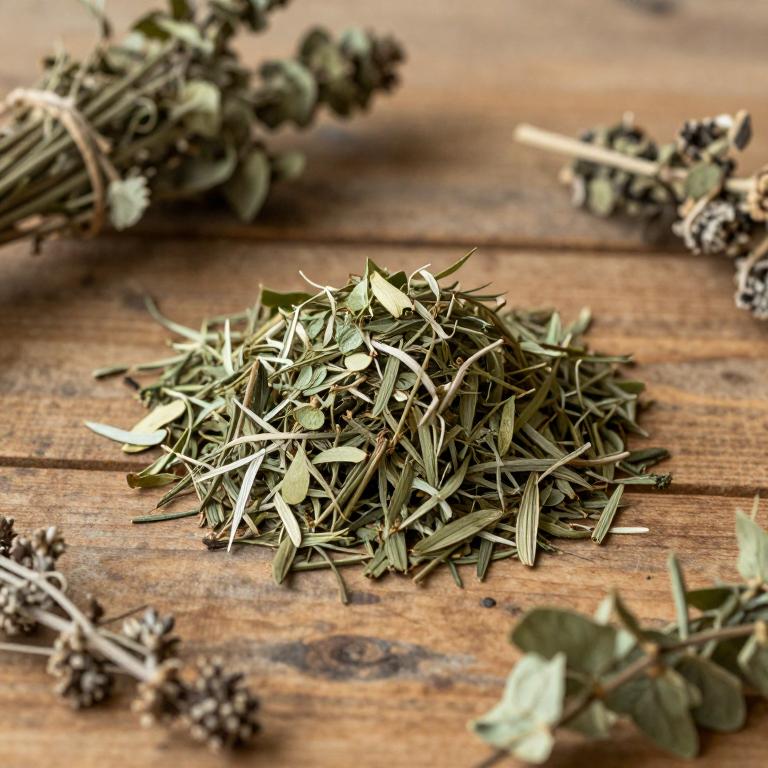
creeping-berry, scientifically known as Curio radicans, is a charming succulent prized for its trailing habit and delicate, fleshy leaves. While primarily grown as an ornamental houseplant, its unique growth pattern and resilience make it a fascinating specimen for collectors seeking texture and verdant beauty in their indoor gardens.
Names and Synonyms
Common Names
- creeping-berry
- Baboon Toes
- Banana Vine
- Creeping Berry
- Necklace Plant
- String of Bananas
- String of Fishhooks
- String-of-Bananas
- string-of-fishhooks
Scientific Names
Accepted name
Curio radicansSynonyms
- Kleinia radicans
- Cacalia radicans
- Kleinia adenocalyx
- Senecio radicans
- Senecio adenocalyx
- Senecio gonocladus
Sources: Wikidata, Catalogue of Life
Taxonomical Classification
This plant belongs to the kingdom Plantae within the phylum Streptophyta and the class Equisetopsida. It is further classified under the subclass Magnoliidae and the order Asterales, falling within the family Asteraceae. Finally, it is identified by the genus Curio.
| Rank | Classification |
|---|---|
| Kingdom | Plantae |
| Phylum | Streptophyta |
| Class | Equisetopsida |
| Subclass | Magnoliidae |
| Order | Asterales |
| Family | Asteraceae |
| Genus | Curio |
Sources: The World Checklist of Vascular Plants (WCVP)
Distribution
This plant is primarily found throughout the diverse landscapes of Southern Africa. Its native range extends across the various Cape Provinces, where it thrives in specific local climates. Additionally, it can be located within the mountainous regions of Lesotho. The species is also distributed through parts of Namibia, showing its adaptability to different terrains. Finally, its presence is noted in the Free State and the coastal areas of KwaZulu-Natal.
| Region | Area |
|---|---|
| Southern Africa | Cape Provinces |
| Southern Africa | Lesotho |
| Southern Africa | Namibia |
| Southern Africa | KwaZulu-Natal |
| Southern Africa | Free State |
| Southern Africa | Northern Provinces |
Sources: The World Checklist of Vascular Plants (WCVP)
Botanical Identification
Ecology
The ecology of Curio radicans is strictly defined by its high-altitude habitat, occupying a specific niche within montane ecosystems. This species thrives within a narrow altitudinal belt, maintaining a specialized presence in environments characterized by significant verticality. Its distribution is constrained to an elevational range that begins at 2560 m AMSL and extends to a maximum of 2820 m AMSL. This restricted elevational window suggests that the plant is highly adapted to the unique climatic conditions, such as lower temperatures and specific atmospheric pressures, found within this precise subalpine or high-montane zone.
- Elevational range max:
- 2820 m AMSL
- Elevational range min:
- 2560 m AMSL
Life history
The life history of Curio radicans is characterized by its classification as a perennial, allowing the plant to persist through multiple growing seasons rather than completing its life cycle in a single year. As a succulent species, its survival strategy relies on its ability to endure varying environmental conditions over an extended period, often utilizing its fleshy leaves and stems to store water and sustain its metabolic processes. This perennial nature enables the plant to establish a robust root system and undergo repeated cycles of vegetative growth and potential flowering, contributing to its long-term presence in its natural habitat.
- Lifecycle :
- annual
Morphology
The morphology of Curio radicans is characterized by its growth form as a non-woody herb and specifically a forb. It functions as an independent organism, lacking any parasitic relationship, and maintains a terrestrial existence, whether occupying aquatic, semiaquatic, or terrestrial habitats. Although it exhibits climbing tendencies, it is classified as a self-supporting climber, rather than an obligatory liana or vine. Furthermore, it is strictly a terrestrial species, showing no epiphytic characteristics such as being a holoepiphyte or hemiepiphyte.
- Aquatic :
- terrestrial
- Climber :
- self-supporting
- Epiphyte :
- terrestrial
- Growth form :
- herb
- Growth form :
- forb
- Parasite :
- independent
- Woodiness :
- non-woody
Sources: Global Inventory of Floras and Traits (GIFT)
Chemicals
Curio radicans has 16 reported phytochemicals identified across 0 scientific publications and several other databases. The most consistently reported chemicals include 4-Imidazolidinone, CATECHIN, Diisooctyl phthalate, Flavonoids, Hydroxybenzoic acid.
| Chemical | Supporting sources | Consensus |
|---|---|---|
| 4-Imidazolidinone | 1 supporting sources | ★☆☆☆☆ |
| CATECHIN | 1 supporting sources | ★☆☆☆☆ |
| Diisooctyl phthalate | 1 supporting sources | ★☆☆☆☆ |
| Flavonoids | 1 supporting sources | ★☆☆☆☆ |
| Hydroxybenzoic acid | 1 supporting sources | ★☆☆☆☆ |
| Phenols | 1 supporting sources | ★☆☆☆☆ |
| Saponins | 1 supporting sources | ★☆☆☆☆ |
| Tannins | 1 supporting sources | ★☆☆☆☆ |
| Terpenoids | 1 supporting sources | ★☆☆☆☆ |
| caffeic acid | 1 supporting sources | ★☆☆☆☆ |
4-Imidazolidinone
- ChemistryOpen
CATECHIN
- Scientific reports
Diisooctyl phthalate
- ChemistryOpen
Flavonoids
- Scientific reports
Hydroxybenzoic acid
- Scientific reports
Phenols
- Scientific reports
Saponins
- Scientific reports
Tannins
- Scientific reports
Terpenoids
- Scientific reports
caffeic acid
- Scientific reports
Activities
Curio radicans has 2 reported activities identified across 0 scientific publications and several other databases. The most consistently reported activities include Antioxidant, Genoprotective.
| Activity | Supporting sources | Consensus |
|---|---|---|
| Antioxidant | 1 supporting sources | ★☆☆☆☆ |
| Genoprotective | 1 supporting sources | ★☆☆☆☆ |
Antioxidant
- ChemistryOpen
Genoprotective
- ChemistryOpen
Preparations
Curio radicans has 2 reported preparations identified across 0 scientific publications and several other databases. The most consistently reported preparations include ethanolic extract, ethyl acetate extract.
| Preparation | Supporting sources | Consensus |
|---|---|---|
| Ethanolic extract | 1 supporting sources | ★☆☆☆☆ |
| Ethyl acetate extract | 1 supporting sources | ★☆☆☆☆ |
Ethanolic extract
- ChemistryOpen
Ethyl acetate extract
- ChemistryOpen