turmerics
Curcuma · Accepted scientific name
Scientific literature: Very Sparse (48 studies) · ★☆☆☆☆
Turmerics, scientifically known as Curcuma, is a genus of flowering plants in the ginger family, renowned for its potent medicinal properties. Primarily valued for the bioactive compound curcumin, these rhizomes offer powerful anti-inflammatory and antioxidant benefits, making them a cornerstone in traditional Ayurvedic medicine and modern holistic wellness.
- Family
- Zingiberaceae
- Native range
- Africa
- Parts used
- Rhizome · Root
- Common names
- Turmerics · Tumerics And Allies
- Scientific synonyms
- Paracautleya · Kua · 7 more
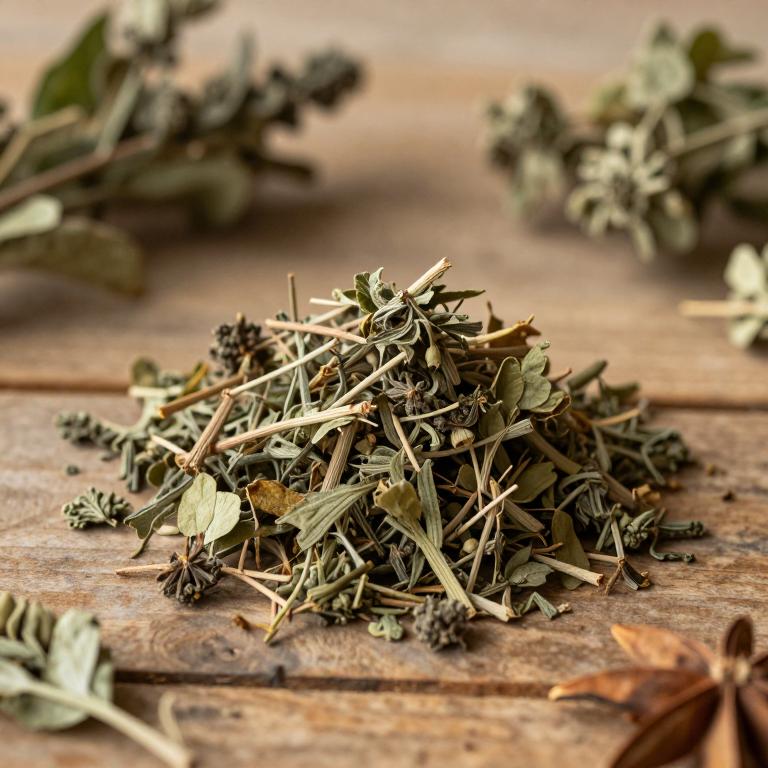
Names and Synonyms
Common Names
- turmerics
- Tumerics and allies
Scientific Names
Accepted name
CurcumaSynonyms
- Paracautleya
- Kua
- Laosanthus
- Hitcheniopsis
- Smithatris
- Hitchenia
- Dischema
- Erndlia
- Stahlianthus
Regional and Traditional Names
French:
- Curcumas
Sources: Wikidata, Catalogue of Life
Taxonomical Classification
This plant belongs to the kingdom Plantae within the phylum Streptophyta and the class Equisetopsida. Under the subclass Magnoliidae, it is categorized within the order Zingiberales and the family Zingiberaceae. Finally, its specific taxonomic classification falls under the genus Curcuma.
| Rank | Classification |
|---|---|
| Kingdom | Plantae |
| Phylum | Streptophyta |
| Class | Equisetopsida |
| Subclass | Magnoliidae |
| Order | Zingiberales |
| Family | Zingiberaceae |
| Genus | Curcuma |
Sources: The World Checklist of Vascular Plants (WCVP)
Distribution
This plant exhibits a specific distribution pattern primarily centered within the tropical regions of the African continent. In West Tropical Africa, it can be found growing in Guinea-Bissau and the Ivory Coast. Its presence extends into West-Central Tropical Africa, where it is documented in the Congo. Additionally, the species inhabits the islands located within the Gulf of Guinea. Finally, the geographical range reaches further into the heart of the continent within the DR Congo.
| Region | Area |
|---|---|
| West Tropical Africa | Guinea-Bissau |
| West Tropical Africa | Ivory Coast |
| West-Central Tropical Africa | Congo |
| West-Central Tropical Africa | Gulf of Guinea Is. |
| West-Central Tropical Africa | DR Congo |
| Western Indian Ocean | Comoros |
| Western Indian Ocean | Mauritius |
| Western Indian Ocean | Madagascar |
| Western Indian Ocean | Réunion |
| China | China South-Central |
Sources: The World Checklist of Vascular Plants (WCVP)
Plant Parts
Curcuma has 3 reported plant parts identified across 11 scientific publications and several other databases that are studied for medicinal purposes. The most consistently reported plant part include rhizome, root, leaf.
| Plant part | Supporting sources | Consensus |
|---|---|---|
| Rhizome | 7 supporting sources | ★★★★☆ |
| Root | 3 supporting sources | ★★☆☆☆ |
| Leaf | 1 supporting sources | ★☆☆☆☆ |
Rhizome
- The Journal of pharmacy and pharmacology
- Hua xi yi ke da xue xue bao = Journal of West China University of Medical Sciences = Huaxi yike daxue xuebao
- Food chemistry
- Molecules (Basel, Switzerland)
- Journal of natural medicines
View 2 additional sources
- Zhongguo Zhong yao za zhi = Zhongguo zhongyao zazhi = China journal of Chinese materia medica
- Plants (Basel, Switzerland)
Root
- Hua xi yi ke da xue xue bao = Journal of West China University of Medical Sciences = Huaxi yike daxue xuebao
- The Analyst
- Nederlands tijdschrift voor geneeskunde
Leaf
- Zhongguo Zhong yao za zhi = Zhongguo zhongyao zazhi = China journal of Chinese materia medica
Chemicals
Curcuma has 15 reported phytochemicals identified across 11 scientific publications and several other databases. The most consistently reported chemicals include Curcuminoids, curcumin, Bisdemethoxycurcumin, Caryophyllene oxide, Curcumol.
| Chemical | Supporting sources | Consensus |
|---|---|---|
| Curcuminoids | 2 supporting sources | ★☆☆☆☆ |
| curcumin | 2 supporting sources | ★☆☆☆☆ |
| Bisdemethoxycurcumin | 1 supporting sources | ★☆☆☆☆ |
| Caryophyllene oxide | 1 supporting sources | ★☆☆☆☆ |
| Curcumol | 1 supporting sources | ★☆☆☆☆ |
| Curdione | 1 supporting sources | ★☆☆☆☆ |
| Curlone | 1 supporting sources | ★☆☆☆☆ |
| D-Limonene | 1 supporting sources | ★☆☆☆☆ |
| Demethoxycurcumin | 1 supporting sources | ★☆☆☆☆ |
| Phytoestrogen | 1 supporting sources | ★☆☆☆☆ |
Curcuminoids
- Zhongguo Zhong yao za zhi = Zhongguo zhongyao zazhi = China journal of Chinese materia medica
- International journal of pharmaceutics
curcumin
- Zhongguo Zhong yao za zhi = Zhongguo zhongyao zazhi = China journal of Chinese materia medica
- Current pharmaceutical design
Bisdemethoxycurcumin
- Zhongguo Zhong yao za zhi = Zhongguo zhongyao zazhi = China journal of Chinese materia medica
Caryophyllene oxide
- Plants (Basel, Switzerland)
Curcumol
- Zhongguo Zhong yao za zhi = Zhongguo zhongyao zazhi = China journal of Chinese materia medica
Curdione
- Zhongguo Zhong yao za zhi = Zhongguo zhongyao zazhi = China journal of Chinese materia medica
Curlone
- Plants (Basel, Switzerland)
D-Limonene
- Plants (Basel, Switzerland)
Demethoxycurcumin
- Zhongguo Zhong yao za zhi = Zhongguo zhongyao zazhi = China journal of Chinese materia medica
Phytoestrogen
- Journal of natural medicines
Activities
Curcuma has 3 reported activities identified across 11 scientific publications and several other databases. The most consistently reported activities include Antiinflammatory, Antioxidant, Antiprotozoal.
| Activity | Supporting sources | Consensus |
|---|---|---|
| Antiinflammatory | 1 supporting sources | ★☆☆☆☆ |
| Antioxidant | 1 supporting sources | ★☆☆☆☆ |
| Antiprotozoal | 1 supporting sources | ★☆☆☆☆ |
Antiinflammatory
- Ciba Foundation symposium
Antioxidant
- Current pharmaceutical design
Antiprotozoal
- Molecules (Basel, Switzerland)
Conditions
Curcuma has 10 reported investigations on conditions identified across 11 scientific publications and several other databases. The most consistently reported conditions include gastrointestinal disorders, amenorrhea, arthritis, cancer, dysmenorrhea.
| Condition | Supporting sources | Consensus |
|---|---|---|
| Gastrointestinal disorders | 2 supporting sources | ★☆☆☆☆ |
| Amenorrhea | 1 supporting sources | ★☆☆☆☆ |
| Arthritis | 1 supporting sources | ★☆☆☆☆ |
| Cancer | 1 supporting sources | ★☆☆☆☆ |
| Dysmenorrhea | 1 supporting sources | ★☆☆☆☆ |
| Inflammation | 1 supporting sources | ★☆☆☆☆ |
| Leprosy | 1 supporting sources | ★☆☆☆☆ |
| Obesity | 1 supporting sources | ★☆☆☆☆ |
| Pain | 1 supporting sources | ★☆☆☆☆ |
| Wounds | 1 supporting sources | ★☆☆☆☆ |
Gastrointestinal disorders
- Nutrients
- Chemistry & biodiversity
Amenorrhea
- Zhongguo Zhong yao za zhi = Zhongguo zhongyao zazhi = China journal of Chinese materia medica
Arthritis
- Chemistry & biodiversity
Cancer
- Nutrients
Dysmenorrhea
- Zhongguo Zhong yao za zhi = Zhongguo zhongyao zazhi = China journal of Chinese materia medica
Inflammation
- Chemistry & biodiversity
Leprosy
- Chemistry & biodiversity
Obesity
- Chemistry & biodiversity
Pain
- Nutrients
Wounds
- Nutrients
Preparations
Curcuma has 21 reported preparations identified across 11 scientific publications and several other databases. The most consistently reported preparations include extracts, Curcuma crude drugs, Essential oils, Ezhu, SHEN QI JIN KANG (SQJK) capsule.
| Preparation | Supporting sources | Consensus |
|---|---|---|
| Extracts | 2 supporting sources | ★☆☆☆☆ |
| Curcuma crude drugs | 1 supporting sources | ★☆☆☆☆ |
| Essential oils | 1 supporting sources | ★☆☆☆☆ |
| Ezhu | 1 supporting sources | ★☆☆☆☆ |
| Shen qi jin kang (sqjk) capsule | 1 supporting sources | ★☆☆☆☆ |
| Crude extract | 1 supporting sources | ★☆☆☆☆ |
| Dried curcuma rhizomes | 1 supporting sources | ★☆☆☆☆ |
| Dried hexane-extracted essential oils | 1 supporting sources | ★☆☆☆☆ |
| Dried hydrodistilled essential oil | 1 supporting sources | ★☆☆☆☆ |
| Extract | 1 supporting sources | ★☆☆☆☆ |
Extracts
- CNS & neurological disorders drug targets
- Molecules (Basel, Switzerland)
Curcuma crude drugs
- Journal of natural medicines
Essential oils
- Foods (Basel, Switzerland)
Ezhu
- Yao xue xue bao = Acta pharmaceutica Sinica
Shen qi jin kang (sqjk) capsule
- Ai zheng = Aizheng = Chinese journal of cancer
Crude extract
- Inflammation research : official journal of the European Histamine Research Society ... [et al.]
Dried curcuma rhizomes
- Plants (Basel, Switzerland)
Dried hexane-extracted essential oils
- Plants (Basel, Switzerland)
Dried hydrodistilled essential oil
- Plants (Basel, Switzerland)
Extract
- European journal of drug metabolism and pharmacokinetics