black turmeric
Curcuma caesia · Accepted scientific name
Scientific literature: Sparse (52 studies) · ★★☆☆☆
Black turmeric, scientifically known as Curcuma caesia, is a remarkable medicinal plant prized in traditional Ayurvedic medicine. Distinguished by its striking blue stems, this perennial herb offers profound therapeutic benefits. Rich in bioactive compounds, it is widely utilized for its potent anti-inflammatory, antioxidant, and antimicrobial properties in holistic healing.
- Family
- Zingiberaceae
- Native range
- Asia-Tropical
- Parts used
- Rhizome
- Common names
- Black Turmeric · Black Zedoary · 1 more
- Scientific synonyms
- Curcuma Kuchoor
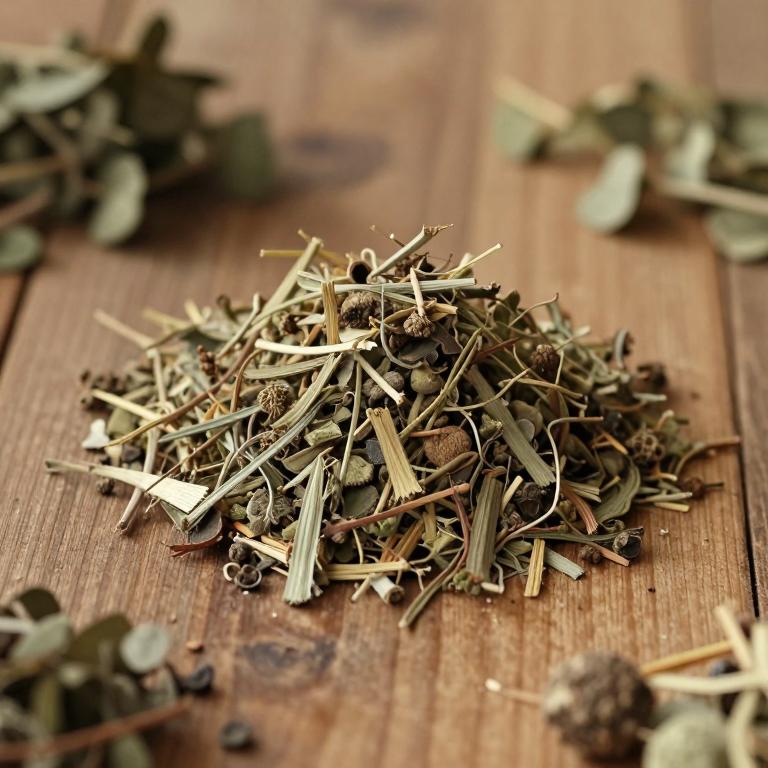
Names and Synonyms
Common Names
- black turmeric
- black zedoary
- Black Tumeric
Scientific Names
Accepted name
Curcuma caesiaSynonyms
- Curcuma kuchoor
Regional and Traditional Names
French:
- Curcuma noir
Sources: Wikidata, Catalogue of Life
Taxonomical Classification
This plant belongs to the kingdom Plantae and the phylum Streptophyta, falling under the class Equisetopsida and subclass Magnoliidae. Within the order Zingiberales, it is a member of the family Zingiberaceae. It is specifically classified under the genus Curcuma.
| Rank | Classification |
|---|---|
| Kingdom | Plantae |
| Phylum | Streptophyta |
| Class | Equisetopsida |
| Subclass | Magnoliidae |
| Order | Zingiberales |
| Family | Zingiberaceae |
| Genus | Curcuma |
Sources: The World Checklist of Vascular Plants (WCVP)
Distribution
This plant exhibits a specific distribution pattern centered within the Indian Subcontinent. It can be found growing across various regions of India, showcasing its local importance. Furthermore, its presence extends into the diverse landscapes of Bangladesh. The species is also documented within the unique ecological zones of the East Himalaya. Together, these locations define the primary natural range of Curcuma caesia.
| Region | Area |
|---|---|
| Indian Subcontinent | Bangladesh |
| Indian Subcontinent | East Himalaya |
| Indian Subcontinent | India |
Sources: The World Checklist of Vascular Plants (WCVP)
Botanical Identification
Life history
The life history of Curcuma caesia is characterized by its specialized survival strategy as a perennial herb that relies on underground storage organs to endure unfavorable environmental conditions. Classified primarily as a geophyte, the plant maintains its persistence through the development of thick, fleshy rhizomes located beneath the soil surface, which serve as reservoirs for nutrients and water. This life form is further categorized under the broader group of crypto-phytes, meaning that its vital regenerative parts are protected from seasonal stressors by being concealed underground. During the favorable growing seasons, the plant emerges from these rhizomes to produce its aerial vegetative structures, but as the environment shifts, the above-ground parts may perish, leaving the subterranean systems to remain dormant until favorable conditions return to trigger a new cycle of growth.
- Life form :
- geophyte
- Life form :
- cryptophyte
Morphology
The morphology of Curcuma caesia is characterized by its growth habit as a self-supporting plant, as it does not function as a climber and lacks any obligatory or facultative climbing mechanisms. It is an independent organism that does not exhibit parasitic behavior, maintaining its own nutritional processes without relying on a host. Furthermore, the plant is strictly terrestrial in its ecological niche, rather than being an epiphyte, growing directly within the soil substrate.
- Climber :
- self-supporting
- Epiphyte :
- terrestrial
- Parasite :
- independent
Sources: Global Inventory of Floras and Traits (GIFT)
Plant Parts
Curcuma caesia has 1 reported plant parts identified across 2 scientific publications and several other databases that are studied for medicinal purposes. The most consistently reported plant part include rhizome.
| Plant part | Supporting sources | Consensus |
|---|---|---|
| Rhizome | 2 supporting sources | ★☆☆☆☆ |
Rhizome
- AMB Express
- Scientific reports
Chemicals
Curcuma caesia has 26 reported phytochemicals identified across 2 scientific publications and several other databases. The most consistently reported chemicals include Epicurzerenone, Sesquiterpenes, Zederone, camphor, 4-Terpineol.
| Chemical | Supporting sources | Consensus |
|---|---|---|
| Epicurzerenone | 2 supporting sources | ★☆☆☆☆ |
| Sesquiterpenes | 2 supporting sources | ★☆☆☆☆ |
| Zederone | 2 supporting sources | ★☆☆☆☆ |
| camphor | 2 supporting sources | ★☆☆☆☆ |
| 4-Terpineol | 1 supporting sources | ★☆☆☆☆ |
| Aerugidiol | 1 supporting sources | ★☆☆☆☆ |
| BETA-ELEMENE | 1 supporting sources | ★☆☆☆☆ |
| Boldenone | 1 supporting sources | ★☆☆☆☆ |
| CALCIUM | 1 supporting sources | ★☆☆☆☆ |
| Calebin A | 1 supporting sources | ★☆☆☆☆ |
Epicurzerenone
- Journal of complementary & integrative medicine
- Current pharmaceutical biotechnology
Sesquiterpenes
- Ecotoxicology and environmental safety
- Scientific reports
Zederone
- Chemistry & biodiversity
- Journal of complementary & integrative medicine
camphor
- Current pharmaceutical biotechnology
- Frontiers in pharmacology
4-Terpineol
- Ecotoxicology and environmental safety
Aerugidiol
- In silico pharmacology
BETA-ELEMENE
- International journal of mycobacteriology
Boldenone
- International journal of mycobacteriology
CALCIUM
- Journal of food science and technology
Calebin A
- AMB Express
Activities
Curcuma caesia has 6 reported activities identified across 2 scientific publications and several other databases. The most consistently reported activities include Antioxidant, Antiarthritic, Antibacterial, Antidiabetic, Antimicrobial.
| Activity | Supporting sources | Consensus |
|---|---|---|
| Antioxidant | 2 supporting sources | ★☆☆☆☆ |
| Antiarthritic | 1 supporting sources | ★☆☆☆☆ |
| Antibacterial | 1 supporting sources | ★☆☆☆☆ |
| Antidiabetic | 1 supporting sources | ★☆☆☆☆ |
| Antimicrobial | 1 supporting sources | ★☆☆☆☆ |
| Gastroprotective | 1 supporting sources | ★☆☆☆☆ |
Antioxidant
- Current pharmaceutical biotechnology
- Scientific reports
Antiarthritic
- In silico pharmacology
Antibacterial
- Current pharmaceutical biotechnology
Antidiabetic
- Scientific reports
Antimicrobial
- Current pharmaceutical biotechnology
Gastroprotective
- Frontiers in pharmacology
Conditions
Curcuma caesia has 11 reported investigations on conditions identified across 2 scientific publications and several other databases. The most consistently reported conditions include Mycobacterium smegmatis, Oral cancer, antioxidant, arthritis, bacteria.
| Condition | Supporting sources | Consensus |
|---|---|---|
| Mycobacterium smegmatis | 1 supporting sources | ★☆☆☆☆ |
| Oral cancer | 1 supporting sources | ★☆☆☆☆ |
| Antioxidant | 1 supporting sources | ★☆☆☆☆ |
| Arthritis | 1 supporting sources | ★☆☆☆☆ |
| Bacteria | 1 supporting sources | ★☆☆☆☆ |
| Cancer | 1 supporting sources | ★☆☆☆☆ |
| Fungus | 1 supporting sources | ★☆☆☆☆ |
| Gastric ulcer | 1 supporting sources | ★☆☆☆☆ |
| Gastrointestinal disorders | 1 supporting sources | ★☆☆☆☆ |
| Inflammation | 1 supporting sources | ★☆☆☆☆ |
Mycobacterium smegmatis
- International journal of mycobacteriology
Oral cancer
- Chemistry & biodiversity
Antioxidant
- Scientific reports
Arthritis
- In silico pharmacology
Bacteria
- Current pharmaceutical biotechnology
Cancer
- Journal of complementary & integrative medicine
Fungus
- Current pharmaceutical biotechnology
Gastric ulcer
- Frontiers in pharmacology
Gastrointestinal disorders
- Frontiers in pharmacology
Inflammation
- Journal of complementary & integrative medicine
Preparations
Curcuma caesia has 2 reported preparations identified across 2 scientific publications and several other databases. The most consistently reported preparations include dry rhizome powder, hexane extract.
| Preparation | Supporting sources | Consensus |
|---|---|---|
| Dry rhizome powder | 1 supporting sources | ★☆☆☆☆ |
| Hexane extract | 1 supporting sources | ★☆☆☆☆ |
Dry rhizome powder
- International journal of mycobacteriology
Hexane extract
- Chemistry & biodiversity