Siam Tulip
Curcuma alismatifolia · Accepted scientific name
Scientific literature: Very Sparse (3 studies) · ★☆☆☆☆
Siam Tulip, scientifically known as Curcumma alismatifolia, is a stunning perennial plant cherished for its vibrant, exotic blooms. Beyond its ornamental beauty, it holds significant value in traditional medicine. Its rhizomes are frequently utilized for their therapeutic properties, offering potential benefits in managing various ailments and promoting holistic wellness.
- Family
- Zingiberaceae
- Native range
- Asia-Tropical
- Parts used
- Not available
- Common names
- Siam Tulip
- Scientific synonyms
- Hitcheniopsis Alismatifolia
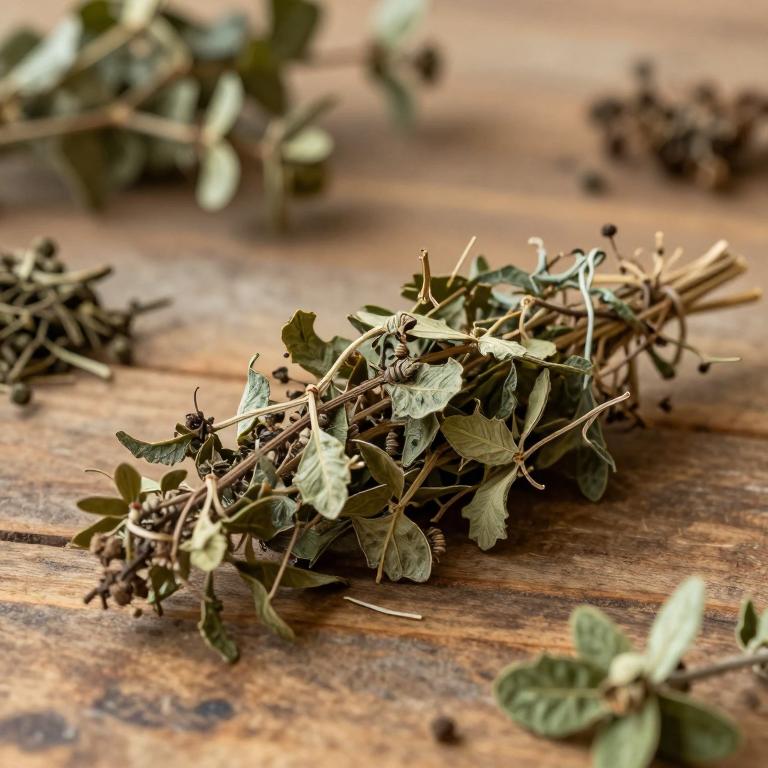
Names and Synonyms
Common Names
- Siam Tulip
Scientific Names
Accepted name
Curcuma alismatifoliaSynonyms
- Hitcheniopsis alismatifolia
Sources: Wikidata, Catalogue of Life
Taxonomical Classification
This plant belongs to the kingdom Plantae and the phylum Streptophyta, falling under the class Equisetopsida and subclass Magnoliidae. It is further classified within the order Zingiberales and the family Zingiberaceae. Finally, its taxonomic position is defined by the genus Curcuma, specifically as the species Curcuma alismatiifolia.
| Rank | Classification |
|---|---|
| Kingdom | Plantae |
| Phylum | Streptophyta |
| Class | Equisetopsida |
| Subclass | Magnoliidae |
| Order | Zingiberales |
| Family | Zingiberaceae |
| Genus | Curcuma |
Sources: The World Checklist of Vascular Plants (WCVP)
Distribution
This plant, Curcuma alismatifolia, is primarily found within the diverse landscapes of the Indo-China region. Its natural geographical distribution spans across several distinct Southeast Asian countries. Specifically, it can be located in the lush environments of Cambodia and Laos. Furthermore, the species is well-established within the territories of Thailand and Vietnam. Together, these nations represent the core areas where this medicinal plant thrives.
| Region | Area |
|---|---|
| Indo-China | Cambodia |
| Indo-China | Laos |
| Indo-China | Thailand |
| Indo-China | Vietnam |
Sources: The World Checklist of Vascular Plants (WCVP)
Botanical Identification
Life history
The life history of Curcuma alismatiifolia is characterized by its status as a perennial plant, allowing it to persist through multiple growing seasons. As a geophyte, it survives unfavorable environmental periods by storing nutrients and moisture in underground structures, which facilitates its regeneration. This life form further classifies the species as a cryptophyte, meaning its vital growing points are protected beneath the soil surface, ensuring its survival against seasonal changes or external stressors.
- Life form :
- geophyte
- Life form :
- cryptophyte
- Lifecycle :
- perennial
Morphology
The morphology of Curcuma alismatifolia is characterized by its growth form as a non-woody herb. The plant typically reaches a mean height of approximately 0.6 m, maintaining a self-supporting structure without the need for external climbing assistance. As a terrestrial organism, it grows independently in its habitat, functioning as an independent plant rather than a parasite or an epiphyte.
- Climber :
- self-supporting
- Epiphyte :
- terrestrial
- Growth form :
- herb
- Parasite :
- independent
- Plant height mean:
- 0.6 m
- Woodiness :
- non-woody
Physiology
The physiology of Curcuma alismatifolia is characterized by its metabolic processes as a perennial herbaceous plant, primarily driven by its rhizomatous structure which serves as a specialized organ for nutrient and water storage. Its physiological activity is centered on efficient photosynthetic pathways within its broad, lanceolate leaves to facilitate carbohydrate synthesis, which is subsequently translocated to the underground rhizomes for long-term energy reserves. Regarding its nutrient acquisition processes, the plant does not engage in symbiotic nitrogen fixation; it lacks the physiological mechanisms and specialized root nodules required to convert atmospheric nitrogen into usable forms, meaning it is not a nitrogen fixer. Instead, it relies on the uptake of dissolved nitrates and ammonium from the soil through its fibrous root system to support its vegetative growth and reproductive cycles.
- Nitrogen fixer :
- no
Sources: Global Inventory of Floras and Traits (GIFT)
Chemicals
Curcuma alismatifolia has 3 reported phytochemicals identified across 0 scientific publications and several other databases. The most consistently reported chemicals include ANTHOCYANIN, Anthocyanins, Terpenoids.
| Chemical | Supporting sources | Consensus |
|---|---|---|
| ANTHOCYANIN | 1 supporting sources | ★☆☆☆☆ |
| Anthocyanins | 1 supporting sources | ★☆☆☆☆ |
| Terpenoids | 1 supporting sources | ★☆☆☆☆ |
ANTHOCYANIN
- Frontiers in plant science
Anthocyanins
- Frontiers in plant science
Terpenoids
- Frontiers in plant science