lavender-lady
Cuphea glutinosa · Accepted scientific name
Scientific literature: Very Sparse (9 studies) · ★☆☆☆☆
lavender-lady, scientifically known as Cuphea glutinosa, is a fascinating medicinal plant native to tropical regions. Renowned for its vibrant blooms and unique therapeutic properties, this species is often utilized in traditional healing practices. It offers significant potential in pharmacological research, particularly for its diverse bioactive compounds and antioxidant benefits.
- Family
- Lythraceae
- Native range
- Africa
- Parts used
- Leaf
- Common names
- Lavender-Lady
- Scientific synonyms
- Parsonsia Glutinosa · Cuphea Hirsuta
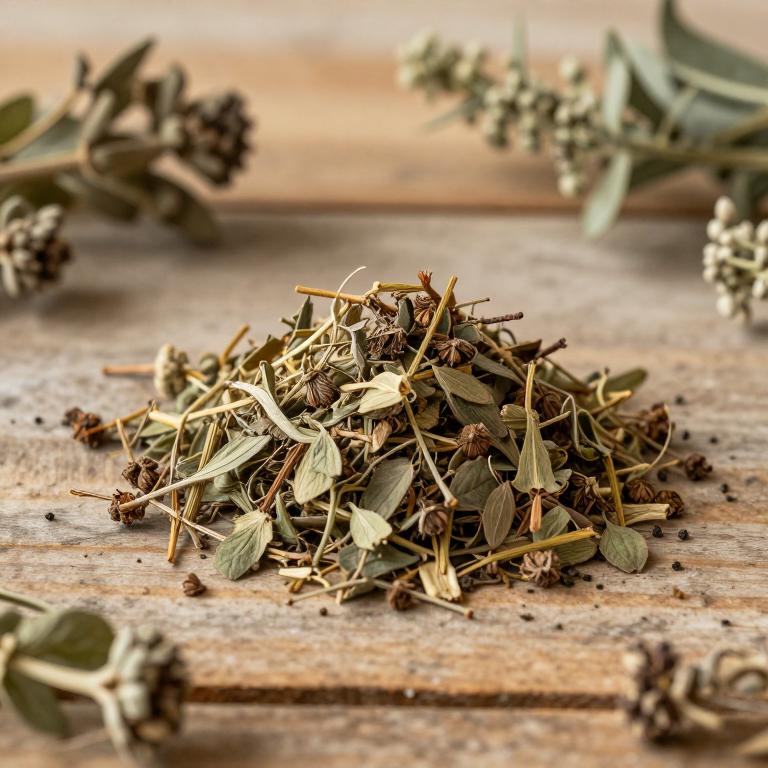
Names and Synonyms
Common Names
- lavender-lady
Scientific Names
Accepted name
Cuphea glutinosaSynonyms
- Parsonsia glutinosa
- Cuphea hirsuta
Regional and Traditional Names
Spanish:
- siete sangrías
Sources: Wikidata, Catalogue of Life
Taxonomical Classification
This plant belongs to the kingdom Plantae and is classified under the phylum Streptophyta and the class Equisetopsida. Within the subclass Magnoliidae, it is organized under the order Myrtaleales and the family Lythraceae. Finally, it is categorized under the genus Cuphea as the species Cuphea glutinosa.
| Rank | Classification |
|---|---|
| Kingdom | Plantae |
| Phylum | Streptophyta |
| Class | Equisetopsida |
| Subclass | Magnoliidae |
| Order | Myrtales |
| Family | Lythraceae |
| Genus | Cuphea |
Sources: The World Checklist of Vascular Plants (WCVP)
Distribution
This plant exhibits a diverse and wide-ranging geographical distribution across several continents. In the Western Indian Ocean, it can be found specifically in Mauritius. Moving to the Americas, its presence extends to the South-Central United States in Texas and the Southeastern United States in Louisiana. Its reach also covers Western South America, particularly within the borders of Bolivia. Finally, the species is located in the northeastern region of Brazil.
| Region | Area |
|---|---|
| Western Indian Ocean | Mauritius |
| South-Central U.S.A. | Texas |
| Southeastern U.S.A. | Louisiana |
| Western South America | Bolivia |
| Brazil | Brazil Northeast |
| Brazil | Brazil Southeast |
| Brazil | Brazil South |
| Southern South America | Argentina Northeast |
| Southern South America | Argentina Northwest |
| Southern South America | Paraguay |
Sources: The World Checklist of Vascular Plants (WCVP)
Botanical Identification
Ecology
The ecology of Cuphea glutinosa is characterized by its presence within the Cerrado (latto sensu) biome, where it thrives in the unique environmental conditions of these tropical savanna ecosystems. This species exhibits a broad vertical distribution across varied landscapes, occupying an elevational range that begins at sea level (0 m AMSL) and extends up to a maximum altitude of 1700 m AMSL. This wide altitudinal gradient suggests an adaptable nature, allowing the plant to inhabit diverse microclimates ranging from lowland plains to higher-altitude montane formations within its native habitat.
- Elevational range max:
- 1700 m AMSL
- Elevational range min:
- 0 m AMSL
- Habitat :
- Cerrado (lato sensu)
Life history
The life history of Cuphea glutinosa is characterized by its nature as a perennial organism, allowing it to persist through multiple growing seasons. As a perennial species, it maintains a long-term presence in its ecological niche, often exhibiting a variable growth pattern depending on environmental stability and resource availability. This lifecycle enables the plant to establish robust root systems that support continuous development, enabling it to survive seasonal shifts and potentially recover from periods of stress more effectively than annual or biennial species. Throughout its extended lifespan, the plant undergoes repetitive cycles of vegetative growth and reproductive phases, contributing to its long-term survival and ability to colonize specific habitats.
- Lifecycle :
- perennial
Morphology
The morphology of Cuphea glutinosa is characterized by a growth form primarily classified as a herb or a forb, exhibiting a non-woody structure. It is a self-supporting plant, lacking the climbing mechanisms of a liana or vine, and functions as an independent organism rather than a parasite. In terms of its life habit, it is a terrestrial species, not categorized as aquatic, semiaquatic, or an epiphyte. The plant typically reaches a mean height of approximately 0.3 m.
- Aquatic :
- terrestrial
- Climber :
- self-supporting
- Epiphyte :
- terrestrial
- Growth form :
- herb
- Growth form :
- forb
- Parasite :
- independent
- Plant height mean:
- 0.3 m
- Woodiness :
- non-woody
Physiology
The physiology of Cuphea glutinosa is characterized by a C3 photosynthetic pathway, utilizing the standard Calvin cycle for carbon fixation during the light-independent reactions. In terms of its nutrient acquisition processes, the plant is not a nitrogen fixer, meaning it lacks the symbiotic relationship with nitrogen-fixing bacteria required to convert atmospheric nitrogen into a usable form and must instead rely on the uptake of nitrates or ammonium from the soil.
- Nitrogen fixer :
- no
- Photosynthetic pathway :
- C3
Sources: Global Inventory of Floras and Traits (GIFT)
Plant Parts
Cuphea glutinosa has 1 reported plant parts identified across 1 scientific publications and several other databases that are studied for medicinal purposes. The most consistently reported plant part include leaf.
| Plant part | Supporting sources | Consensus |
|---|---|---|
| Leaf | 1 supporting sources | ★☆☆☆☆ |
Leaf
- Talanta
Chemicals
Cuphea glutinosa has 2 reported phytochemicals identified across 1 scientific publications and several other databases. The most consistently reported chemicals include Flavonoids, Miquelianin.
| Chemical | Supporting sources | Consensus |
|---|---|---|
| Flavonoids | 1 supporting sources | ★☆☆☆☆ |
| Miquelianin | 1 supporting sources | ★☆☆☆☆ |
Flavonoids
- Talanta
Miquelianin
- Talanta
Activities
Cuphea glutinosa has 3 reported activities identified across 1 scientific publications and several other databases. The most consistently reported activities include Antimicrobial, Antioxidant, Diuretic.
| Activity | Supporting sources | Consensus |
|---|---|---|
| Antimicrobial | 1 supporting sources | ★☆☆☆☆ |
| Antioxidant | 1 supporting sources | ★☆☆☆☆ |
| Diuretic | 1 supporting sources | ★☆☆☆☆ |
Antimicrobial
- Talanta
Antioxidant
- Talanta
Diuretic
- Talanta
Conditions
Cuphea glutinosa has 3 reported investigations on conditions identified across 1 scientific publications and several other databases. The most consistently reported conditions include anti-hypertensives, antioxidant, diuretic.
| Condition | Supporting sources | Consensus |
|---|---|---|
| Anti-hypertensives | 1 supporting sources | ★☆☆☆☆ |
| Antioxidant | 1 supporting sources | ★☆☆☆☆ |
| Diuretic | 1 supporting sources | ★☆☆☆☆ |
Anti-hypertensives
- Talanta
Antioxidant
- Talanta
Diuretic
- Talanta