Colombian waxweed
Cuphea carthagenensis · Accepted scientific name
Scientific literature: Very Sparse (48 studies) · ★☆☆☆☆
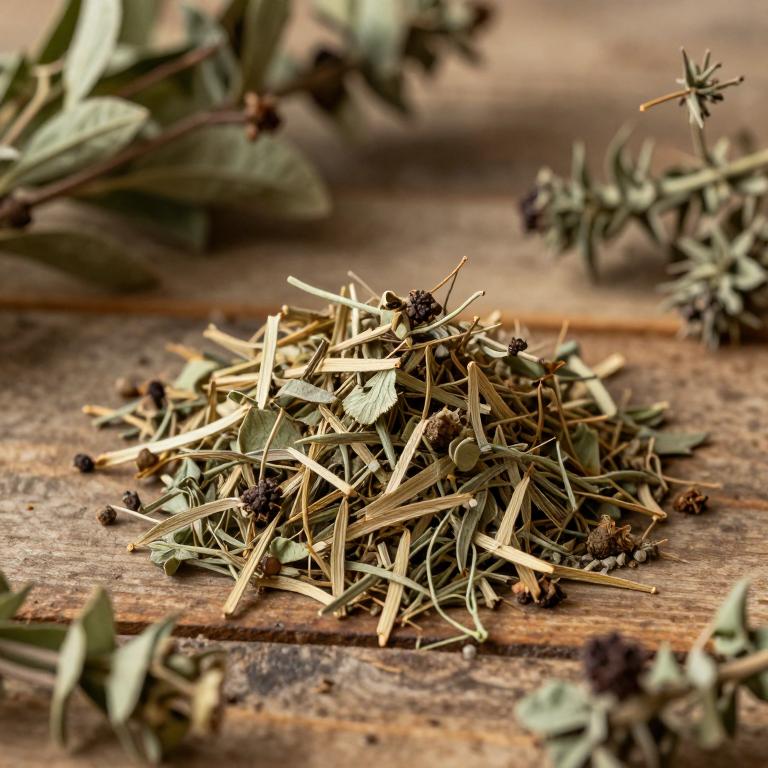
Colombian waxweed, scientifically known as Cuphea carthagenensis, is a versatile medicinal plant native to tropical regions. Renowned for its diverse therapeutic properties, it is traditionally used to treat skin ailments, inflammation, and digestive issues. This resilient herb offers significant pharmacological potential for developing natural remedies in modern herbal medicine.
Names and Synonyms
Common Names
- Columbian cuphea
- tarweed
- Colombian cuphea
- San Antonio
Scientific Names
Accepted name
Cuphea carthagenensisSynonyms
- Lythrum carthagenense
- Balsamona pinto
- Cuphea balsamona
- Cuphea peplidioides
- Cuphea prunellifolia
- Cuphea divaricata
- Parsonsia balsamona
- Parsonsia pinto
Regional and Traditional Names
Spanish:
- escobilla
- Santa Lucia
- nicaragüita
- quiebrapiedras
- siete sangrías
French:
- Petite Violette
Sources: Wikidata, Catalogue of Life
Taxonomical Classification
This plant belongs to the kingdom Plantae and is classified under the phylum Streptophyta and class Equisetopsida. Within the subclass Magnoliidae, it is organized under the order Myrtales and the family Lythraceae. Finally, its specific taxonomic placement is within the genus Cuphea.
| Rank | Classification |
|---|---|
| Kingdom | Plantae |
| Phylum | Streptophyta |
| Class | Equisetopsida |
| Subclass | Magnoliidae |
| Order | Myrtales |
| Family | Lythraceae |
| Genus | Cuphea |
Sources: The World Checklist of Vascular Plants (WCVP)
Distribution
This plant exhibits a wide-ranging geographical distribution across several distinct global regions. Within the Macaronesian islands, it can be found located in the Azores. Its presence extends into West Tropical Africa, specifically within the countries of Guinea and Liberia. Furthermore, it is documented in West-Central Tropical Africa, particularly in Cameroon. Finally, the species reaches East Asia, where it is distributed in China Southeast.
| Region | Area |
|---|---|
| Macaronesia | Azores |
| West Tropical Africa | Guinea |
| West Tropical Africa | Liberia |
| West-Central Tropical Africa | Cameroon |
| China | China Southeast |
| Eastern Asia | Nansei-shoto |
| Eastern Asia | Taiwan |
| Indian Subcontinent | Assam |
| Indian Subcontinent | Bangladesh |
| Indian Subcontinent | East Himalaya |
Sources: The World Checklist of Vascular Plants (WCVP)
Botanical Identification
Ecology
The ecology of Cuphea carthagenensis is characterized by its remarkable adaptability to diverse vertical gradients and human-altered landscapes. This species exhibits a broad altitudinal distribution, thriving in environments ranging from sea level up to an elevation of 2600 m AMSL. Its habitat preferences are notably tied to anthropogenic areas (Área Antrópica), indicating a high tolerance for disturbed sites, cultivated lands, or urbanized surroundings where human activity has modified the natural landscape. This ability to colonize human-impacted zones across such a vast elevational spectrum suggests a resilient ecological strategy capable of enduring varying climatic conditions and soil compositions found from lowland coastal regions to high-altitude terrains.
- Elevational range max:
- 2600 m AMSL
- Elevational range min:
- 0 m AMSL
- Habitat :
- Área Antrópica
Genetics
The genetics of Cuphea cartagenensis are characterized by a specific karyotype that serves as a fundamental metric for its cytogenetic classification. The plant possesses a diploid chromosome number of 16, a stable genomic configuration that underlies its reproductive biology and inheritance patterns. This chromosomal count is a key genetic marker within the genus Cuphea, influencing the complexity of its genome and providing a basis for studying its evolutionary divergence and potential polyploidy events. The stability of this 16-chromosome arrangement plays a critical role in maintaining meiotic regularity and ensuring the successful transmission of genetic information across generations.
- Chromosome number :
- 16
Life history
The life history of Cuphea carthagenensis is characterized by its classification as a perennial plant, allowing it to persist through multiple growing seasons. In terms of its structural growth habit and life form, it functions as a therophyte, a strategy typically defined by completing its life cycle via seeds and surviving unfavorable conditions in a dormant state. This specific life form categorization is consistent across its developmental stages, identifying it as a therophyte in both its primary and secondary life form classifications.
- Life form :
- therophyte
- Lifecycle :
- perennial
Morphology
The morphology of Cuphea carthagenensis is characterized by a growth form primarily consisting of a non-woody herb or forb. It functions as a self-supporting plant, rather than a climber or liana, and maintains an independent lifestyle without acting as a parasite. In terms of its ecological habit, it is a terrestrial species, lacking epiphytic qualities. The plant is relatively small in stature, with a height ranging from a minimum of 0.15 m to a maximum of 0.6 m. While it can exist in varying moisture gradients, its primary classification within these traits is terrestrial, distinguishing it from strictly aquatic or semiaquatic life forms.
- Aquatic :
- terrestrial
- Climber :
- self-supporting
- Epiphyte :
- terrestrial
- Growth form :
- herb
- Growth form :
- forb
- Parasite :
- independent
- Plant height max:
- 0.6 m
- Plant height min:
- 0.15 m
- Woodiness :
- non-woody
Physiology
The physiology of Cuphea cartagenensis is characterized by specific morphological parameters of its foliage, which serve as key indicators of its metabolic and structural adaptations. The leaves exhibit a variable dimension, with lengths ranging from a minimum of 1 cm to a maximum of 6 cm, while their widths fluctuate between 0.5 cm and 2.6 cm. These dimensions suggest a leaf architecture optimized for efficient light interception within its ecological niche. Furthermore, the plant does not exhibit succulence, indicating that its water storage mechanisms are not localized within thickened, fleshy leaf tissues, but rather rely on other physiological processes for moisture regulation and osmotic balance.
- Leaf length max:
- 6 cm
- Leaf length min:
- 1 cm
- Leaf width max:
- 2.6 cm
- Leaf width min:
- 0.5 cm
- Succulence :
- no
Reproduction
The reproduction of Cuphea carthagenensis is characterized by the production of specialized fruit structures and specific dispersal mechanisms. The plant produces fruit in the form of a capsule, which is a dehiscent type, meaning it is capable of splitting open at maturity to release its contents. The seeds produced within these capsules are notably uniform in size, with a recorded seed mass that maintains a consistent value of 7e-04 g, representing the minimum, mean, and maximum mass. Regarding the movement of progeny, the species utilizes an autochorous dispersal syndrome, relying on self-release mechanisms to distribute its seeds.
- Dehiscence :
- dehiscent
- Dispersal syndrome :
- autochorous
- Fruit type :
- capsule
- Seed mass mean:
- 7e-04 g
Sources: Global Inventory of Floras and Traits (GIFT)
Chemicals
Cuphea carthagenensis has 13 reported phytochemicals identified across 0 scientific publications and several other databases. The most consistently reported chemicals include Alkanes, Flavonoids, Hippuric acid, Sterols, Tannins.
| Chemical | Supporting sources | Consensus |
|---|---|---|
| Alkanes | 1 supporting sources | ★☆☆☆☆ |
| Flavonoids | 1 supporting sources | ★☆☆☆☆ |
| Hippuric acid | 1 supporting sources | ★☆☆☆☆ |
| Sterols | 1 supporting sources | ★☆☆☆☆ |
| Tannins | 1 supporting sources | ★☆☆☆☆ |
| Triterpenes | 1 supporting sources | ★☆☆☆☆ |
| Unsaturated Fatty Acids | 1 supporting sources | ★☆☆☆☆ |
| ascorbic acid | 1 supporting sources | ★☆☆☆☆ |
| betulinic acid | 1 supporting sources | ★☆☆☆☆ |
| ellagic acid | 1 supporting sources | ★☆☆☆☆ |
Alkanes
- Natural product research
Flavonoids
- Natural product research
Hippuric acid
- Journal of ethnopharmacology
Sterols
- Natural product research
Tannins
- Natural product research
Triterpenes
- Natural product research
Unsaturated Fatty Acids
- Natural product research
ascorbic acid
- Journal of ethnopharmacology
betulinic acid
- Dr. Duke
ellagic acid
- Journal of ethnopharmacology
Activities
Cuphea carthagenensis has 21 reported activities identified across 0 scientific publications and several other databases. The most consistently reported activities include Anthelmintic, AntiHIV, Antibacterial, Anticancer, Anticarcinomic.
| Activity | Supporting sources | Consensus |
|---|---|---|
| Anthelmintic | 1 supporting sources | ★☆☆☆☆ |
| AntiHIV | 1 supporting sources | ★☆☆☆☆ |
| Antibacterial | 1 supporting sources | ★☆☆☆☆ |
| Anticancer | 1 supporting sources | ★☆☆☆☆ |
| Anticarcinomic | 1 supporting sources | ★☆☆☆☆ |
| Antiedemic | 1 supporting sources | ★☆☆☆☆ |
| Antihypertensive | 1 supporting sources | ★☆☆☆☆ |
| Antiinflammatory | 1 supporting sources | ★☆☆☆☆ |
| Antileukemic | 1 supporting sources | ★☆☆☆☆ |
| Antimalarial | 1 supporting sources | ★☆☆☆☆ |
Anthelmintic
- Dr. Duke
AntiHIV
- Dr. Duke
Antibacterial
- Dr. Duke
Anticancer
- Dr. Duke
Anticarcinomic
- Dr. Duke
Antiedemic
- Dr. Duke
Antihypertensive
- Phytomedicine : international journal of phytotherapy and phytopharmacology
Antiinflammatory
- Dr. Duke
Antileukemic
- Dr. Duke
Antimalarial
- Dr. Duke
Conditions
Cuphea carthagenensis has 10 reported investigations on conditions identified across 0 scientific publications and several other databases. The most consistently reported conditions include Bacillus subtilis, Staphylococcus epidermidis, Streptococcus pyogenes, antioxidant, atherosclerosis.
| Condition | Supporting sources | Consensus |
|---|---|---|
| Bacillus subtilis | 1 supporting sources | ★☆☆☆☆ |
| Staphylococcus epidermidis | 1 supporting sources | ★☆☆☆☆ |
| Streptococcus pyogenes | 1 supporting sources | ★☆☆☆☆ |
| Antioxidant | 1 supporting sources | ★☆☆☆☆ |
| Atherosclerosis | 1 supporting sources | ★☆☆☆☆ |
| Diuretic effect | 1 supporting sources | ★☆☆☆☆ |
| Herpes simplex virus type 1 | 1 supporting sources | ★☆☆☆☆ |
| Hyperlipidemia | 1 supporting sources | ★☆☆☆☆ |
| Hypertension | 1 supporting sources | ★☆☆☆☆ |
| Type 2 diabetes mellitus | 1 supporting sources | ★☆☆☆☆ |
Bacillus subtilis
- Natural product research
Staphylococcus epidermidis
- Natural product research
Streptococcus pyogenes
- Natural product research
Antioxidant
- Natural product research
Atherosclerosis
- Phytomedicine : international journal of phytotherapy and phytopharmacology
Diuretic effect
- Journal of ethnopharmacology
Herpes simplex virus type 1
- Fitoterapia
Hyperlipidemia
- Journal of ethnopharmacology
Hypertension
- Phytomedicine : international journal of phytotherapy and phytopharmacology
Type 2 diabetes mellitus
- Natural product research
Preparations
Cuphea carthagenensis has 7 reported preparations identified across 0 scientific publications and several other databases. The most consistently reported preparations include crude extracts, extracts, hydroalcoholic extract, infusions, maceration.
| Preparation | Supporting sources | Consensus |
|---|---|---|
| Crude extracts | 1 supporting sources | ★☆☆☆☆ |
| Extracts | 1 supporting sources | ★☆☆☆☆ |
| Hydroalcoholic extract | 1 supporting sources | ★☆☆☆☆ |
| Infusions | 1 supporting sources | ★☆☆☆☆ |
| Maceration | 1 supporting sources | ★☆☆☆☆ |
| Ultrasound-assisted extraction | 1 supporting sources | ★☆☆☆☆ |
| Vortex extraction | 1 supporting sources | ★☆☆☆☆ |
Crude extracts
- Phytotherapy research : PTR
Extracts
- Fitoterapia
Hydroalcoholic extract
- Natural product research
Infusions
- Journal of ethnopharmacology
Maceration
- Natural product research
Ultrasound-assisted extraction
- Natural product research
Vortex extraction
- Natural product research