Cunila spicata
Cunila spicata · Accepted scientific name
Scientific literature: Very Sparse (12 studies) · ★☆☆☆☆
Cunila spicata, scientifically known as Cunila spicata, is a fragrant, aromatic herb belonging to the Lamiaceae family. Commonly called mountain mint, this resilient perennial thrives in open woodlands. Renowned for its essential oils, it offers significant medicinal potential, particularly for its antimicrobial, antioxidant, and soothing therapeutic properties.
- Family
- Lamiaceae
- Native range
- Southern America
- Parts used
- Leaf
- Common names
- Not available
- Scientific synonyms
- Gardoquia Spicata · Hedyosmos Spicatus · 1 more
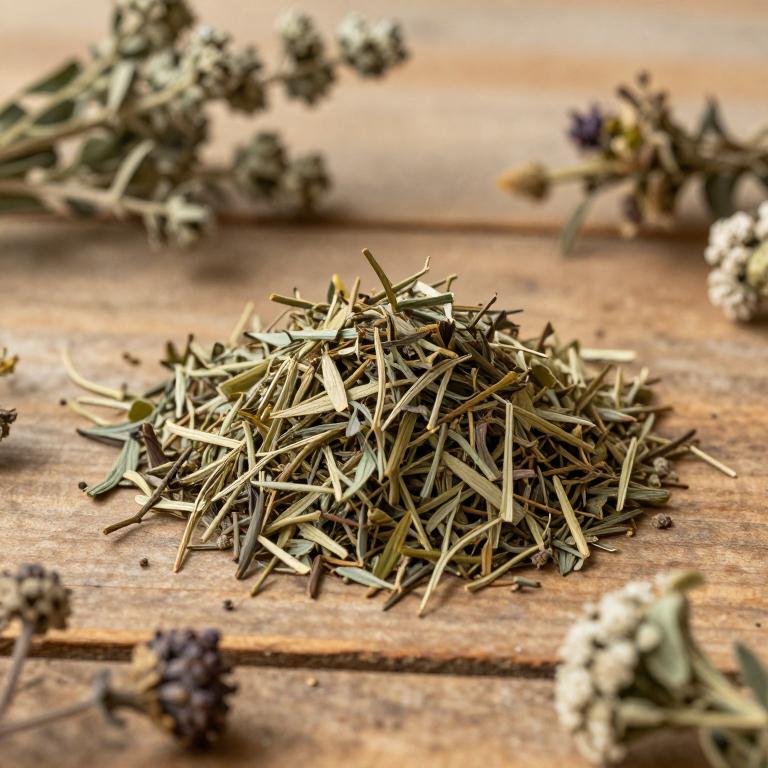
Names and Synonyms
Scientific Names
Accepted name
Cunila spicataSynonyms
- Gardoquia spicata
- Hedyosmos spicatus
- Hedeoma hassleri
Sources: Wikidata
Taxonomical Classification
This plant belongs to the kingdom Plantae and the phylum Streptophyta, falling under the class Equisetopsida and subclass Magnoliidae. Within the order Lamiales and the family Lamiaceae, it is classified under the genus Cunila. Specifically, its scientific name is Cunila spicata.
| Rank | Classification |
|---|---|
| Kingdom | Plantae |
| Phylum | Streptophyta |
| Class | Equisetopsida |
| Subclass | Magnoliidae |
| Order | Lamiales |
| Family | Lamiaceae |
| Genus | Cunila |
Sources: The World Checklist of Vascular Plants (WCVP)
Distribution
This plant is primarily distributed throughout the southern regions of South America. It can be found growing in the northeast of Argentina and across the territory of Paraguay. Furthermore, its presence extends into the country of Uruguay. Within the continent, it is also specifically documented in the southern part of Brazil. These regions collectively form the core geographical range for Cunila spicata.
| Region | Area |
|---|---|
| Brazil | Brazil South |
| Southern South America | Argentina Northeast |
| Southern South America | Paraguay |
| Southern South America | Uruguay |
Sources: The World Checklist of Vascular Plants (WCVP)
Botanical Identification
Ecology
The ecology of Cunila spicata is characterized by a broad altitudinal distribution, allowing the species to thrive across a diverse elevational gradient ranging from 0 m to a maximum of 1200 m AMSL. This plant is typically found inhabiting specific ecological niches, most notably within the Campo de Altitude, as well as in the Floresta Ciliar or Galerias, where it integrates into the local vegetative structure and environmental dynamics of these varied landscapes.
- Elevational range max:
- 1200 m AMSL
- Elevational range min:
- 0 m AMSL
- Habitat :
- Campo de Altitude, Floresta Ciliar ou Galeria
Life history
The life history of Cunila spicata is characterized by its classification as a perennial plant, allowing it to persist through multiple growing seasons. In terms of its structural growth strategy and survival mechanisms, the species is identified as a hemicryptophyte. This life form indicates that its perenn Perennating buds are located at the soil surface, protected by the remains of previous years' leaf litter or the substrate itself, which enables the plant to endure unfavorable seasonal conditions and emerge again during subsequent growing cycles.
- Life form :
- hemicryptophyte
- Lifecycle :
- perennial
Morphology
The morphology of Cunila spicata is characterized by a growth form categorized as a herb, specifically functioning as a forb that lacks woody tissues, thus being classified as non-woody. It is a self-supporting plant that does not exhibit climbing behavior and maintains an independent existence as a non-parasitic species. Rather than being an epiphyte of any variety, it is strictly terrestrial in its habitat, showing no aquatic or semiaquatic tendencies.
- Aquatic :
- terrestrial
- Climber :
- self-supporting
- Epiphyte :
- terrestrial
- Growth form :
- herb
- Parasite :
- independent
- Woodiness :
- non-woody
Sources: Global Inventory of Floras and Traits (GIFT)
Plant Parts
Cunila spicata has 1 reported plant parts identified across 1 scientific publications and several other databases that are studied for medicinal purposes. The most consistently reported plant part include leaf.
| Plant part | Supporting sources | Consensus |
|---|---|---|
| Leaf | 1 supporting sources | ★☆☆☆☆ |
Leaf
- Phytochemistry
Chemicals
Cunila spicata has 5 reported phytochemicals identified across 1 scientific publications and several other databases. The most consistently reported chemicals include 1,8-Cineole, Aurantiamide acetate, Aurantiamide benzoate, Linalool, betulinic acid.
| Chemical | Supporting sources | Consensus |
|---|---|---|
| 1,8-Cineole | 1 supporting sources | ★☆☆☆☆ |
| Aurantiamide acetate | 1 supporting sources | ★☆☆☆☆ |
| Aurantiamide benzoate | 1 supporting sources | ★☆☆☆☆ |
| Linalool | 1 supporting sources | ★☆☆☆☆ |
| betulinic acid | 1 supporting sources | ★☆☆☆☆ |
1,8-Cineole
- Phytochemistry
Aurantiamide acetate
- Yakugaku zasshi : Journal of the Pharmaceutical Society of Japan
Aurantiamide benzoate
- Yakugaku zasshi : Journal of the Pharmaceutical Society of Japan
Linalool
- Phytochemistry
betulinic acid
- Yakugaku zasshi : Journal of the Pharmaceutical Society of Japan
Conditions
Cunila spicata has 6 reported investigations on conditions identified across 1 scientific publications and several other databases. The most consistently reported conditions include HSV-1, HSV-2, adenovirus, bronchitis, gout.
| Condition | Supporting sources | Consensus |
|---|---|---|
| Hsv-1 | 1 supporting sources | ★☆☆☆☆ |
| Hsv-2 | 1 supporting sources | ★☆☆☆☆ |
| Adenovirus | 1 supporting sources | ★☆☆☆☆ |
| Bronchitis | 1 supporting sources | ★☆☆☆☆ |
| Gout | 1 supporting sources | ★☆☆☆☆ |
| Poliovirus | 1 supporting sources | ★☆☆☆☆ |
Hsv-1
- Phytomedicine : international journal of phytotherapy and phytopharmacology
Hsv-2
- Phytomedicine : international journal of phytotherapy and phytopharmacology
Adenovirus
- Phytomedicine : international journal of phytotherapy and phytopharmacology
Bronchitis
- Yakugaku zasshi : Journal of the Pharmaceutical Society of Japan
Gout
- Yakugaku zasshi : Journal of the Pharmaceutical Society of Japan
Poliovirus
- Phytomedicine : international journal of phytotherapy and phytopharmacology