Cunila origanoides
Cunila origanoides · Accepted scientific name
Scientific literature: Extensive (187 studies) · ★★★★☆
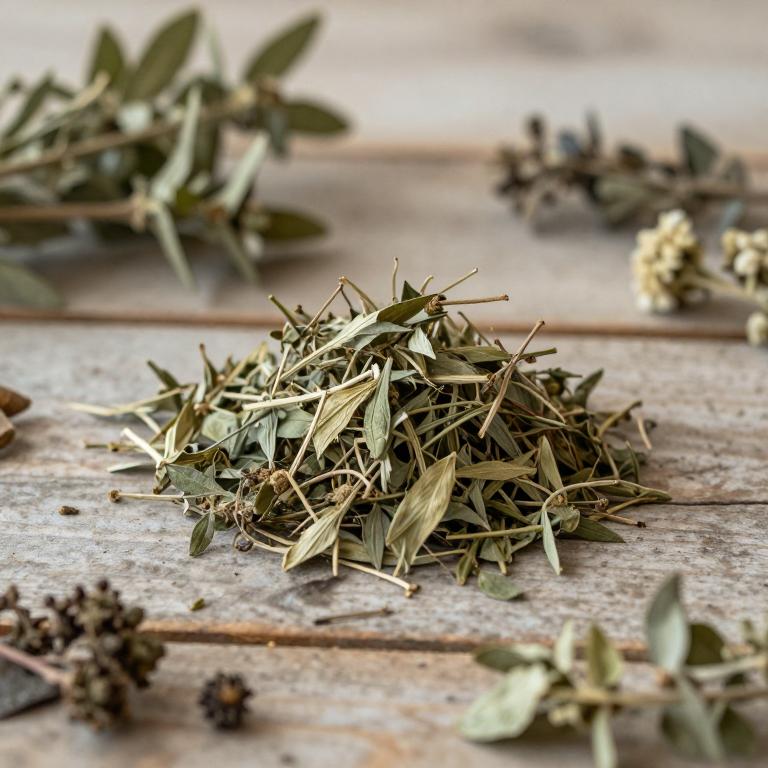
Cunila origanoides, scientifically known as Cunila origanoides, is a fragrant aromatic herb native to the mountainous regions of Mexico. Valued for its essential oils, this plant offers significant therapeutic potential. It is frequently studied for its antimicrobial and antioxidant properties, making it a fascinating subject in ethnobotanical research.
- Family
- Not available
- Native range
- Northern America
- Parts used
- Not available
- Common names
- Not available
- Scientific synonyms
- Not available
Names and Synonyms
Scientific Names
Accepted name
Cunila origanoidesDistribution
This plant exhibits a specific distribution pattern across several regions of the United States. In the North-Central region, it can be found growing in the states of Illinois, Kansas, Missouri, and Oklahoma. Additionally, its presence extends into the Northeastern United States within the state of Indiana. This range demonstrates that the species is primarily concentrated in the central and northeastern portions of the country. Together, these locations define the known geographical footprint of Cunila origanoides.
| Region | Area |
|---|---|
| North-Central U.S.A. | Illinois |
| North-Central U.S.A. | Kansas |
| North-Central U.S.A. | Missouri |
| North-Central U.S.A. | Oklahoma |
| Northeastern U.S.A. | Indiana |
| Northeastern U.S.A. | New Jersey |
| Northeastern U.S.A. | New York |
| Northeastern U.S.A. | Ohio |
| Northeastern U.S.A. | Pennsylvania |
| Northeastern U.S.A. | West Virginia |
Sources: The World Checklist of Vascular Plants (WCVP)
Botanical Identification
Life history
The life history of Cunila origanoides is characterized by its status as a perennial plant, allowing it to persist through multiple growing seasons. In terms of its structural growth habit, it is classified as a chamaephyte, meaning its perennating buds are located close to the ground level, often just above the soil surface, which helps the species adapt to its specific environmental conditions.
- Life form :
- chamaephyte
- Lifecycle :
- perennial
Morphology
The morphology of Cunila origanoides is characterized by its growth form as a forb, presenting a non-woody structure typical of herbaceous plants. It functions as an independent organism, showing no parasitic tendencies toward other plants. In terms of its ecological positioning, it is a terrestrial species, growing in soil rather than as an epiphyte. While it exhibits a self-supporting climbing habit, it does not rely on external structures for its primary upward growth, maintaining its structural integrity as a self-supporting herb.
- Climber :
- self-supporting
- Epiphyte :
- terrestrial
- Growth form :
- forb
- Parasite :
- independent
Reproduction
The reproduction of Cunila origanoides is characterized by a specific seasonal flowering cycle that facilitates its reproductive success. The flowering period for this species typically commences in August and continues through until October, though the exact timing can be variable depending on environmental conditions. During this window, the plant produces its inflorescences, which are essential for the sexual reproduction process and the subsequent production of seeds.
- Flowering time :
- Aug
- Flowering time :
- Oct
Sources: Global Inventory of Floras and Traits (GIFT)
Chemicals
Cunila origanoides has 16 reported phytochemicals identified across 0 scientific publications and several other databases. The most consistently reported chemicals include 1,8-Cineole, 1-OCTEN-3-OL, 3-OCTANOL, ALPHA-PINENE, Alpha terpinene.
| Chemical | Supporting sources | Consensus |
|---|---|---|
| 1,8-Cineole | 1 supporting sources | ★☆☆☆☆ |
| 1-OCTEN-3-OL | 1 supporting sources | ★☆☆☆☆ |
| 3-OCTANOL | 1 supporting sources | ★☆☆☆☆ |
| ALPHA-PINENE | 1 supporting sources | ★☆☆☆☆ |
| Alpha terpinene | 1 supporting sources | ★☆☆☆☆ |
| BETA-PINENE | 1 supporting sources | ★☆☆☆☆ |
| CARVACROL | 1 supporting sources | ★☆☆☆☆ |
| Caryophyllene | 1 supporting sources | ★☆☆☆☆ |
| EO | 1 supporting sources | ★☆☆☆☆ |
| GAMMA-TERPINENE | 1 supporting sources | ★☆☆☆☆ |
1,8-Cineole
- Dr. Duke
1-OCTEN-3-OL
- Dr. Duke
3-OCTANOL
- Dr. Duke
ALPHA-PINENE
- Dr. Duke
Alpha terpinene
- Dr. Duke
BETA-PINENE
- Dr. Duke
CARVACROL
- Dr. Duke
Caryophyllene
- Dr. Duke
EO
- Dr. Duke
GAMMA-TERPINENE
- Dr. Duke
Activities
Cunila origanoides has 170 reported activities identified across 0 scientific publications and several other databases. The most consistently reported activities include (-)-Chronotropic, (-)-Inotropic, ACE-Inhibitor, AChE-Inhibitor, Acaricide.
| Activity | Supporting sources | Consensus |
|---|---|---|
| (-)-Chronotropic | 1 supporting sources | ★☆☆☆☆ |
| (-)-Inotropic | 1 supporting sources | ★☆☆☆☆ |
| ACE-Inhibitor | 1 supporting sources | ★☆☆☆☆ |
| AChE-Inhibitor | 1 supporting sources | ★☆☆☆☆ |
| Acaricide | 1 supporting sources | ★☆☆☆☆ |
| Aldose-Reductase-Inhibitor | 1 supporting sources | ★☆☆☆☆ |
| Allelochemic | 1 supporting sources | ★☆☆☆☆ |
| Allelopathic | 1 supporting sources | ★☆☆☆☆ |
| Allergenic | 1 supporting sources | ★☆☆☆☆ |
| Analgesic | 1 supporting sources | ★☆☆☆☆ |
(-)-Chronotropic
- Dr. Duke
(-)-Inotropic
- Dr. Duke
ACE-Inhibitor
- Dr. Duke
AChE-Inhibitor
- Dr. Duke
Acaricide
- Dr. Duke
Aldose-Reductase-Inhibitor
- Dr. Duke
Allelochemic
- Dr. Duke
Allelopathic
- Dr. Duke
Allergenic
- Dr. Duke
Analgesic
- Dr. Duke