Cunila galioides
Cunila galioides · Accepted scientific name
Scientific literature: Very Sparse (2 studies) · ★☆☆☆☆
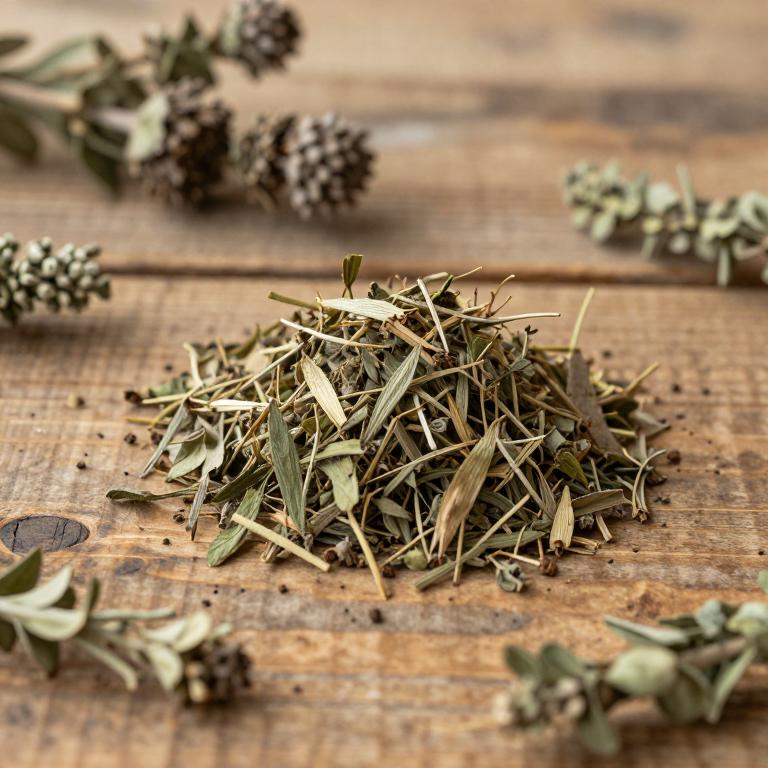
, scientifically known as Cunila galioides, is a noteworthy aromatic herb native to specific high-altitude regions. Renowned for its distinct fragrance and bioactive compounds, this plant holds significant ethnobotanical value. Researchers are increasingly exploring its potential medicinal properties, particularly for its antimicrobial and antioxidant activities in traditional healing.
- Family
- Lamiaceae
- Native range
- Southern America
- Parts used
- Not available
- Common names
- Not available
- Scientific synonyms
- Hedyosmos Galioides · Hedeoma Glaziovii · 1 more
Names and Synonyms
Scientific Names
Accepted name
Cunila galioidesSynonyms
- Hedyosmos galioides
- Hedeoma glaziovii
- Cunila galioides var. hispida
Sources: Wikidata, Catalogue of Life
Taxonomical Classification
This plant belongs to the kingdom Plantae and the phylum Streptophyta, specifically classified within the class Equisetopsida and subclass Magnoliidae. It is further organized under the order Lamiales and the family Lamiaceae. Finally, its taxonomic identity is defined by its placement within the genus Cunila.
| Rank | Classification |
|---|---|
| Kingdom | Plantae |
| Phylum | Streptophyta |
| Class | Equisetopsida |
| Subclass | Magnoliidae |
| Order | Lamiales |
| Family | Lamiaceae |
| Genus | Cunila |
Sources: The World Checklist of Vascular Plants (WCVP)
Distribution
This plant, known scientifically as Cunila galioides, exhibits a specific range of occurrence within the country of Brazil. Its geographical distribution is primarily concentrated across several key macroregions of the nation. Specifically, it can be found growing within the West-Central region of Brazil. Additionally, the species is documented to inhabit the Southeast part of the country. Finally, its presence extends into the southern territories of Brazil.
| Region | Area |
|---|---|
| Brazil | Brazil West-Central |
| Brazil | Brazil Southeast |
| Brazil | Brazil South |
Sources: The World Checklist of Vascular Plants (WCVP)
Botanical Identification
Ecology
The ecology of Cunila galioides is characterized by its presence across a diverse range of Brazilian biomes and significant altitudinal variations. This species inhabits several distinct ecological environments, including Campo de Altitude, Campo Limpo, Cerrado (latu sensu), and Floresta Ombrófila Mista. Its distribution spans a broad vertical gradient, occurring at elevations ranging from a minimum of 400 m AMSL to a maximum of 2500 m AMSL.
- Elevational range max:
- 2500 m AMSL
- Elevational range min:
- 400 m AMSL
- Habitat :
- Campo de Altitude, Campo Limpo, Cerrado (lato sensu), Floresta Ombrófila Mista
Life history
The life history of Cunila galioides is characterized by its classification as a perennial plant, allowing it to persist through multiple growing seasons. In terms of its growth architecture and survival strategy, the species exhibits a dual morphological classification involving both nanophanerophyte and phanerophyte life forms. This combination of traits suggests a complex developmental strategy where the plant maintains structural presence and regenerative capacity within its specific ecological niche.
- Life form :
- nanophanerophyte
- Life form :
- phanerophyte
- Lifecycle :
- perennial
Morphology
The morphology of Cunila galioides is characterized by its growth form as a woody shrub, exhibiting a robust and self-supporting structure that does not require climbing or external support. As a terrestrial species, it lacks aquatic or semiaquatic adaptations and does not function as an epiphyte, maintaining a strictly land-based existence. The plant is biologically independent, functioning as a non-parasitic organism that derives its own nutrients without relying on a host. Its physical development is defined by its woodiness, which contributes to its stable, shrubby habit.
- Aquatic :
- terrestrial
- Climber :
- self-supporting
- Epiphyte :
- terrestrial
- Growth form :
- shrub
- Parasite :
- independent
- Woodiness :
- woody
Sources: Global Inventory of Floras and Traits (GIFT)
Chemicals
Cunila galioides has 2 reported phytochemicals identified across 0 scientific publications and several other databases. The most consistently reported chemicals include Citral, LIMONENE.
| Chemical | Supporting sources | Consensus |
|---|---|---|
| Citral | 1 supporting sources | ★☆☆☆☆ |
| LIMONENE | 1 supporting sources | ★☆☆☆☆ |
Citral
- Brazilian journal of biology = Revista brasleira de biologia
LIMONENE
- Brazilian journal of biology = Revista brasleira de biologia