Culcitium canescens
Culcitium canescens · Accepted scientific name
Scientific literature: Very Sparse (3 studies) · ★☆☆☆☆
Culcitium canescens, scientifically known as Culcitium canescens, is a rare, perennial herbaceous plant native to the mountainous regions of the Himalayas. Valued in traditional medicine, it possesses unique therapeutic properties used to treat various ailments. This distinctive species is recognized by its robust structure and specialized ecological requirements.
- Family
- Asteraceae
- Native range
- Southern America
- Parts used
- Not available
- Common names
- Not available
- Scientific synonyms
- Senecio Canescens Var. Monocephalus · Senecio Boyacensis · 9 more
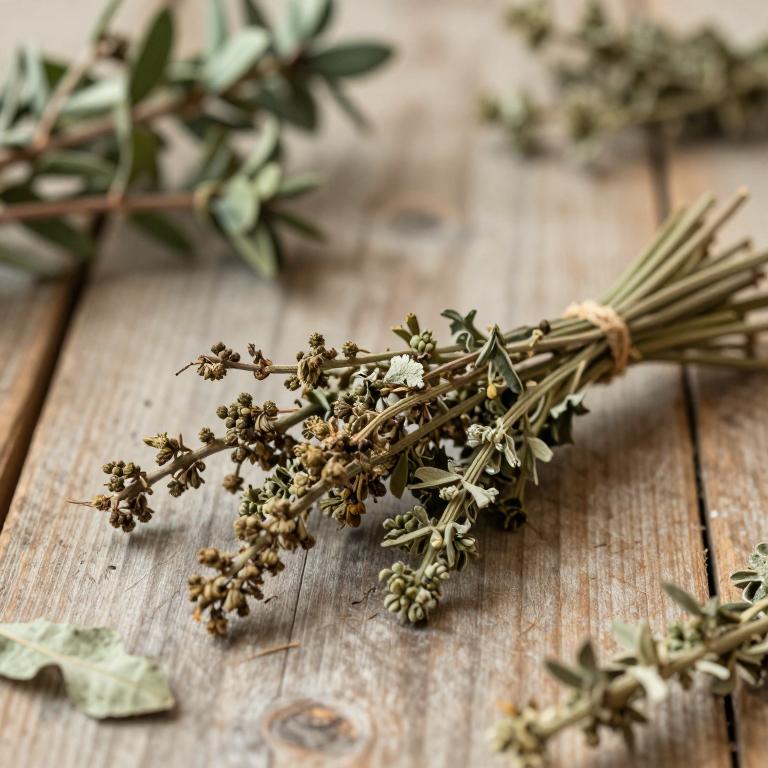
Names and Synonyms
Scientific Names
Accepted name
Culcitium canescensSynonyms
- Senecio canescens var. monocephalus
- Senecio boyacensis
- Senecio canescens f. magnificus
- Senecio canescens var. boyacensis
- Senecio micropifolius var. moncephalus
- Culcitium boyacense
- Senecio canescens var. ecuadoriensis
- Senecio canescens var. elongatus
- Senecio canescens
- Senecio canescens var. macrocephalus
- Culcitium canescens var. monocephalum
Regional and Traditional Names
Spanish:
- Huira-huira
- oreja de liebre
Sources: Wikidata, Catalogue of Life
Taxonomical Classification
This plant belongs to the kingdom Plantae and is classified within the phylum Streptophyta and the class Equisetopsida. It is further organized under the subclass Magnoliidae and the order Asterales. Finally, it is a member of the family Asteraceae and is categorized under the genus Culcitium.
| Rank | Classification |
|---|---|
| Kingdom | Plantae |
| Phylum | Streptophyta |
| Class | Equisetopsida |
| Subclass | Magnoliidae |
| Order | Asterales |
| Family | Asteraceae |
| Genus | Culcitium |
Sources: The World Checklist of Vascular Plants (WCVP)
Distribution
This plant is native to the specific regions of western South America. Its presence is documented across several distinct countries within this part of the continent. Specifically, it can be found growing in the territories of Colombia and Ecuador. Furthermore, its natural range extends into the landscapes of Peru. The distribution is completed by its occurrence within the borders of Bolivia.
| Region | Area |
|---|---|
| Western South America | Bolivia |
| Western South America | Colombia |
| Western South America | Ecuador |
| Western South America | Peru |
Sources: The World Checklist of Vascular Plants (WCVP)
Botanical Identification
Ecology
The ecology of Culcitium canescens is defined by its highly specialized habitat within high-altitude montane environments, where it occupies a distinct vertical niche. This species is specifically adapted to life in alpine or sub-alpine zones, thriving within a narrow elevational range that spans from a minimum of 3100 m AMSL to a maximum of 4710 m AMSL. Such an extreme altitudinal distribution suggests that the plant is physiologically equipped to withstand the intense solar radiation, low atmospheric pressure, and significant temperature fluctuations characteristic of high-elevation ecosystems. Its presence in these high-altitude brackets indicates a preference for rugged, montane terrains where it likely interacts with specialized soil compositions and climatic patterns unique to these rarefied environments.
- Elevational range max:
- 4710 m AMSL
- Elevational range min:
- 3100 m AMSL
Morphology
The morphology of Culcitium canescens is characterized by its growth form as a non-woody herb, exhibiting a soft, non-woodiness throughout its structure. This plant is primarily terrestrial in its habitat, functioning as an independent organism that does not rely on a parasitic or epiphytic lifestyle, remaining strictly terrestrial rather than acting as a holoepiphyte or hemiepiphyte. In terms of its physical habit, it possesses a self-supporting climbing mechanism, functioning as a self-supporting vine or liana that does not require external structural support to maintain its posture. Despite its ability to climb, its physiological classification remains that of a herbaceous plant, lacking the woody tissues found in shrubs or trees.
- Aquatic :
- terrestrial
- Climber :
- self-supporting
- Epiphyte :
- terrestrial
- Growth form :
- herb
- Parasite :
- independent
- Woodiness :
- non-woody
Sources: Global Inventory of Floras and Traits (GIFT)
Chemicals
Culcitium canescens has 3 reported phytochemicals identified across 0 scientific publications and several other databases. The most consistently reported chemicals include Cacalohastine, Cacalonol, Dehydrocacalohastine.
| Chemical | Supporting sources | Consensus |
|---|---|---|
| Cacalohastine | 1 supporting sources | ★☆☆☆☆ |
| Cacalonol | 1 supporting sources | ★☆☆☆☆ |
| Dehydrocacalohastine | 1 supporting sources | ★☆☆☆☆ |
Cacalohastine
- Chemical & pharmaceutical bulletin
Cacalonol
- Chemical & pharmaceutical bulletin
Dehydrocacalohastine
- Chemical & pharmaceutical bulletin