Okeechobee gourd
Cucurbita okeechobeensis · Accepted scientific name
Scientific literature: Very Sparse (6 studies) · ★☆☆☆☆
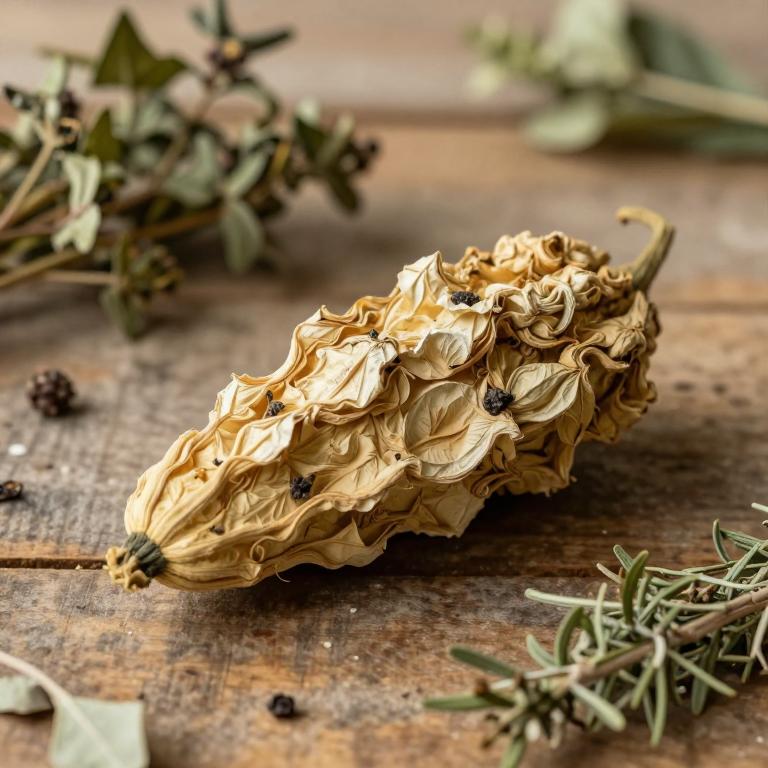
Okeechobee gourd, scientifically known as Cucurbita okeechobeensis, is a remarkable medicinal plant valued for its diverse therapeutic properties. Native to specific tropical regions, this unique gourd is utilized in traditional medicine to treat various ailments, offering significant nutritional benefits and bioactive compounds that support overall health and wellness.
- Family
- Cucurbitaceae
- Native range
- Northern America
- Parts used
- Fruit · Seed
- Common names
- Okeechobee Gourd
- Scientific synonyms
- Pepo Okeechobeensis
Names and Synonyms
Common Names
- Okeechobee gourd
Scientific Names
Accepted name
Cucurbita okeechobeensisSynonyms
- Pepo okeechobeensis
Regional and Traditional Names
Spanish:
- Calabacilla
Sources: Wikidata, Catalogue of Life
Taxonomical Classification
This plant belongs to the kingdom Plantae and is classified under the phylum Streptophyta and class Equisetopsida. Within the subclass Magnoliidae, it is placed in the order Cucurbitales and the family Cucurbitaceae. Finally, it is categorized under the genus Cucurbita.
| Rank | Classification |
|---|---|
| Kingdom | Plantae |
| Phylum | Streptophyta |
| Class | Equisetopsida |
| Subclass | Magnoliidae |
| Order | Cucurbitales |
| Family | Cucurbitaceae |
| Genus | Cucurbita |
Sources: The World Checklist of Vascular Plants (WCVP)
Distribution
This plant exhibits a diverse geographical distribution stretching from the United States into various regions of Mexico. In the Southeastern United States, its presence is specifically noted within the state of Florida. Moving into Mexico, the species is widely dispersed across several key territories. It can be found throughout Mexico Central, Northeast, and the Gulf regions. Additionally, the plant extends its range into the Southwest portion of Mexico.
| Region | Area |
|---|---|
| Southeastern U.S.A. | Florida |
| Mexico | Mexico Central |
| Mexico | Mexico Northeast |
| Mexico | Mexico Gulf |
| Mexico | Mexico Southwest |
| Mexico | Mexico Southeast |
| Caribbean | Dominican Republic |
Sources: The World Checklist of Vascular Plants (WCVP)
Botanical Identification
Life history
The life history of Cucurbita okeechobeenis is characterized by an annual lifecycle, meaning the plant completes its entire biological development—from germination and vegetative growth to flowering and seed production—within a single growing season. As an annual species, it follows a rapid developmental trajectory where it establishes a vigorous climbing or sprawling growth habit to maximize resource acquisition. The plant transitions from a seedling stage to a mature reproductive phase, producing distinct male and female flowers to facilitate pollination. Once fertilization occurs, the plant focuses its energy on the maturation of its fruit and seeds, eventually senescing and dying after the seeds are dispersed, ensuring the continuation of the species in the following season.
- Lifecycle :
- annual
Morphology
The morphology of Cucurbita okeechobeenis is characterized by its growth form as a non-woody herb and a forb, exhibiting a sprawling or climbing habit. It functions as an obligatory climber, utilizing specialized structures to ascend and support its weight as it extends across its environment. Due to its herbaceous nature, the plant lacks any woody tissue, maintaining a soft, succulent, and non-woody stem structure throughout its development.
- Climber :
- obligatory
- Growth form :
- herb
- Growth form :
- forb
- Woodiness :
- non-woody
Reproduction
The reproduction of Cucurbita okeechobeenis is characterized by the production of seeds that exhibit notable variability in physical dimensions. The seed mass within a population fluctuates significantly, ranging from a minimum of 0.03417 g to a maximum of 0.108 g. When analyzing the overall reproductive output, the seed mass mean is recorded at 0.071085 g, indicating a specific central tendency in the energy investment per individual seed. This range in mass suggests potential adaptations to varying environmental conditions or genetic diversity within the species' reproductive cycle.
- Seed mass max:
- 0.108 g
- Seed mass mean:
- 0.071085 g
- Seed mass min:
- 0.03417 g
Sources: Global Inventory of Floras and Traits (GIFT)
Plant Parts
Cucurbita okeechobeensis has 2 reported plant parts identified across 2 scientific publications and several other databases that are studied for medicinal purposes. The most consistently reported plant part include fruit, seed.
| Plant part | Supporting sources | Consensus |
|---|---|---|
| Fruit | 1 supporting sources | ★☆☆☆☆ |
| Seed | 1 supporting sources | ★☆☆☆☆ |
Fruit
- Archiv der Pharmazie
Seed
- Archiv der Pharmazie
Chemicals
Cucurbita okeechobeensis has 1 reported phytochemicals identified across 2 scientific publications and several other databases. The most consistently reported chemicals include Flavonoids.
| Chemical | Supporting sources | Consensus |
|---|---|---|
| Flavonoids | 1 supporting sources | ★☆☆☆☆ |
Flavonoids
- Archiv der Pharmazie