fig-leaf gourd
Cucurbita ficifolia · Accepted scientific name
Scientific literature: Very Sparse (16 studies) · ★☆☆☆☆
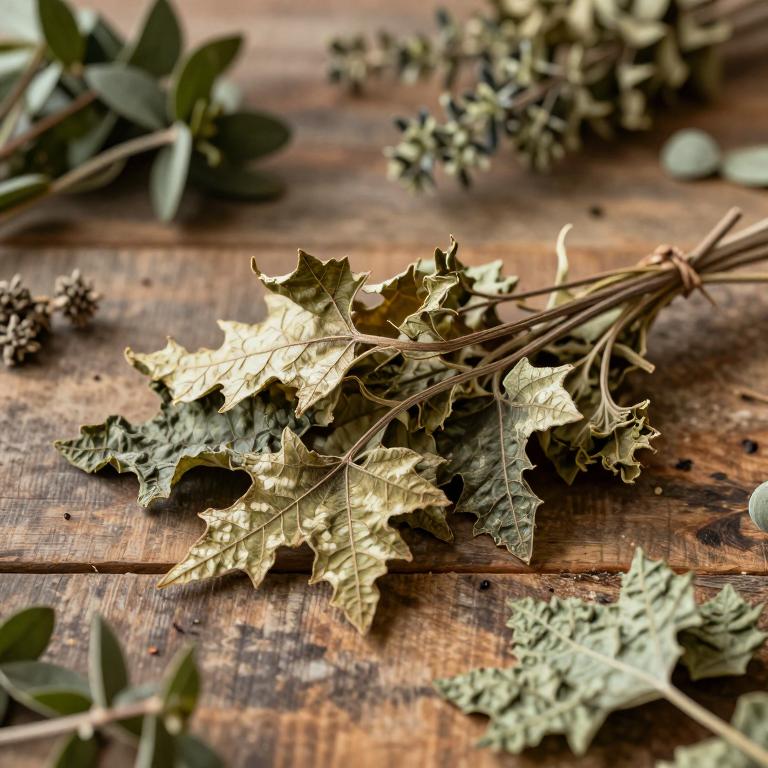
Fig-leaf gourd, scientifically known as Cucurbita ficifolia, is a versatile perennial plant prized for its edible fruit and medicinal properties. Often used in traditional remedies, it possesses antioxidant and anti-inflammatory qualities. This unique gourd, characterized by its distinctively shaped leaves, offers significant nutritional value and therapeutic potential.
Names and Synonyms
Common Names
- Fig-leaved Gourd
- Malabar gourd
- blackseed squash
- cidra
- fig-leaf gourd
- sidra
- Pie melon
- fig-leafed gourd
- figleaf gourd
Scientific Names
Accepted name
Cucurbita ficifoliaSynonyms
- Pepo malabaricus
- Pepo ficifolia
- Cucurbita ficifolia f. melanosperma
- Cucurbita melanosperma
- Cucurbita mexicana
- Cucurbita ficifolia f. leucosperma
- Cucurbita ficifolia var. mexicana
Regional and Traditional Names
Spanish:
- chiclayo
- chilacayota
- chilacayote
- chiverri
- lacoyote
- silacayote
- Alcayota
- Cayote
- Chiverre
- Vitoria
- chiuche
- sambo
- zambo
German:
- Feigenblatt-Kürbis
- Feigenblattkürbis
- Feigenblatt-Kürbis
French:
- Courge de Siam
- courge à feuilles de figuier
- Courge de Siam
- Courge à confiture
Sources: Wikidata, Catalogue of Life
Taxonomical Classification
This plant belongs to the kingdom Plantae and is classified under the phylum Streptophyta and the class Equisetopsida. Within the subclass Magnoliidae, it is organized into the order Cucurbitales and the family Cucurbitaceae. Finally, its specific taxonomic placement is within the genus Cucurbita.
| Rank | Classification |
|---|---|
| Kingdom | Plantae |
| Phylum | Streptophyta |
| Class | Equisetopsida |
| Subclass | Magnoliidae |
| Order | Cucurbitales |
| Family | Cucurbitaceae |
| Genus | Cucurbita |
Sources: The World Checklist of Vascular Plants (WCVP)
Distribution
This plant exhibits a diverse geographical distribution spanning several continents and distinct climatic zones. In Middle Europe, it can be found growing in Germany, while its presence in Southwestern Europe is noted in Spain. The species also inhabits the Macaronesian region, specifically within the Canary Islands. Moving toward the Indian Subcontinent, the plant is established in the Assam region. Finally, its range extends to the Southern Hemisphere, where it is located in New Zealand North.
| Region | Area |
|---|---|
| Middle Europe | Germany |
| Southwestern Europe | Spain |
| Macaronesia | Canary Is. |
| Indian Subcontinent | Assam |
| New Zealand | New Zealand North |
| Southwestern U.S.A. | California |
| Mexico | Mexico Central |
| Mexico | Mexico Northeast |
| Mexico | Mexico Gulf |
| Mexico | Mexico Northwest |
Sources: The World Checklist of Vascular Plants (WCVP)
Botanical Identification
Ecology
The ecology of Cucurbita ficifolia is characterized by a broad altitudinal distribution and varied environmental settings. It thrives across a wide elevational range, beginning at low-lying coastal habitats and extending up to significant highland reaches. Specifically, the species is found at elevations starting from a minimum of 550 m AMSL, with a mean elevational occupancy of approximately 1900 m AMSL. Its ability to adapt to different topographic gradients allows it to reach a maximum elevation of 3000 m AMSL, demonstrating a high degree of ecological plasticity across both maritime and montane landscapes.
- Elevational range max:
- 3000 m AMSL
- Elevational range mean:
- 1900 m AMSL
- Elevational range min:
- 550 m AMSL
- Habitat :
- Coastal
Life history
The life history of Cucurbita ficifolia is characterized by a variable lifecycle that can function as an annual, biennial, or perennial, depending on environmental conditions and cultivation practices. As a plant, it exhibits a therophyte life form, specifically categorized under both therophyte classifications (Life_form_1 and Life_form_2), which signifies that it completes its biological cycle through a distinct seasonal progression, often relying on seeds to persist through unfavorable periods.
- Life form :
- therophyte
- Lifecycle :
- perennial
Morphology
The morphology of Cucurbita ficifolia is characterized by a non-woody, herbaceous growth form, specifically classified as a forb. It functions as an obligatory climber, utilizing a vine growth habit to spread across its environment. The plant reaches a mean height of approximately 2 meters and is strictly terrestrial in its ecological positioning, meaning it is neither an epiphyte nor an aquatic species. Furthermore, it exists as an independent organism, lacking any parasitic tendencies.
- Aquatic :
- terrestrial
- Climber :
- vine
- Climber :
- obligatory
- Epiphyte :
- terrestrial
- Growth form :
- herb
- Growth form :
- forb
- Parasite :
- independent
- Plant height mean:
- 2 m
- Woodiness :
- non-woody
Physiology
The physiology of Cucurbita ficifolia is characterized by specific morphological dimensions of its foliage and distinct metabolic capabilities. The leaves exhibit a consistent width profile, with a mean, minimum, and maximum measurement all recorded at 20 cm, suggesting a highly uniform lateral expansion during development. In terms of longitudinal growth, the leaf length reaches a maximum of 18 cm. From a biochemical and nutritional standpoint, the plant does not function as a nitrogen fixer, meaning it lacks the symbiotic relationship with nitrogen-fixing bacteria required to convert atmospheric nitrogen into usable forms for its growth.
- Leaf length max:
- 18 cm
- Leaf width mean:
- 20 cm
- Nitrogen fixer :
- no
Reproduction
The reproduction of Cucurbita ficifolia is characterized by a sexual process through a monoecious flowering system, with asexual reproduction being entirely absent. The flowering period is highly flexible and variable, potentially occurring across all months of the year, including December. Pollination is achieved through a biotic syndrome, specifically relying on insects to facilitate the transfer of pollen. While the plant is capable of self-fertilization, its reproductive cycle culminates in the production of relatively large fruits, averaging 20 cm in length and 17.5 cm in width. Within these fruits, the seeds possess a consistent mass of 0.113 g. The dispersal of the species follows a zoochorous syndrome, specifically through endozoochory, where seeds are dispersed via the internal passage of animals.
- Dispersal syndrome :
- zoochorous
- Dispersal syndrome :
- endozoochorous
- Flowering time :
- Dec
- Fruit length mean:
- 20 cm
- Fruit width mean:
- 17.5 cm
- Pollination syndrome :
- insect
- Pollination syndrome :
- biotic
- Reproduction asexual :
- absent
- Reproduction sexual :
- monoecious
- Seed mass mean:
- 0.113 g
- Self fertilization :
- present
Sources: Global Inventory of Floras and Traits (GIFT)
Chemicals
Cucurbita ficifolia has 3 reported phytochemicals identified across 0 scientific publications and several other databases. The most consistently reported chemicals include D-chiro-Inositol, Sugars, polyphenols.
| Chemical | Supporting sources | Consensus |
|---|---|---|
| D-chiro-Inositol | 1 supporting sources | ★☆☆☆☆ |
| Sugars | 1 supporting sources | ★☆☆☆☆ |
| polyphenols | 1 supporting sources | ★☆☆☆☆ |
D-chiro-Inositol
- Journal of ethnopharmacology
Sugars
- Molecules (Basel, Switzerland)
polyphenols
- Molecules (Basel, Switzerland)
Activities
Cucurbita ficifolia has 4 reported activities identified across 0 scientific publications and several other databases. The most consistently reported activities include Antioxidant, Antidiabetic, Cytotoxic, Neuroprotective.
| Activity | Supporting sources | Consensus |
|---|---|---|
| Antioxidant | 2 supporting sources | ★☆☆☆☆ |
| Antidiabetic | 1 supporting sources | ★☆☆☆☆ |
| Cytotoxic | 1 supporting sources | ★☆☆☆☆ |
| Neuroprotective | 1 supporting sources | ★☆☆☆☆ |
Antioxidant
- Molecules (Basel, Switzerland)
- Biomedicine & pharmacotherapy = Biomedecine & pharmacotherapie
Antidiabetic
- Molecules (Basel, Switzerland)
Cytotoxic
- Proceedings of the Western Pharmacology Society
Neuroprotective
- Molecules (Basel, Switzerland)
Conditions
Cucurbita ficifolia has 4 reported investigations on conditions identified across 0 scientific publications and several other databases. The most consistently reported conditions include Diabetes mellitus, antidiabetic, antioxidant, hyperglycemia.
| Condition | Supporting sources | Consensus |
|---|---|---|
| Diabetes mellitus | 1 supporting sources | ★☆☆☆☆ |
| Antidiabetic | 1 supporting sources | ★☆☆☆☆ |
| Antioxidant | 1 supporting sources | ★☆☆☆☆ |
| Hyperglycemia | 1 supporting sources | ★☆☆☆☆ |
Diabetes mellitus
- Molecules (Basel, Switzerland)
Antidiabetic
- Molecules (Basel, Switzerland)
Antioxidant
- Biomedicine & pharmacotherapy = Biomedecine & pharmacotherapie
Hyperglycemia
- Archives of medical research
Preparations
Cucurbita ficifolia has 2 reported preparations identified across 0 scientific publications and several other databases. The most consistently reported preparations include aqueous (AF) and methanolic (MF) fractions of C. ficifolia pulp and peel hydroethanolic (HE) extracts, traditional preparations.
| Preparation | Supporting sources | Consensus |
|---|---|---|
| Aqueous (af) and methanolic (mf) fractions of c. ficifolia pulp and peel hydroethanolic (he) extracts | 1 supporting sources | ★☆☆☆☆ |
| Traditional preparations | 1 supporting sources | ★☆☆☆☆ |
Aqueous (af) and methanolic (mf) fractions of c. ficifolia pulp and peel hydroethanolic (he) extracts
- Molecules (Basel, Switzerland)
Traditional preparations
- Archives of medical research