wild cucumber
Cucumis prophetarum · Accepted scientific name
Scientific literature: Very Sparse (11 studies) · ★☆☆☆☆
Wild cucumber, scientifically known as Cucumis prophetarum, is a climbing herbaceous vine native to tropical regions. Characterized by its distinctive tendrils and distinctive fruits, this plant holds significant ethnobotanical importance. Traditionally, it has been utilized in various folk medicines to treat diverse ailments, though careful handling is essential.
- Family
- Cucurbitaceae
- Native range
- Europe
- Parts used
- Fruit
- Common names
- Wild Cucumber
- Scientific synonyms
- Not available
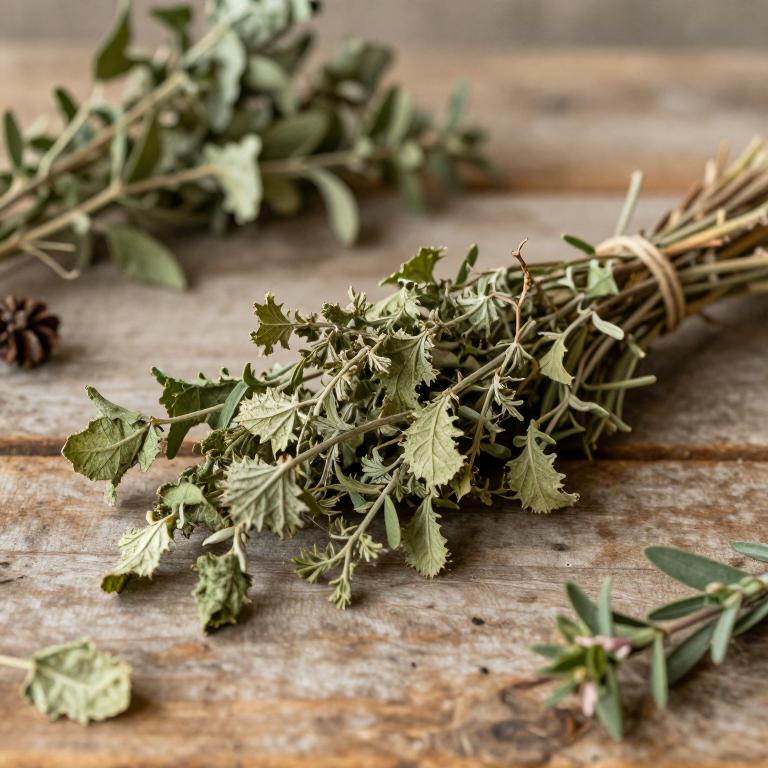
Names and Synonyms
Common Names
- wild cucumber
Scientific Names
Accepted name
Cucumis prophetarumRegional and Traditional Names
Spanish:
- Pepino silvestre
German:
- Propheten-Gurke
Sources: Wikidata, Catalogue of Life
Taxonomical Classification
This plant belongs to the kingdom Plantae and the phylum Streptophyta, falling under the class Equisetopsida and subclass Magnoliidae. It is further classified within the order Cucurbitaleales and the family Cucurbitaceae. Finally, it is identified by the genus Cucumis.
| Rank | Classification |
|---|---|
| Kingdom | Plantae |
| Phylum | Streptophyta |
| Class | Equisetopsida |
| Subclass | Magnoliidae |
| Order | Cucurbitales |
| Family | Cucurbitaceae |
| Genus | Cucumis |
Sources: The World Checklist of Vascular Plants (WCVP)
Distribution
This plant exhibits a broad geographical distribution spanning several distinct climatic regions. In Middle Europe, it can be found within the borders of Germany. Its presence extends into Northern Africa, specifically located in Algeria and Egypt. Furthermore, the species inhabits parts of West Tropical Africa. This tropical range includes the nations of both Benin and Burkina.
| Region | Area |
|---|---|
| Middle Europe | Germany |
| Northern Africa | Algeria |
| Northern Africa | Egypt |
| West Tropical Africa | Benin |
| West Tropical Africa | Burkina |
| West Tropical Africa | Mali |
| West Tropical Africa | Mauritania |
| West Tropical Africa | Nigeria |
| West Tropical Africa | Niger |
| West Tropical Africa | Senegal |
Sources: The World Checklist of Vascular Plants (WCVP)
Botanical Identification
Life history
The life history of Cucumis prophetarum is characterized by a perennial lifecycle, allowing the plant to persist through multiple growing seasons. In terms of its structural growth strategy and survival mechanisms, it exhibits a dual classification of life forms, functioning both as a chamaephyte and a hemicryptophyte. This indicates that its perennating buds are located either at or just below the soil surface, enabling the plant to withstand varying environmental conditions and recover following seasonal changes.
- Life form :
- chamaephyte
- Life form :
- hemicryptophyte
- Lifecycle :
- perennial
Morphology
The morphology of Cucumis prophetarum is characterized by its growth form as a non-woody herb, typically reaching an average plant height of 1.5 m. As a terrestrial species, it does not exhibit aquatic or epiphytic tendencies, instead establishing itself in soil-based environments. The plant functions as a self-supporting climber and is an independent organism, showing no parasitic behavior. Its structural composition is entirely non-woody, maintaining a herbaceous habit throughout its development.
- Aquatic :
- terrestrial
- Climber :
- self-supporting
- Epiphyte :
- terrestrial
- Growth form :
- herb
- Parasite :
- independent
- Plant height mean:
- 1.5 m
- Woodiness :
- non-woody
Physiology
The physiology of Cucumis prophetarum is characterized by its metabolic processes and nutrient acquisition strategies common to the Cucurbitaceae family. As a non-nitrogen-fixing plant, it lacks the specialized symbiotic relationship with rhizobia bacteria required to convert atmospheric nitrogen into organic forms; therefore, it is not a nitrogen fixer. The plant relies entirely on the uptake of nitrates and ammonium from the soil through its root system to satisfy its physiological requirements for protein synthesis and chlorophyll production. Its metabolic pathways are centered on efficient photosynthesis and the translocation of photosynthates from the leaves to its developing fruits and specialized tissues. The plant's physiological activity is closely tied to its water-use efficiency and its ability to manage secondary metabolite production, which often serves as a defense mechanism against herbivory and environmental stressors.
- Nitrogen fixer :
- no
Reproduction
The reproduction of Cucumis prophetarum is characterized by a specific seasonal flowering window and distinct seed morphology. The flowering period typically commences in April and concludes in May, though the onset and duration can remain variable depending on environmental conditions. Following successful pollination, the plant produces seeds that exhibit a notable range in mass. The seed mass varies significantly, with a minimum recorded weight of 0.00481 g and a maximum of 0.02649 g, resulting in an average seed mass of approximately 0.01399 g.
- Flowering time :
- Apr
- Flowering time :
- May
- Seed mass max:
- 0.02649 g
- Seed mass mean:
- 0.01399 g
- Seed mass min:
- 0.00481 g
Sources: Global Inventory of Floras and Traits (GIFT)
Plant Parts
Cucumis prophetarum has 1 reported plant parts identified across 1 scientific publications and several other databases that are studied for medicinal purposes. The most consistently reported plant part include fruit.
| Plant part | Supporting sources | Consensus |
|---|---|---|
| Fruit | 1 supporting sources | ★☆☆☆☆ |
Fruit
- ACS omega
Chemicals
Cucumis prophetarum has 3 reported phytochemicals identified across 1 scientific publications and several other databases. The most consistently reported chemicals include Cucumegastigmane II, Cucurbitacins, RAFFINOSE.
| Chemical | Supporting sources | Consensus |
|---|---|---|
| Cucumegastigmane II | 1 supporting sources | ★☆☆☆☆ |
| Cucurbitacins | 1 supporting sources | ★☆☆☆☆ |
| RAFFINOSE | 1 supporting sources | ★☆☆☆☆ |
Cucumegastigmane II
- Molecules (Basel, Switzerland)
Cucurbitacins
- Molecules (Basel, Switzerland)
RAFFINOSE
- Molecules (Basel, Switzerland)
Activities
Cucumis prophetarum has 2 reported activities identified across 1 scientific publications and several other databases. The most consistently reported activities include Antidiabetic, Antioxidant.
| Activity | Supporting sources | Consensus |
|---|---|---|
| Antidiabetic | 1 supporting sources | ★☆☆☆☆ |
| Antioxidant | 1 supporting sources | ★☆☆☆☆ |
Antidiabetic
- Molecules (Basel, Switzerland)
Antioxidant
- Molecules (Basel, Switzerland)
Conditions
Cucumis prophetarum has 4 reported investigations on conditions identified across 1 scientific publications and several other databases. The most consistently reported conditions include Type 2 diabetes mellitus, hyperglycemia, insulin resistance, type 2 diabetes.
| Condition | Supporting sources | Consensus |
|---|---|---|
| Type 2 diabetes mellitus | 1 supporting sources | ★☆☆☆☆ |
| Hyperglycemia | 1 supporting sources | ★☆☆☆☆ |
| Insulin resistance | 1 supporting sources | ★☆☆☆☆ |
| Type 2 diabetes | 1 supporting sources | ★☆☆☆☆ |
Type 2 diabetes mellitus
- Molecules (Basel, Switzerland)
Hyperglycemia
- Phytomedicine : international journal of phytotherapy and phytopharmacology
Insulin resistance
- Molecules (Basel, Switzerland)
Type 2 diabetes
- Phytomedicine : international journal of phytotherapy and phytopharmacology