Cucumis ficifolius
Cucumis ficifolius · Accepted scientific name
Scientific literature: Very Sparse (4 studies) · ★☆☆☆☆
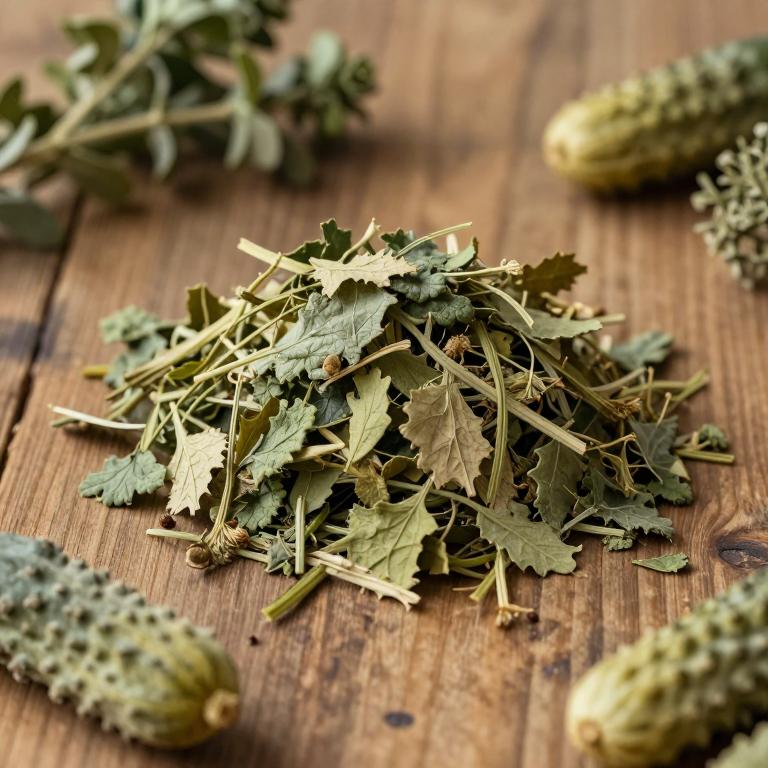
, scientifically known as Cucumis ficifolius, is a versatile plant widely valued in traditional medicine. Often recognized for its unique fruit, it possesses significant therapeutic properties, including antioxidant and anti-inflammatory effects. This plant is frequently studied for its potential to support digestive health and promote overall holistic wellness.
- Family
- Cucurbitaceae
- Native range
- Africa
- Parts used
- Root
- Common names
- Not available
- Scientific synonyms
- Cucumis Figarei Var. Microphyllus · Cucumis Figarei Var. Cyrtopodus · 2 more
Names and Synonyms
Scientific Names
Accepted name
Cucumis ficifoliusSynonyms
- Cucumis figarei var. microphyllus
- Cucumis figarei var. cyrtopodus
- Cucumis abyssinicus
- Cucumis figarei
Sources: Wikidata, Catalogue of Life
Taxonomical Classification
This plant belongs to the kingdom Plantae within the phylum Streptophyta and the class Equisetopsida. It is further classified under the subclass Magnoliidae and the order Cucurbitales. Finally, it resides in the family Cucurbitaceae and is identified by the genus Cucumis.
| Rank | Classification |
|---|---|
| Kingdom | Plantae |
| Phylum | Streptophyta |
| Class | Equisetopsida |
| Subclass | Magnoliidae |
| Order | Cucurbitales |
| Family | Cucurbitaceae |
| Genus | Cucumis |
Sources: The World Checklist of Vascular Plants (WCVP)
Distribution
This plant exhibits a broad geographical distribution across several regions of the African continent. In West Tropical Africa, it can be found in various countries including Senegal and Mauritania. Its presence extends further south within West Tropical Africa to include nations such as Ivory Coast and Nigeria. Additionally, the species is recorded in the West-Central Tropical Africa region, specifically in Rwanda. Collectively, these locations demonstrate the wide ecological range of this medicinal species.
| Region | Area |
|---|---|
| West Tropical Africa | Ivory Coast |
| West Tropical Africa | Mauritania |
| West Tropical Africa | Nigeria |
| West Tropical Africa | Senegal |
| West-Central Tropical Africa | Rwanda |
| West-Central Tropical Africa | DR Congo |
| Northeast Tropical Africa | Chad |
| Northeast Tropical Africa | Djibouti |
| Northeast Tropical Africa | Eritrea |
| Northeast Tropical Africa | Ethiopia |
Sources: The World Checklist of Vascular Plants (WCVP)
Botanical Identification
Life history
The life history of Cucumis ficifolia is characterized by a perennial lifecycle, though its growth patterns can vary depending on environmental conditions and cultivation practices. In terms of its structural development and survival strategy, the plant is classified under the life form of a chamaephyte, indicating that its perennially renewing buds are located close to the soil surface. This chamaephyte classification, appearing consistently across both its primary and secondary life form assessments, dictates its ability to endure varying seasonal shifts by maintaining its regenerative capacity near the ground level.
- Life form :
- chamaephyte
- Lifecycle :
- perennial
Morphology
The morphology of Cucumis ficifolium is characterized by a growth form primarily classified as a herb and a subshrub, exhibiting a non-woody structure. It functions as an obligatory climber, utilizing its specialized growth habit to ascend supports, and maintains an independent lifestyle without acting as a parasite. The plant is terrestrial in its habitat, rather than aquatic or epiphytic, and typically reaches a mean plant height of approximately 2 meters.
- Aquatic :
- terrestrial
- Climber :
- obligatory
- Epiphyte :
- terrestrial
- Growth form :
- herb
- Growth form :
- subshrub
- Parasite :
- independent
- Plant height mean:
- 2 m
- Woodiness :
- non-woody
Reproduction
The reproduction of Cucumis ficifolium is primarily driven by the production of seeds, which exhibit specific morphological characteristics essential for its propagation. The seed mass within this species is highly consistent, demonstrating minimal variance across the population. Specifically, the seed mass follows a very narrow range, with a mean mass of 0.010995 g. This distribution is tightly bounded, as evidenced by a maximum seed mass of 0.01116 g and a minimum seed mass of 0.01083 g. Such precision in seed size suggests a stabilized reproductive strategy aimed at maintaining uniform seedling vigor and resource allocation during the germination process.
- Seed mass max:
- 0.01116 g
- Seed mass mean:
- 0.010995 g
- Seed mass min:
- 0.01083 g
Sources: Global Inventory of Floras and Traits (GIFT)
Plant Parts
Cucumis ficifolius has 1 reported plant parts identified across 1 scientific publications and several other databases that are studied for medicinal purposes. The most consistently reported plant part include root.
| Plant part | Supporting sources | Consensus |
|---|---|---|
| Root | 1 supporting sources | ★☆☆☆☆ |
Root
- Journal of ethnopharmacology
Activities
Cucumis ficifolius has 1 reported activities identified across 1 scientific publications and several other databases. The most consistently reported activities include Hepatoprotective.
| Activity | Supporting sources | Consensus |
|---|---|---|
| Hepatoprotective | 1 supporting sources | ★☆☆☆☆ |
Hepatoprotective
- Journal of ethnopharmacology
Conditions
Cucumis ficifolius has 2 reported investigations on conditions identified across 1 scientific publications and several other databases. The most consistently reported conditions include abdominal pain, liver diseases.
| Condition | Supporting sources | Consensus |
|---|---|---|
| Abdominal pain | 1 supporting sources | ★☆☆☆☆ |
| Liver diseases | 1 supporting sources | ★☆☆☆☆ |
Abdominal pain
- Journal of ethnobiology and ethnomedicine
Liver diseases
- Journal of ethnopharmacology