pepperberry-tree
Cryptocarya obovata · Accepted scientific name
Scientific literature: Very Sparse (12 studies) · ★☆☆☆☆
pepperberry-tree, scientifically known as Cryptocarya obovata, is a versatile rainforest shrub native to Australia. Renowned for its glossy foliage and pungent, aromatic berries, this plant holds significant ethnobotanical value. Indigenous cultures have long utilized its fruit for medicinal purposes, leveraging its unique properties to support various health functions.
- Family
- Lauraceae
- Native range
- Asia-Tropical
- Parts used
- Fruit
- Common names
- Pepperberry-Tree · Purple-Laurel · 6 more
- Scientific synonyms
- Litsea Ferruginea Var. Lanceolata · Tetranthera Ferruginea Var. Lanceolata
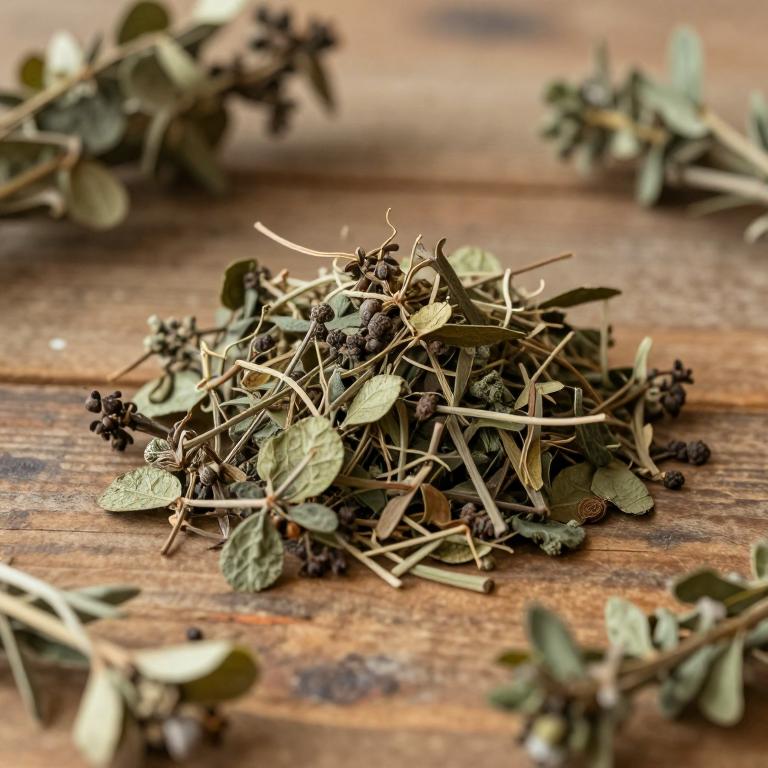
Names and Synonyms
Common Names
- pepperberry-tree
- purple-laurel
- she-beech
- white-sycamore
- white-walnut
- Australian laurel
- Pepperberry
- White Walnut
Scientific Names
Accepted name
Cryptocarya obovataSynonyms
- Litsea ferruginea var. lanceolata
- Tetranthera ferruginea var. lanceolata
Sources: Wikidata, Catalogue of Life
Taxonomical Classification
This plant belongs to the kingdom Plantae and is classified under the phylum Streptophyta and the class Equisetopsida. Within the subclass Magnoliidae, it is positioned in the order Laurales and the family Lauraceae. Finally, it is identified by its specific genus, Cryptocarya.
| Rank | Classification |
|---|---|
| Kingdom | Plantae |
| Phylum | Streptophyta |
| Class | Equisetopsida |
| Subclass | Magnoliidae |
| Order | Laurales |
| Family | Lauraceae |
| Genus | Cryptocarya |
Sources: The World Checklist of Vascular Plants (WCVP)
Distribution
This plant exhibits a broad geographical distribution spanning across several distinct regions. Within the Indo-China territory, it can be specifically found growing in Vietnam. Moving toward the Australian continent, its presence is well-documented in the state of New South Wales. Additionally, the species extends its reach further north into the tropical regions of Queensland. These varied locations demonstrate the plant's ability to inhabit diverse environments across Southeast Asia and Australia.
| Region | Area |
|---|---|
| Indo-China | Vietnam |
| Australia | New South Wales |
| Australia | Queensland |
Sources: The World Checklist of Vascular Plants (WCVP)
Botanical Identification
Ecology
The ecology of Cryptocarya obovata is fundamentally defined by its preference for lowland environments, where it thrives within the complex structural layers of tropical or subtropical forest ecosystems. In these low-elevation habitats, the species typically occupies well-drained soils and relies on the consistent humidity and stable thermal conditions characteristic of lowland biomes. As a component of the forest canopy or sub-canopy, its presence is closely tied to the nutrient cycling and light availability patterns found in these productive regions. The plant's ecological niche is shaped by its interaction with the moist, warm microclimates of the lowlands, which support its physiological requirements and influence its distribution alongside other diverse flora and fauna within the lowland forest community.
- Habitat :
- Lowland
Life history
The life history of Cryptocarya obovata is characterized by its classification as a phanerophyte, a growth form where the perennating buds are located high above the ground on aerial shoots. Within this category, it specifically functions as a phanerophyte, indicating its development as a woody plant that maintains its vital reproductive structures on elevated branches, protecting them from seasonal environmental stresses. This life strategy allows the species to establish a persistent presence in its habitat, utilizing its perennial structure to navigate seasonal changes while ensuring the survival of its buds above the soil surface.
- Life form :
- phanerophyte
Morphology
The morphology of Cryptocarya obovata is characterized by its growth form as a woody tree, reaching a maximum plant height of 40 m. As a terrestrial organism, it does not exhibit aquatic, semiaquatic, or epiphytic lifestyles, maintaining an independent existence rather than functioning as a parasite. Structurally, the plant is self-supporting, lacking the climbing or vining habits associated with lianas or facultative climbers, and instead relies on its sturdy, woody architecture to maintain its upright stature.
- Aquatic :
- terrestrial
- Climber :
- self-supporting
- Epiphyte :
- terrestrial
- Growth form :
- tree
- Parasite :
- independent
- Plant height max:
- 40 m
- Woodiness :
- woody
Physiology
The physiology of Cryptocarya obovata is characterized by a specific suite of morphological and metabolic adaptations, most notably its reliance on the C3 photosynthetic pathway for carbon fixation. The plant's vegetative structure features relatively small, specialized foliage, with leaf dimensions ranging from a minimum length of 0.5 cm to a maximum length of 1 cm. Correspondingly, the leaf width is similarly constrained, measuring between a minimum of 0.5 cm and a maximum of 1 cm, reflecting a compact leaf architecture integrated with its C3 metabolic processes.
- Leaf length max:
- 1 cm
- Leaf length min:
- 0.5 cm
- Leaf width max:
- 1 cm
- Leaf width min:
- 0.5 cm
- Photosynthetic pathway :
- C3
Sources: Global Inventory of Floras and Traits (GIFT)
Plant Parts
Cryptocarya obovata has 1 reported plant parts identified across 1 scientific publications and several other databases that are studied for medicinal purposes. The most consistently reported plant part include fruit.
| Plant part | Supporting sources | Consensus |
|---|---|---|
| Fruit | 1 supporting sources | ★☆☆☆☆ |
Fruit
- Journal of natural products
Chemicals
Cryptocarya obovata has 5 reported phytochemicals identified across 1 scientific publications and several other databases. The most consistently reported chemicals include Kurzichalcolactone B, obochalcolactone, oboflavanone A, oboflavanone B, obolactone.
| Chemical | Supporting sources | Consensus |
|---|---|---|
| Kurzichalcolactone B | 1 supporting sources | ★☆☆☆☆ |
| obochalcolactone | 1 supporting sources | ★☆☆☆☆ |
| oboflavanone A | 1 supporting sources | ★☆☆☆☆ |
| oboflavanone B | 1 supporting sources | ★☆☆☆☆ |
| obolactone | 1 supporting sources | ★☆☆☆☆ |
Kurzichalcolactone B
- Journal of natural products
obochalcolactone
- Journal of natural products
oboflavanone A
- Journal of natural products
oboflavanone B
- Journal of natural products
obolactone
- Journal of natural products
Preparations
Cryptocarya obovata has 2 reported preparations identified across 1 scientific publications and several other databases. The most consistently reported preparations include fruits, trunk bark.
| Preparation | Supporting sources | Consensus |
|---|---|---|
| Fruits | 1 supporting sources | ★☆☆☆☆ |
| Trunk bark | 1 supporting sources | ★☆☆☆☆ |
Fruits
- Journal of natural products
Trunk bark
- Journal of natural products