Cryptocarya concinna
Cryptocarya concinna · Accepted scientific name
Scientific literature: Very Sparse (5 studies) · ★☆☆☆☆
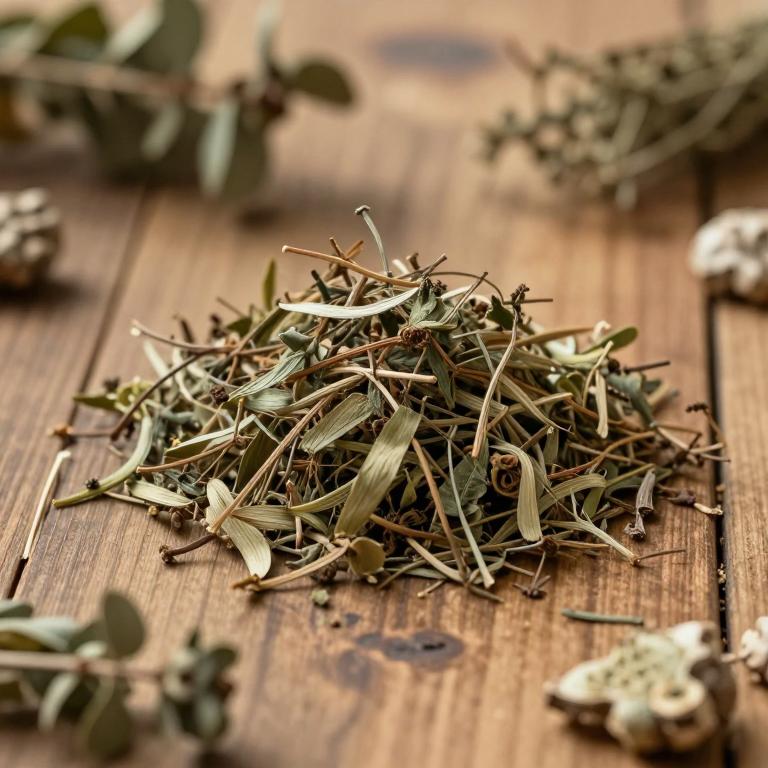
Cryptocarya concinna, scientifically known as Cryptocarya concinna, is a remarkable medicinal plant valued for its diverse therapeutic properties. Native to specific tropical regions, it contains bioactive compounds used in traditional healing to treat various ailments. This species serves as a vital natural resource for pharmacological research and holistic wellness.
- Family
- Not available
- Native range
- Asia-Temperate
- Parts used
- Leaf
- Common names
- Not available
- Scientific synonyms
- Not available
Names and Synonyms
Scientific Names
Accepted name
Cryptocarya concinnaDistribution
This plant exhibits a diverse geographical range across several specific regions in Asia. In China, its presence is documented in the South-Central, Southeast, and Hainan areas. The species is also found within the island of Taiwan, which falls under the Eastern Asia category. Additionally, its distribution extends into the Indo-China region, specifically within Cambodia. Together, these locations highlight a broad natural habitat stretching from mainland China to Southeast Asia.
| Region | Area |
|---|---|
| China | China South-Central |
| China | Hainan |
| China | China Southeast |
| Eastern Asia | Taiwan |
| Indo-China | Cambodia |
| Indo-China | Laos |
| Indo-China | Thailand |
| Indo-China | Vietnam |
Sources: The World Checklist of Vascular Plants (WCVP)
Botanical Identification
Ecology
The ecology of Cryptocarya concinna is characterized by a highly specific altitudinal distribution, as it is documented to inhabit a precise elevational band. The species occurs at a consistent altitude of 600 m AMSL, with its minimum, mean, and maximum elevational ranges all converging at this exact point. This uniformity suggests a specialized niche within its ecosystem, where the plant is adapted to the specific climatic and environmental conditions found at the 600 m AMSL threshold.
- Elevational range max:
- 600 m AMSL
Life history
The life history of Cryptocarya conciinna is characterized by its status as a perennial species, allowing it to persist in its environment over many growing seasons. As a phanerophyte, the plant maintains its photosynthetic organs on elevated stems, a life form that can be further categorized under the phanerophyte classification to describe its structural growth habit. Throughout its existence, the plant exhibits an evergreen deciduousness, meaning it retains its foliage year-round rather than shedding it seasonally.
- Deciduousness :
- evergreen
- Life form :
- phanerophyte
- Lifecycle :
- perennial
Morphology
The morphology of Cryptocarya concinna is characterized by its robust growth form as a woody tree, reaching an average height of 16.5 m. It functions as a self-supporting structure, rather than a climber or vine, and grows as an independent organism without parasitic tendencies. The plant is strictly terrestrial in its ecological habit, neither exhibiting aquatic nor epiphytic characteristics.
- Aquatic :
- terrestrial
- Climber :
- self-supporting
- Epiphyte :
- terrestrial
- Growth form :
- tree
- Parasite :
- independent
- Plant height mean:
- 16.5 m
- Woodiness :
- woody
Physiology
The physiology of Cryptocarya concinna is characterized by a C3 photosynthetic pathway, which dictates its carbon fixation processes and metabolic efficiency. The vegetative morphology is defined by elliptic-shaped leaves that possess entire margins, lacking both thorns and spines. These leaves exhibit significant dimensional variability, with lengths ranging from a minimum of 5 cm to a maximum of 10 cm, maintaining a mean length of 7.5 cm. In terms of lateral expansion, the leaf width varies between a minimum of 2 cm and a maximum of 3 cm. Furthermore, the plant does not function as a nitrogen fixer, relying instead on the assimilation of nitrogen from the soil through its root system rather than through symbiotic nitrogen-fixing relationships.
- Leaf form :
- elliptic
- Leaf length max:
- 10 cm
- Leaf length mean:
- 7.5 cm
- Leaf length min:
- 5 cm
- Leaf margin :
- entire
- Leaf spines :
- no
- Leaf thorns :
- no
- Leaf width max:
- 3 cm
- Leaf width min:
- 2 cm
- Nitrogen fixer :
- no
- Photosynthetic pathway :
- C3
Reproduction
The reproduction of Cryptocarya concinna is characterized by specific morphological dimensions regarding its inflorescence and subsequent fruit and seed development. The reproductive cycle begins with the inflorescence, which exhibits a length ranging from a minimum of 0.04 m to a maximum of 0.08 m. Following fertilization, the plant produces fruits that vary in size; the fruit length typically ranges from a minimum of 1.5 cm to a maximum of 2 cm, with an average length of 1.75 cm. The fruit width remains highly consistent, maintaining a steady measurement of 0.8 cm across its minimum, mean, and maximum values. Within these fruits, the seeds are produced with a uniform mass of 0.386 g, representing the minimum, mean, and maximum seed mass recorded for the species.
- Fruit length max:
- 2 cm
- Fruit length mean:
- 1.75 cm
- Fruit length min:
- 1.5 cm
- Fruit width max:
- 0.8 cm
- Inflorescence length max:
- 0.08 m
- Inflorescence length min:
- 0.04 m
- Seed mass mean:
- 0.386 g
Sources: Global Inventory of Floras and Traits (GIFT)
Plant Parts
Cryptocarya concinna has 1 reported plant parts identified across 3 scientific publications and several other databases that are studied for medicinal purposes. The most consistently reported plant part include leaf.
| Plant part | Supporting sources | Consensus |
|---|---|---|
| Leaf | 3 supporting sources | ★★☆☆☆ |
Leaf
- Natural product research
- Journal of natural products
- Plants (Basel, Switzerland)
Preparations
Cryptocarya concinna has 1 reported preparations identified across 3 scientific publications and several other databases. The most consistently reported preparations include leaf essential oils.
| Preparation | Supporting sources | Consensus |
|---|---|---|
| Leaf essential oils | 1 supporting sources | ★☆☆☆☆ |
Leaf essential oils
- Plants (Basel, Switzerland)