Cryptocarya chinensis
Cryptocarya chinensis · Accepted scientific name
Scientific literature: Very Sparse (12 studies) · ★☆☆☆☆
Cryptocarya chinensis, scientifically known as Cryptocarya chinensis, is a versatile medicinal plant valued in traditional herbal practices. Native to specific subtropical regions, it contains bioactive compounds prized for their therapeutic potential. Researchers study this species for its diverse pharmacological properties, aiming to unlock new treatments for various health conditions.
- Family
- Lauraceae
- Native range
- Asia-Temperate
- Parts used
- Leaf
- Common names
- Not available
- Scientific synonyms
- Beilschmiedia Chinensis
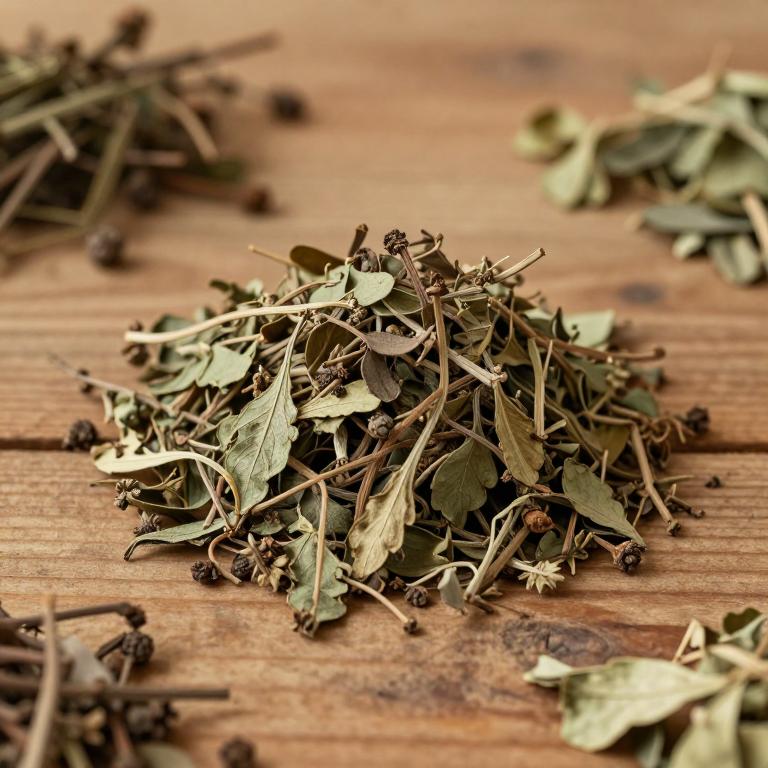
Names and Synonyms
Scientific Names
Accepted name
Cryptocarya chinensisSynonyms
- Beilschmiedia chinensis
Sources: Wikidata, Catalogue of Life
Taxonomical Classification
This plant belongs to the kingdom Plantae and the phylum Streptophyta, falling under the class Equisetopsida and subclass Magnoliidae. Within the order Laurales and the family Lauraceae, it is classified under the genus Cryptocarya. Specifically, the medicinal species is known as Cryptocarya chinensis.
| Rank | Classification |
|---|---|
| Kingdom | Plantae |
| Phylum | Streptophyta |
| Class | Equisetopsida |
| Subclass | Magnoliidae |
| Order | Laurales |
| Family | Lauraceae |
| Genus | Cryptocarya |
Sources: The World Checklist of Vascular Plants (WCVP)
Distribution
This plant exhibits a specific distribution pattern across several key regions of East Asia. Within China, it can be found growing in the South-Central, Southeast, and Hainan areas. Its presence also extends to the island nation of Japan. Furthermore, the species is documented within the Nansei-shotō archipelago. Collectively, these locations define the natural geographical range of Cryptocarya chinensis.
| Region | Area |
|---|---|
| China | China South-Central |
| China | Hainan |
| China | China Southeast |
| Eastern Asia | Japan |
| Eastern Asia | Nansei-shoto |
| Eastern Asia | Taiwan |
| Indo-China | Vietnam |
Sources: The World Checklist of Vascular Plants (WCVP)
Botanical Identification
Ecology
The ecology of Cryptocarya chinensis is characterized by its specific altitudinal distribution within montane and subtropical forest ecosystems. This species typically thrives within a defined elevational range, occupying habitats starting from a minimum altitude of 300 m AMSL. As elevation increases, the plant's presence extends through mid-altitude zones, maintaining a mean elevation of approximately 700 m AMSL. The upper limit of its ecological niche is reached at a maximum elevation of 1100 m AMSL, beyond which the environmental conditions likely become less suitable for its growth and survival.
- Elevational range max:
- 1100 m AMSL
- Elevational range mean:
- 700 m AMSL
- Elevational range min:
- 300 m AMSL
Life history
The life history of Cryptocarya chinensis is characterized by its status as a perennial plant, ensuring its presence in the ecosystem over multiple growing seasons. As a phanerophyte, its reproductive buds are located on aerial shoots well above the ground, a structural adaptation that defines its primary life form. This species maintains a consistent photosynthetic capacity through its evergreen nature, retaining its foliage throughout the year rather than undergoing seasonal shedding.
- Deciduousness :
- evergreen
- Life form :
- phanerophyte
- Lifecycle :
- perennial
Morphology
The morphology of Cryptocarya chinensis is characterized by its growth form as a woody tree, which typically reaches a significant height with an average measurement of 18 m. As a terrestrial species, it is neither aquatic nor an epiphyte, maintaining an independent existence without acting as a parasite. In terms of structural support, the plant is categorized as self-supporting, meaning it does not function as a liana or a climbing vine, but rather stands on its own through its robust, woody architecture.
- Aquatic :
- terrestrial
- Climber :
- self-supporting
- Epiphyte :
- terrestrial
- Growth form :
- tree
- Parasite :
- independent
- Plant height mean:
- 18 m
- Woodiness :
- woody
Physiology
The physiology of Cryptocarya chinensis is characterized by a C3 photosynthetic pathway, which dictates its metabolic processes and carbon fixation efficiency. Its foliage is composed of elliptic leaves that feature entire margins, completely lacking in both thorns and spines. The leaf dimensions exhibit specific morphological variability, with lengths ranging from a minimum of 7 cm to a mean of 9 cm, reaching a maximum of 11 cm. Correspondingly, the leaf width varies from a minimum of 3.5 cm to a maximum of 5.5 cm. Furthermore, the plant does not function as a nitrogen fixer, relying instead on the available soil nutrients for its developmental and physiological requirements.
- Leaf form :
- elliptic
- Leaf length max:
- 11 cm
- Leaf length mean:
- 9 cm
- Leaf length min:
- 7 cm
- Leaf margin :
- entire
- Leaf spines :
- no
- Leaf thorns :
- no
- Leaf width max:
- 5.5 cm
- Leaf width min:
- 3.5 cm
- Nitrogen fixer :
- no
- Photosynthetic pathway :
- C3
Reproduction
The reproduction of Cryptocarya chinensis is characterized by its specific inflorescence and fruit morphology. The plant produces inflorescences that vary in length, ranging from a minimum of 0.015 m to a maximum of 0.04 m. Following pollination, the development of the fruit exhibits measurable dimensional variation; the fruit length ranges from a minimum of 0.75 cm to a maximum of 0.9 cm, with an average length of 0.825 cm. Similarly, the fruit width fluctuates between a minimum of 0.9 cm and a maximum of 1.2 cm, maintaining a mean width of 1.05 cm. Regarding the movement of its offspring, the species utilizes a zoochorous dispersal syndrome, relying on animals to facilitate the spread of its seeds.
- Dispersal syndrome :
- zoochorous
- Fruit length max:
- 0.9 cm
- Fruit length mean:
- 0.825 cm
- Fruit length min:
- 0.75 cm
- Fruit width max:
- 1.2 cm
- Fruit width mean:
- 1.05 cm
- Fruit width min:
- 0.9 cm
- Inflorescence length max:
- 0.04 m
- Inflorescence length min:
- 0.015 m
Sources: Global Inventory of Floras and Traits (GIFT)
Plant Parts
Cryptocarya chinensis has 1 reported plant parts identified across 1 scientific publications and several other databases that are studied for medicinal purposes. The most consistently reported plant part include leaf.
| Plant part | Supporting sources | Consensus |
|---|---|---|
| Leaf | 1 supporting sources | ★☆☆☆☆ |
Leaf
- Journal of natural products
Chemicals
Cryptocarya chinensis has 9 reported phytochemicals identified across 1 scientific publications and several other databases. The most consistently reported chemicals include (+)-8,9-Dihydrostepharine, (+)-Eschscholtzidine N-oxide, (-)-12-Hydroxycrychine, CRYPTOCARYANONE A, Crychine.
| Chemical | Supporting sources | Consensus |
|---|---|---|
| (+)-8,9-Dihydrostepharine | 1 supporting sources | ★☆☆☆☆ |
| (+)-Eschscholtzidine N-oxide | 1 supporting sources | ★☆☆☆☆ |
| (-)-12-Hydroxycrychine | 1 supporting sources | ★☆☆☆☆ |
| CRYPTOCARYANONE A | 1 supporting sources | ★☆☆☆☆ |
| Crychine | 1 supporting sources | ★☆☆☆☆ |
| INFECTOCARYONE | 1 supporting sources | ★☆☆☆☆ |
| Isoamuronine | 1 supporting sources | ★☆☆☆☆ |
| Isocryprochine | 1 supporting sources | ★☆☆☆☆ |
| Prooxocryptochine | 1 supporting sources | ★☆☆☆☆ |
(+)-8,9-Dihydrostepharine
- Journal of natural products
(+)-Eschscholtzidine N-oxide
- Journal of natural products
(-)-12-Hydroxycrychine
- Journal of natural products
CRYPTOCARYANONE A
- Journal of natural products
Crychine
- The Journal of pharmacy and pharmacology
INFECTOCARYONE
- Journal of natural products
Isoamuronine
- Journal of natural products
Isocryprochine
- Journal of natural products
Prooxocryptochine
- Journal of natural products
Activities
Cryptocarya chinensis has 1 reported activities identified across 1 scientific publications and several other databases. The most consistently reported activities include Cytotoxic.
| Activity | Supporting sources | Consensus |
|---|---|---|
| Cytotoxic | 1 supporting sources | ★☆☆☆☆ |
Cytotoxic
- Journal of natural products
Preparations
Cryptocarya chinensis has 2 reported preparations identified across 1 scientific publications and several other databases. The most consistently reported preparations include ethanol extract of the wood, leaves.
| Preparation | Supporting sources | Consensus |
|---|---|---|
| Ethanol extract of the wood | 1 supporting sources | ★☆☆☆☆ |
| Leaves | 1 supporting sources | ★☆☆☆☆ |
Ethanol extract of the wood
- Journal of natural products
Leaves
- Journal of natural products