Cryptocarya aschersoniana
Cryptocarya aschersoniana · Accepted scientific name
Scientific literature: Very Sparse (7 studies) · ★☆☆☆☆
, scientifically known as Cryptocarya aschersoniania, is a significant medicinal plant native to specific tropical regions. Valued for its diverse pharmacological properties, it is frequently utilized in traditional medicine to treat various ailments. Research continues to explore its bioactive compounds, highlighting its immense potential for modern therapeutic applications.
- Family
- Lauraceae
- Native range
- Southern America
- Parts used
- Leaf
- Common names
- Not available
- Scientific synonyms
- Cryptocarya Subcorymbosa · Cryptocarya Minutiflora
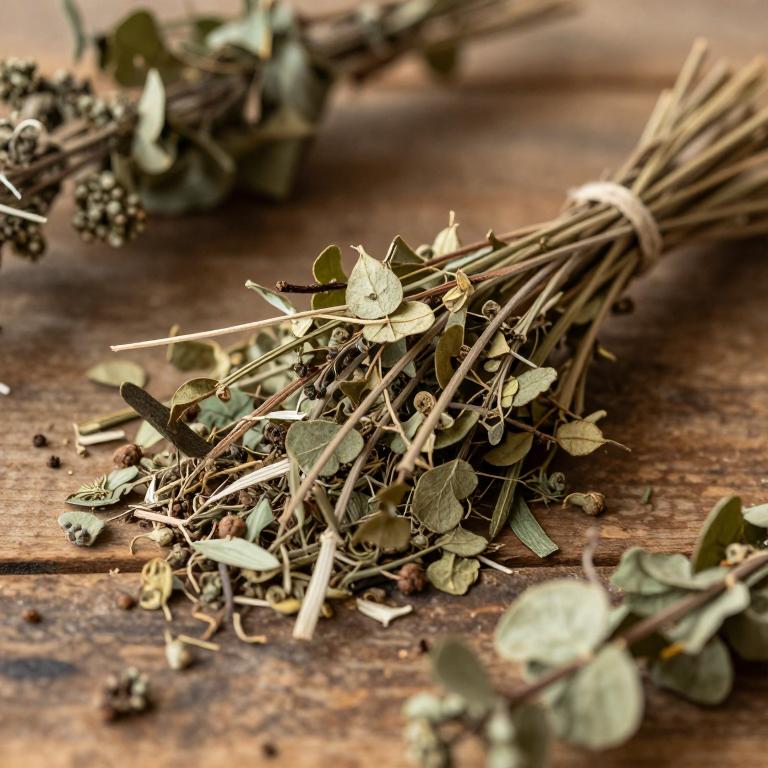
Names and Synonyms
Scientific Names
Accepted name
Cryptocarya aschersonianaSynonyms
- Cryptocarya subcorymbosa
- Cryptocarya minutiflora
Sources: Wikidata, Catalogue of Life
Taxonomical Classification
This plant belongs to the kingdom Plantae and is classified under the phylum Streptophyta and the class Equisetopsida. Within the subclass Magnoliidae, it falls under the order Laurales and the family Lauraceae. Finally, its taxonomic identity is defined by the genus Cryptocarya.
| Rank | Classification |
|---|---|
| Kingdom | Plantae |
| Phylum | Streptophyta |
| Class | Equisetopsida |
| Subclass | Magnoliidae |
| Order | Laurales |
| Family | Lauraceae |
| Genus | Cryptocarya |
Sources: The World Checklist of Vascular Plants (WCVP)
Distribution
This plant exhibits a broad geographical distribution across several key regions of South America. In the western portion of the continent, its range extends through the countries of Colombia and Peru. Moving toward the east, the species is widely established within the diverse landscapes of Brazil. Specifically, it can be found in the West-Central, Southeast, and South regions of this large nation. Consequently, its habitat spans from the Andean territories to the varied climatic zones of the Brazilian interior.
| Region | Area |
|---|---|
| Western South America | Colombia |
| Western South America | Peru |
| Brazil | Brazil West-Central |
| Brazil | Brazil Southeast |
| Brazil | Brazil South |
| Southern South America | Argentina Northeast |
| Southern South America | Uruguay |
Sources: The World Checklist of Vascular Plants (WCVP)
Botanical Identification
Ecology
The ecology of Cryptocarya ashersoniana is characterized by its presence within the Floresta Ombrófila (also known as Floresta Pluvial), where it thrives in the humid and stable conditions provided by these rainforest ecosystems. This species occupies a specific altitudinal niche, typically found at elevations ranging from a minimum of 500 m AMSL to a maximum of 1000 m AMSL.
- Elevational range max:
- 1000 m AMSL
- Elevational range min:
- 500 m AMSL
- Habitat :
- Floresta Ombrófila (= Floresta Pluvial)
Life history
The life history of Cryptocarya aschersoniana is characterized by its status as a perennial organism, meaning it persists through multiple growing seasons and maintains its physiological functions over a long lifespan. Throughout its existence, the plant maintains an evergreen habit, retaining its foliage year-round rather than shedding it seasonally, which allows for continuous photosynthetic activity.
- Deciduousness :
- evergreen
- Lifecycle :
- perennial
Morphology
The morphology of Cryptocarya aschersoniana is characterized by a woody growth form that can manifest as either a shrub or a tree. This species is a terrestrial plant that functions as an independent organism, not acting as a parasite or an epiphyte. As a self-supporting species, it does not exhibit climbing habits such as being a liana or a vine. In terms of stature, the plant reaches a mean height of approximately 20 m, with its maximum potential height extending up to 30 m.
- Aquatic :
- terrestrial
- Climber :
- self-supporting
- Epiphyte :
- terrestrial
- Growth form :
- tree
- Growth form :
- shrub
- Parasite :
- independent
- Plant height max:
- 30 m
- Plant height mean:
- 20 m
- Woodiness :
- woody
Physiology
The physiology of Cryptocarya ashersoniana is characterized by a standard C3 photosynthetic pathway, utilizing the Calvin cycle to fix atmospheric carbon dioxide during the light-independent reactions. As a member of the Lauraceae family, its metabolic processes rely on the enzyme RuBisCO for carbon assimilation, which is typical for plants operating under this specific photosynthetic mechanism rather than the C4 or CAM pathways. Furthermore, this species does not function as a nitrogen fixer, meaning it lacks the specialized symbiotic relationship with diazotrophic bacteria, such as rhizobia, required to convert atmospheric nitrogen into bioavailable forms, and instead relies on the uptake of nitrates or ammonium from the surrounding soil substrate.
- Nitrogen fixer :
- no
- Photosynthetic pathway :
- C3
Reproduction
Reproduction in Cryptocarya ascershoniana is characterized by the development of fleshy fruits that serve as the primary vessel for seed dispersal. The seeds produced by this species exhibit high morphological consistency, with a uniform seed length measured at 21 mm, maintaining both a minimum and maximum value of 21 mm. In terms of physical capacity, the seeds possess a constant volume of 4400 mm³, a value that remains consistent across the minimum, maximum, and mean measurements. These fleshy fruits provide a nutrient-rich medium that facilitates the protection and eventual propagation of the seeds within their natural habitat.
- Fruit dryness :
- fleshy
- Seed length mean:
- 21 mm
- Seed volume max:
- 4400 mm³
Sources: Global Inventory of Floras and Traits (GIFT)
Plant Parts
Cryptocarya aschersoniana has 1 reported plant parts identified across 1 scientific publications and several other databases that are studied for medicinal purposes. The most consistently reported plant part include leaf.
| Plant part | Supporting sources | Consensus |
|---|---|---|
| Leaf | 1 supporting sources | ★☆☆☆☆ |
Leaf
- Anais da Academia Brasileira de Ciencias
Chemicals
Cryptocarya aschersoniana has 3 reported phytochemicals identified across 1 scientific publications and several other databases. The most consistently reported chemicals include LIMONENE, Linalool, NEROLIDOL.
| Chemical | Supporting sources | Consensus |
|---|---|---|
| LIMONENE | 1 supporting sources | ★☆☆☆☆ |
| Linalool | 1 supporting sources | ★☆☆☆☆ |
| NEROLIDOL | 1 supporting sources | ★☆☆☆☆ |
LIMONENE
- Anais da Academia Brasileira de Ciencias
Linalool
- Anais da Academia Brasileira de Ciencias
NEROLIDOL
- Anais da Academia Brasileira de Ciencias
Activities
Cryptocarya aschersoniana has 1 reported activities identified across 1 scientific publications and several other databases. The most consistently reported activities include Cytotoxic.
| Activity | Supporting sources | Consensus |
|---|---|---|
| Cytotoxic | 1 supporting sources | ★☆☆☆☆ |
Cytotoxic
- Anais da Academia Brasileira de Ciencias
Conditions
Cryptocarya aschersoniana has 2 reported investigations on conditions identified across 1 scientific publications and several other databases. The most consistently reported conditions include cutaneous leishmaniasis, leishmaniasis.
| Condition | Supporting sources | Consensus |
|---|---|---|
| Cutaneous leishmaniasis | 1 supporting sources | ★☆☆☆☆ |
| Leishmaniasis | 1 supporting sources | ★☆☆☆☆ |
Cutaneous leishmaniasis
- Anais da Academia Brasileira de Ciencias
Leishmaniasis
- Anais da Academia Brasileira de Ciencias
Preparations
Cryptocarya aschersoniana has 1 reported preparations identified across 1 scientific publications and several other databases. The most consistently reported preparations include leaf essential oil.
| Preparation | Supporting sources | Consensus |
|---|---|---|
| Leaf essential oil | 1 supporting sources | ★☆☆☆☆ |
Leaf essential oil
- Anais da Academia Brasileira de Ciencias