Chilean Acorn
Cryptocarya alba · Accepted scientific name
Scientific literature: Very Sparse (11 studies) · ★☆☆☆☆
Chilean Acorn, scientifically known as Cryptocarya alba, is a versatile evergreen tree native to the temperate forests of Chile. Highly valued in traditional medicine, its various parts possess antioxidant and anti-inflammatory properties. This resilient species plays a crucial role in forest ecosystems while offering significant potential for pharmacological research.
- Family
- Lauraceae
- Native range
- Southern America
- Parts used
- Leaf
- Common names
- Chilean Acorn
- Scientific synonyms
- Cryptocarya Mammosa · Cryptocarya Peumus · 11 more
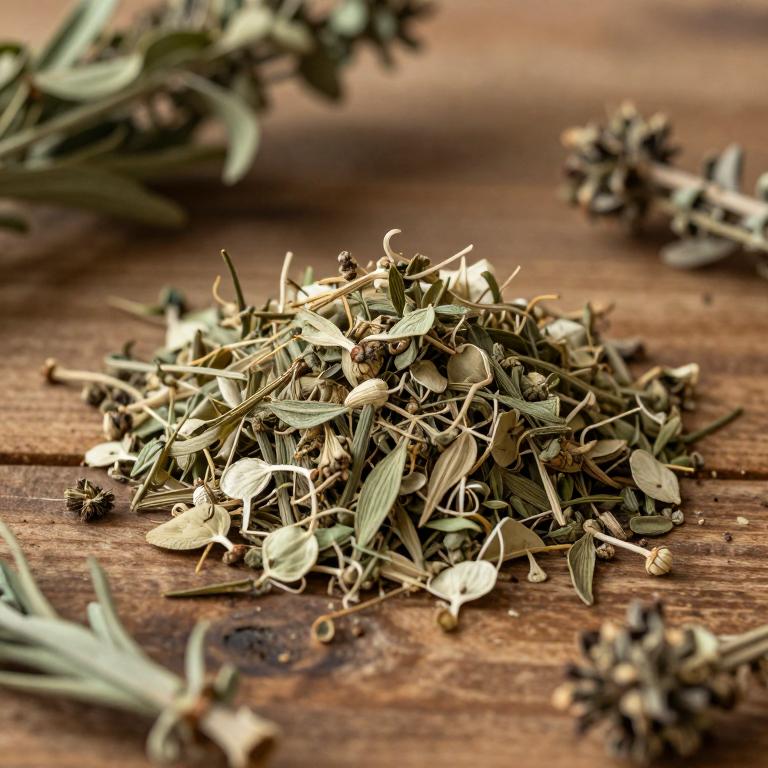
Names and Synonyms
Common Names
- Chilean Acorn
Scientific Names
Accepted name
Cryptocarya albaSynonyms
- Cryptocarya mammosa
- Cryptocarya peumus
- Cryptocarya peumus var. stenantha
- Icosandra rufescens
- Cryptocarya peumus var. laxiflora
- Laurus peumo
- Laurus peumus
- Peumus rubra
- Peumus alba
- Peumus mammosa
- Cryptocarya stenantha
- Cryptocarya laxiflora
- Cryptocarya mammosa
Regional and Traditional Names
Spanish:
- Laurus peumo
- Laurus peumus
- Peumo
- Cryptocarya stenantha
- Peumus alba
- Cryptocarya peumo
- Icosandra rufescens
- Cryptocarya peumus
- Cryptocarya rubra
- Peumus mammosa
- Cryptocarya laxiflora
- Peumus rubra
- Cryptocarya mammosa
- Peumo
French:
- Cryptocarya rubra
- Cryptodira alba
Sources: Wikidata, Catalogue of Life
Taxonomical Classification
This plant belongs to the kingdom Plantae and is classified within the phylum Streptophyta and the class Equisetopsida. It falls under the subclass Magnoliidae and the order Laurales, specifically within the family Lauraceae. Finally, its taxonomic designation is completed by its classification under the genus Cryptocarya.
| Rank | Classification |
|---|---|
| Kingdom | Plantae |
| Phylum | Streptophyta |
| Class | Equisetopsida |
| Subclass | Magnoliidae |
| Order | Laurales |
| Family | Lauraceae |
| Genus | Cryptocarya |
Sources: The World Checklist of Vascular Plants (WCVP)
Distribution
This plant exhibits a specific geographical range restricted to certain regions of Southern South America. Its primary habitat includes the central parts of Chile, where it thrives in the local climate. Additionally, the species can be found extending further into the southern territories of Chile. Beyond the mainland, its distribution also reaches the unique environment of the Juan Fernández Islands. Consequently, its presence is characterized by these distinct localized pockets across the southern reaches of the continent.
| Region | Area |
|---|---|
| Southern South America | Chile Central |
| Southern South America | Chile South |
| Southern South America | Juan Fernández Is. |
Sources: The World Checklist of Vascular Plants (WCVP)
Botanical Identification
Ecology
The ecology of Cryptocarya alba is characterized by its ability to inhabit a broad altitudinal gradient, spanning from sea level up to a maximum elevation of 1500 m AMSL. This wide elevational range, starting from 0 m AMSL, allows the species to adapt to diverse environmental conditions and varying topographic complexities within its native habitat. By occupying such a significant vertical range, the plant interacts with a variety of microclimates, which influences its distribution and ecological role within its ecosystem.
- Elevational range max:
- 1500 m AMSL
- Elevational range min:
- 0 m AMSL
Life history
The life history of Cryptocarya alba is characterized by its status as a perennial organism, meaning it persists through multiple growing seasons rather than completing its cycle in a single year. In terms of its structural growth strategy, the species is classified as a phanerophyte, a life form where the perennating buds are located well above the ground level on aerial shoots. This phanerophytic habit ensures its survival and continued development over long temporal scales within its ecosystem.
- Life form :
- phanerophyte
- Lifecycle :
- perennial
Morphology
The morphology of Cryptocarya alba is characterized by a robust, woody growth form, specifically categorized as a tree. As a terrestrial species, it does not exhibit aquatic or semiaquatic tendencies, nor does it function as an epiphyte; instead, it grows directly from the soil as an independent organism rather than a parasite. The plant is self-supporting in its structural development, lacking the climbing habits of lianas or vines, and maintains a sturdy, perennial architecture defined by its woody tissue.
- Aquatic :
- terrestrial
- Climber :
- self-supporting
- Epiphyte :
- terrestrial
- Growth form :
- tree
- Parasite :
- independent
- Woodiness :
- woody
Physiology
The physiology of Cryptocarya alba is characterized by a specialized metabolic framework designed for survival in diverse environmental conditions. Most fundamentally, the plant utilizes a C3 photosynthetic pathway, a process where the first stable product of carbon fixation is a three-carbon molecule, typically occurring under moderate light and temperature conditions. This metabolic strategy dictates its water-use efficiency and gas exchange dynamics, as the plant relies on the enzyme Rubisco to facilitate carbon assimilation. Complementing this photosynthetic mechanism, the plant exhibits physiological adaptations for drought tolerance and resource management, allowing it to maintain cellular homeostasis and osmotic balance even during periods of limited water availability. These integrated physiological processes enable the plant to optimize energy production and biomass accumulation within its native ecological niche.
- Photosynthetic pathway :
- C3
Reproduction
The reproduction of Cryptocarya alba is characterized by specific seed morphological parameters that facilitate its propagation within its ecosystem. The seeds produced by this species exhibit a highly consistent mass, with a measured mean seed mass of 0.83333 g. This uniformity is reflected in the seed size distribution, as both the maximum and minimum recorded seed masses are identical at 0.83333 g, indicating a lack of significant variance in the weight of the individual seeds produced during the reproductive cycle.
- Seed mass mean:
- 0.83333 g
Sources: Global Inventory of Floras and Traits (GIFT)
Plant Parts
Cryptocarya alba has 1 reported plant parts identified across 1 scientific publications and several other databases that are studied for medicinal purposes. The most consistently reported plant part include leaf.
| Plant part | Supporting sources | Consensus |
|---|---|---|
| Leaf | 1 supporting sources | ★☆☆☆☆ |
Leaf
- Journal of natural products
Chemicals
Cryptocarya alba has 3 reported phytochemicals identified across 1 scientific publications and several other databases. The most consistently reported chemicals include Anthocyanins, Eucalyptol, Flavonoids.
| Chemical | Supporting sources | Consensus |
|---|---|---|
| Anthocyanins | 1 supporting sources | ★☆☆☆☆ |
| Eucalyptol | 1 supporting sources | ★☆☆☆☆ |
| Flavonoids | 1 supporting sources | ★☆☆☆☆ |
Anthocyanins
- Journal of toxicology and environmental health. Part A
Eucalyptol
- Molecules (Basel, Switzerland)
Flavonoids
- Journal of toxicology and environmental health. Part A
Activities
Cryptocarya alba has 3 reported activities identified across 1 scientific publications and several other databases. The most consistently reported activities include Antibacterial, Antioxidant, Cytotoxic.
| Activity | Supporting sources | Consensus |
|---|---|---|
| Antibacterial | 1 supporting sources | ★☆☆☆☆ |
| Antioxidant | 1 supporting sources | ★☆☆☆☆ |
| Cytotoxic | 1 supporting sources | ★☆☆☆☆ |
Antibacterial
- Molecules (Basel, Switzerland)
Antioxidant
- Molecules (Basel, Switzerland)
Cytotoxic
- Journal of natural products
Conditions
Cryptocarya alba has 2 reported investigations on conditions identified across 1 scientific publications and several other databases. The most consistently reported conditions include antioxidant activity, rheumatism.
| Condition | Supporting sources | Consensus |
|---|---|---|
| Antioxidant activity | 1 supporting sources | ★☆☆☆☆ |
| Rheumatism | 1 supporting sources | ★☆☆☆☆ |
Antioxidant activity
- Molecules (Basel, Switzerland)
Rheumatism
- Journal of toxicology and environmental health. Part A
Preparations
Cryptocarya alba has 2 reported preparations identified across 1 scientific publications and several other databases. The most consistently reported preparations include dichloromethane-soluble repository extract, essential oils.
| Preparation | Supporting sources | Consensus |
|---|---|---|
| Dichloromethane-soluble repository extract | 1 supporting sources | ★☆☆☆☆ |
| Essential oils | 1 supporting sources | ★☆☆☆☆ |
Dichloromethane-soluble repository extract
- Journal of natural products
Essential oils
- Molecules (Basel, Switzerland)