Cryptocarya agathophylla
Cryptocarya agathophylla · Accepted scientific name
Scientific literature: Very Extensive (239 studies) · ★★★★★
Cryptocarya agatophylla, scientifically known as Cryptocarya agatophylla, is a remarkable medicinal plant native to tropical rainforest ecosystems. Renowned for its diverse bioactive compounds, this species offers significant therapeutic potential. Researchers increasingly study its phytochemical properties to develop natural treatments for various ailments, highlighting its importance in ethnopharmacology.
- Family
- Lauraceae
- Native range
- Africa
- Parts used
- Leaf
- Common names
- Not available
- Scientific synonyms
- Agathophyllum Ravensara · Ravensara Aromatica · 5 more
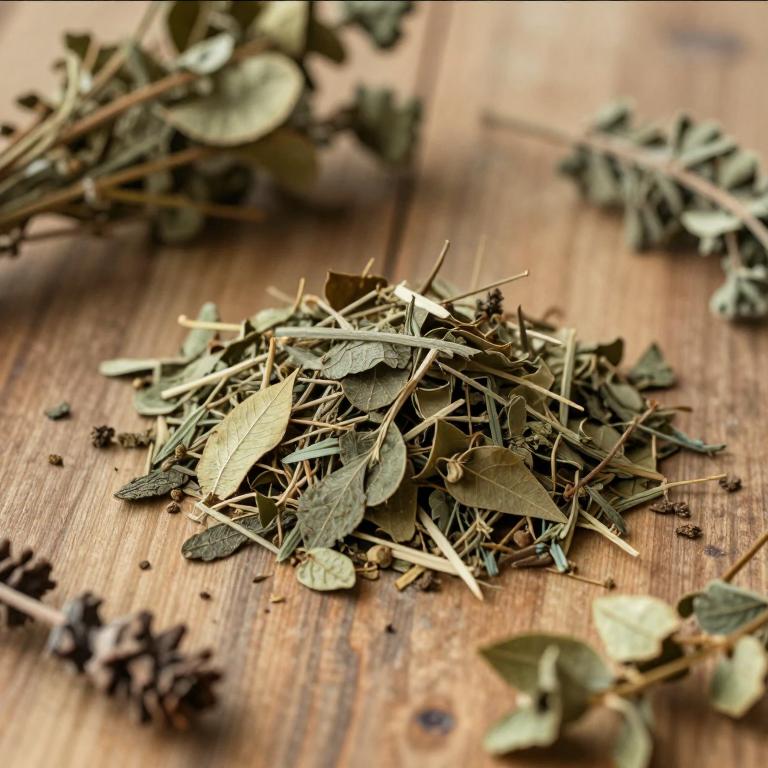
Names and Synonyms
Scientific Names
Accepted name
Cryptocarya agathophyllaSynonyms
- Agathophyllum ravensara
- Ravensara aromatica
- Ravensara anisata
- Ravensara aromatica
- Agathophyllum aromaticum
- Evodia aromatica
- Evodia ravensarae
Regional and Traditional Names
French:
- ravinsara
Sources: Wikidata, Catalogue of Life
Taxonomical Classification
This plant belongs to the kingdom Plantae and is classified under the phylum Streptophyta and the class Equisetopsida. Within the subclass Magnoliidae, it is ordered as Laurales and placed in the family Lauraceae. Finally, its taxonomic identity is defined by the genus Cryptocarya, specifically the species Cryptocarya agatophylla.
| Rank | Classification |
|---|---|
| Kingdom | Plantae |
| Phylum | Streptophyta |
| Class | Equisetopsida |
| Subclass | Magnoliidae |
| Order | Laurales |
| Family | Lauraceae |
| Genus | Cryptocarya |
Sources: The World Checklist of Vascular Plants (WCVP)
Distribution
This plant is characterized by a very specific and limited geographical range. It is native to the tropical regions located within the Western Indian Ocean. Specifically, its natural distribution is confined to the island of Madagascar. Because it is endemic to this single area, it plays a unique role in the local ecosystem. Consequently, the survival of this species is closely tied to the environmental conditions found on this island.
| Region | Area |
|---|---|
| Western Indian Ocean | Madagascar |
Sources: The World Checklist of Vascular Plants (WCVP)
Botanical Identification
Life history
The life history of Cryptocarya agatophylla is characterized by its status as a perennial species, meaning it maintains its vegetative structures and continues to grow through multiple growing seasons rather than completing its cycle in a single year. As a long-lived woody plant, it follows a developmental trajectory that moves from seed germination into an extended vegetative establishment phase, eventually reaching reproductive maturity where it can produce flowers and fruits repeatedly over many years. This perennial nature allows the plant to invest significant energy into structural stability and long-term survival within its ecological niche, providing a consistent presence in its habitat across varying seasonal cycles.
- Lifecycle :
- perennial
Morphology
The morphology of Cryptocarya agathophylla is characterized by its stature as a woody tree, reaching an average height of approximately 20 m. Unlike climbing species, it is a self-supporting plant that maintains a sturdy, tree-like growth form.
- Climber :
- self-supporting
- Growth form :
- tree
- Plant height mean:
- 20 m
- Woodiness :
- woody
Physiology
The physiology of Cryptocarya agatophylla is characterized by its metabolic processes and nutritional strategies typical of members within the Lauraceae family. As a woody perennial, its physiological functions are centered around efficient carbon sequestration through photosynthesis and the regulation of transpiration to maintain water balance within its canopy. In terms of its nutrient acquisition strategies, the plant does not possess a symbiotic relationship with diazotrophic bacteria to convert atmospheric gas into organic forms; therefore, it is not a nitrogen fixer. This lack of nitrogen-fixing capability means the plant relies entirely on the uptake of nitrates and ammonium from the soil through its root system to fulfill its physiological requirements for amino acid and protein synthesis. Its metabolic activity is closely tied to environmental factors such as light intensity, soil moisture, and ambient temperature, which dictate its rate of respiration and nutrient assimilation.
- Nitrogen fixer :
- no
Reproduction
The reproduction of Cryptocarya agatophylia is characterized by the production of seeds that exhibit a highly consistent physical profile. Based on available botanical data, the seed mass for this species is remarkably uniform, with a mean value of 8.3333 g. This consistency is reflected in the lack of variance across the measured population, as both the maximum and minimum seed mass recorded are also 8.3333 g. Such precise uniformity in seed mass suggests a specialized reproductive strategy where energy allocation per propagule is strictly regulated, ensuring that each seed possesses a standardized amount of nutrient reserves to support early seedling development.
- Seed mass mean:
- 8.3333 g
Sources: Global Inventory of Floras and Traits (GIFT)
Plant Parts
Cryptocarya agathophylla has 1 reported plant parts identified across 1 scientific publications and several other databases that are studied for medicinal purposes. The most consistently reported plant part include leaf.
| Plant part | Supporting sources | Consensus |
|---|---|---|
| Leaf | 1 supporting sources | ★☆☆☆☆ |
Leaf
- Phytochemistry
Chemicals
Cryptocarya agathophylla has 21 reported phytochemicals identified across 1 scientific publications and several other databases. The most consistently reported chemicals include 1,8-Cineole, ALPHA-PINENE, Alpha terpinene, BETA-CARYOPHYLLENE, BETA-PINENE.
| Chemical | Supporting sources | Consensus |
|---|---|---|
| 1,8-Cineole | 1 supporting sources | ★☆☆☆☆ |
| ALPHA-PINENE | 1 supporting sources | ★☆☆☆☆ |
| Alpha terpinene | 1 supporting sources | ★☆☆☆☆ |
| BETA-CARYOPHYLLENE | 1 supporting sources | ★☆☆☆☆ |
| BETA-PINENE | 1 supporting sources | ★☆☆☆☆ |
| CITRONELLAL | 1 supporting sources | ★☆☆☆☆ |
| Citronellol | 1 supporting sources | ★☆☆☆☆ |
| Citronellyl acetate | 1 supporting sources | ★☆☆☆☆ |
| EO | 1 supporting sources | ★☆☆☆☆ |
| Elemicin | 1 supporting sources | ★☆☆☆☆ |
1,8-Cineole
- Dr. Duke
ALPHA-PINENE
- Dr. Duke
Alpha terpinene
- Dr. Duke
BETA-CARYOPHYLLENE
- Dr. Duke
BETA-PINENE
- Dr. Duke
CITRONELLAL
- Dr. Duke
Citronellol
- Dr. Duke
Citronellyl acetate
- Dr. Duke
EO
- Dr. Duke
Elemicin
- Dr. Duke
Activities
Cryptocarya agathophylla has 205 reported activities identified across 1 scientific publications and several other databases. The most consistently reported activities include Antimutagenic, (-)-Chronotropic, (-)-Inotropic, ACE-Inhibitor, AChE-Inhibitor.
| Activity | Supporting sources | Consensus |
|---|---|---|
| Antimutagenic | 2 supporting sources | ★☆☆☆☆ |
| (-)-Chronotropic | 1 supporting sources | ★☆☆☆☆ |
| (-)-Inotropic | 1 supporting sources | ★☆☆☆☆ |
| ACE-Inhibitor | 1 supporting sources | ★☆☆☆☆ |
| AChE-Inhibitor | 1 supporting sources | ★☆☆☆☆ |
| Acaricide | 1 supporting sources | ★☆☆☆☆ |
| Aldose-Reductase-Inhibitor | 1 supporting sources | ★☆☆☆☆ |
| Allelochemic | 1 supporting sources | ★☆☆☆☆ |
| Allelopathic | 1 supporting sources | ★☆☆☆☆ |
| Allergenic | 1 supporting sources | ★☆☆☆☆ |
Antimutagenic
- Dr. Duke
- Mutation research
(-)-Chronotropic
- Dr. Duke
(-)-Inotropic
- Dr. Duke
ACE-Inhibitor
- Dr. Duke
AChE-Inhibitor
- Dr. Duke
Acaricide
- Dr. Duke
Aldose-Reductase-Inhibitor
- Dr. Duke
Allelochemic
- Dr. Duke
Allelopathic
- Dr. Duke
Allergenic
- Dr. Duke
Preparations
Cryptocarya agathophylla has 3 reported preparations identified across 1 scientific publications and several other databases. The most consistently reported preparations include dichloromethane extracts of the bark, dichloromethane extracts of the leaves, essential oils.
| Preparation | Supporting sources | Consensus |
|---|---|---|
| Dichloromethane extracts of the bark | 1 supporting sources | ★☆☆☆☆ |
| Dichloromethane extracts of the leaves | 1 supporting sources | ★☆☆☆☆ |
| Essential oils | 1 supporting sources | ★☆☆☆☆ |
Dichloromethane extracts of the bark
- Phytochemistry
Dichloromethane extracts of the leaves
- Phytochemistry
Essential oils
- Mutation research