Cruciata glabra
Cruciata glabra · Accepted scientific name
Scientific literature: Very Sparse (0 studies) · ★☆☆☆☆
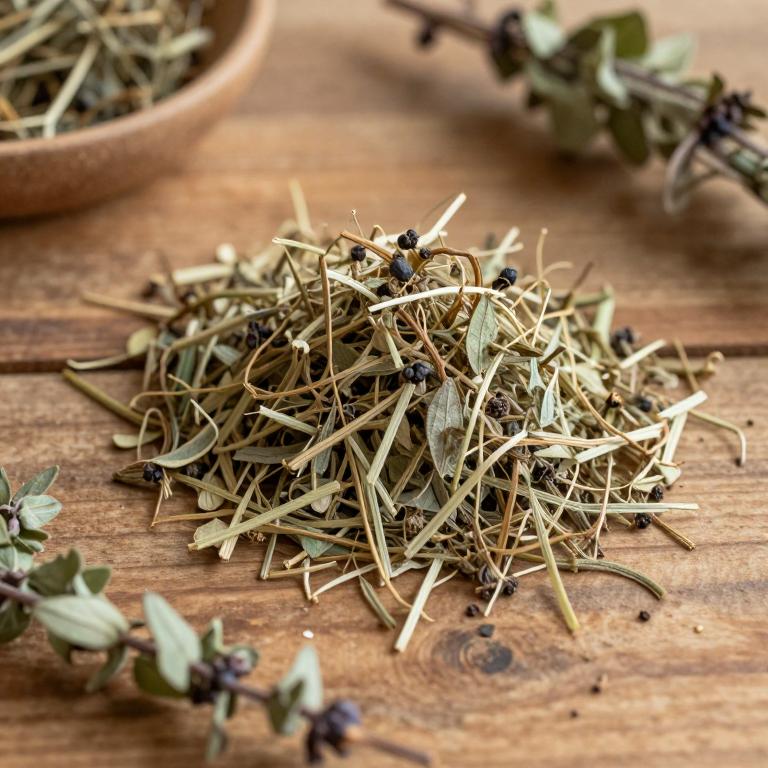
Cruciata glabra, commonly known as slenderbedstraw, is a perennial herb characterized by its delicate, whorled leaves and small white flowers. This plant thrives in shaded, moist environments, often forming lush green mats along forest floors or stream banks. Throughout history, various parts of the plant have been utilized in traditional herbal practices for their unique properties. One of the most common ways to consume this botanical is by preparing it as a soothing tea. This infusion offers a gentle way to experience the plant's natural characteristics in a warm, liquid form.
- Synonyms
- Galium Vernum Var. Bauhini · Valantia Bauhini · 2 more
- Common names
- Not available
- Family
- Rubiaceae
- Distribution
- Not available
- Plant Parts
- Not available
Classification
Synonyms
Cruciata glabra is a plant species that has been documented under several different botanical names throughout history. Due to various taxonomic classifications, it is widely recognized by the synonym Galium bauhini. Researchers also refer to this plant as Galium vernum var. bauhini in certain scientific contexts. Furthermore, the species has been linked to the name Valantia bauhini in older literature. Finally, it is frequently identified by the synonymous designation Valantia glabra.
Sources: The World Checklist of Vascular Plants (WCVP)
Taxonomy
Cruciata glabra is a distinctive botanical species that belongs to the kingdom Plantae. Within this vast biological realm, it is specifically classified under the class Equisetopsida. The plant is a member of the order Gentianales, which helps define its evolutionary lineage. Further narrowing its identity, it falls under the family Rubiaceae. Finally, this species is defined by its placement within the genus Cruciata.
| Rank | Classification |
|---|---|
| Kingdom | Plantae |
| Phylum | Streptophyta |
| Class | Equisetopsida |
| Subclass | Magnoliidae |
| Order | Gentianales |
| Family | Rubiaceae |
| Genus | Cruciata |
Sources: The World Checklist of Vascular Plants (WCVP)
Distribution
Geographic Regions
Cruciata glabra exhibits a broad geographical range that spans across several diverse regions. In Africa, this species is notably distributed throughout Northern Africa, specifically within the territories of Algeria and Morocco. Its presence extends into the Asia-Temperate zone, where it can be found throughout the Caucasus and Transcaucasus regions. Furthermore, the plant establishes itself within Central Asia, particularly across Kazakhstan. This wide distribution highlights the plant's ability to adapt to various environmental conditions across two continents.
Sources: The World Checklist of Vascular Plants (WCVP)
Identification
Morphology
Cruciata glabra is a charming herb characterized by its distinct growth form. This plant is entirely self-supporting, allowing it to maintain its structure within its natural habitat. While its size can vary, it typically reaches a maximum height of 0.5 meters. Most specimens tend to stay compact, frequently measuring at least 0.08 meters or 0.2 meters in height. This compact stature makes it a versatile addition to various ecological landscapes.
Sources: Global Inventory of Floras and Traits (GIFT)
Biological Activities
Compounds
Conditions
Preparations
Cruciata glabra is prepared as té within the specific geographical context of the Pyrenees. This plant is part of a diverse group of species used in Spain to create infusions that are typically boiled from either dry or fresh material. While the term té often refers to Camellia sinensis, it is popularly applied to Cruciata glabra as a local medicinal or social beverage. These infusions are often consumed after meals and may serve various digestive or health-related purposes. Consequently, Cruciata glabra represents a notable, though more locally used, example of a plant utilized for making té.