Crotons
Croton · Accepted scientific name
Scientific literature: Very Sparse (15 studies) · ★☆☆☆☆
Crotons, scientifically known as Croton, is a diverse genus of flowering plants within the Euphorbiaceae family. Renowned for their striking foliage and medicinal properties, various species are utilized in traditional medicine to treat skin ailments, inflammation, and digestive issues. These versatile plants hold significant potential in modern pharmacological research.
- Family
- Euphorbiaceae
- Native range
- Africa
- Parts used
- Leaf
- Common names
- Crotons
- Scientific synonyms
- Myriogomphus · Heptanis · 54 more
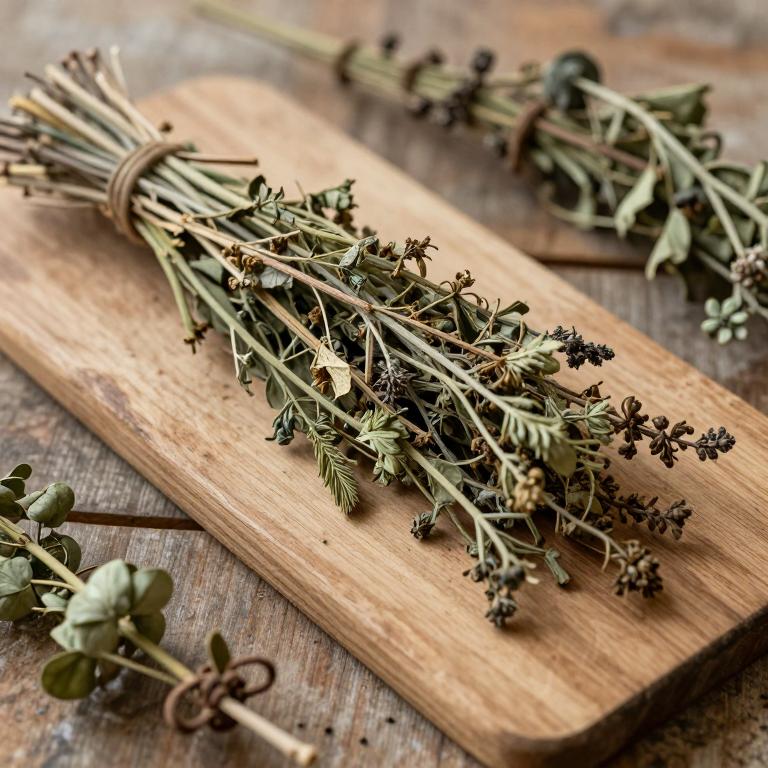
Names and Synonyms
Common Names
- Crotons
Scientific Names
Accepted name
CrotonSynonyms
- Myriogomphus
- Heptanis
- Centrandra
- Timandra
- Oxydectes
- Saipania
- Penteca
- Monguia
- Moacroton
- Heptallon
- Heterochlamys
- Eutropia
- Drepadenium
- Astrogyne
- Argyra
- Medea
- Eremocarpus
- Anisepta
- Leptemon
- Heterocroton
- Gynamblosis
- Pleopadium
- Barhamia
- Crotonanthus
- Halecus
- Leontia
- Vandera
- Crotonopsis
- Leucadenia
- Cleodora
- Macrocroton
- Tiglium
- Comatocroton
- Ocalia
- Calyptriopetalum
- Merleta
- Hendecandra
- Decarinium
- Brunsvia
- Aldinia
- Brachystachys
- Calypteriopetalon
- Cubacroton
- Geiseleria
- Palanostigma
- Pilinophytum
- Lasiogyne
- Klotzschiphytum
- Julocroton
- Podostachys
- Kurkas
- Triplandra
- Lascadium
- Tridesmis
- Semilta
- Luntia
Regional and Traditional Names
Spanish:
- Palillos y parientes
Sources: Wikidata, Catalogue of Life
Taxonomical Classification
This plant belongs to the kingdom Plantae and the phylum Streptophyta, falling under the class Equisetopsida and subclass Magnoliidae. It is further classified within the order Malpighiales and the family Euphorbiaceae. Finally, it is categorized under the specific genus Croton.
| Rank | Classification |
|---|---|
| Kingdom | Plantae |
| Phylum | Streptophyta |
| Class | Equisetopsida |
| Subclass | Magnoliidae |
| Order | Malpighiales |
| Family | Euphorbiaceae |
| Genus | Croton |
Sources: The World Checklist of Vascular Plants (WCVP)
Distribution
This plant exhibits a specific geographical presence within the West Tropical Africa region. It can be found growing in the diverse landscapes of Benin. Additionally, its distribution extends into the territory of Burkina. The plant is also documented as being present in Gambia. Finally, its range includes the coastal areas of Guinea-Bissau.
| Region | Area |
|---|---|
| West Tropical Africa | Benin |
| West Tropical Africa | Burkina |
| West Tropical Africa | Gambia |
| West Tropical Africa | Ghana |
| West Tropical Africa | Guinea-Bissau |
| West Tropical Africa | Guinea |
| West Tropical Africa | Ivory Coast |
| West Tropical Africa | Liberia |
| West Tropical Africa | Mali |
| West Tropical Africa | Nigeria |
Sources: The World Checklist of Vascular Plants (WCVP)
Plant Parts
Croton has 1 reported plant parts identified across 2 scientific publications and several other databases that are studied for medicinal purposes. The most consistently reported plant part include leaf.
| Plant part | Supporting sources | Consensus |
|---|---|---|
| Leaf | 2 supporting sources | ★☆☆☆☆ |
Leaf
- Journal of ethnopharmacology
- Metabolites
Activities
Croton has 5 reported activities identified across 2 scientific publications and several other databases. The most consistently reported activities include Antibacterial, Antihyperglycemic, Antihypertensive, Antioxidant, Hypoglycemic.
| Activity | Supporting sources | Consensus |
|---|---|---|
| Antibacterial | 1 supporting sources | ★☆☆☆☆ |
| Antihyperglycemic | 1 supporting sources | ★☆☆☆☆ |
| Antihypertensive | 1 supporting sources | ★☆☆☆☆ |
| Antioxidant | 1 supporting sources | ★☆☆☆☆ |
| Hypoglycemic | 1 supporting sources | ★☆☆☆☆ |
Antibacterial
- Mini reviews in medicinal chemistry
Antihyperglycemic
- Plants (Basel, Switzerland)
Antihypertensive
- Plants (Basel, Switzerland)
Antioxidant
- Plants (Basel, Switzerland)
Hypoglycemic
- Plants (Basel, Switzerland)
Conditions
Croton has 5 reported investigations on conditions identified across 2 scientific publications and several other databases. The most consistently reported conditions include cancer, gastrointestinal diseases, pain, wound, wounds.
| Condition | Supporting sources | Consensus |
|---|---|---|
| Cancer | 1 supporting sources | ★☆☆☆☆ |
| Gastrointestinal diseases | 1 supporting sources | ★☆☆☆☆ |
| Pain | 1 supporting sources | ★☆☆☆☆ |
| Wound | 1 supporting sources | ★☆☆☆☆ |
| Wounds | 1 supporting sources | ★☆☆☆☆ |
Cancer
- Metabolites
Gastrointestinal diseases
- Plants (Basel, Switzerland)
Pain
- Plants (Basel, Switzerland)
Wound
- Phytochemistry
Wounds
- Plants (Basel, Switzerland)
Preparations
Croton has 2 reported preparations identified across 2 scientific publications and several other databases. The most consistently reported preparations include Croton oil, latex.
| Preparation | Supporting sources | Consensus |
|---|---|---|
| Croton oil | 1 supporting sources | ★☆☆☆☆ |
| Latex | 1 supporting sources | ★☆☆☆☆ |
Croton oil
- Science (New York, N.Y.)
Latex
- Metabolites