Croton yanhuii
Croton yanhuii · Accepted scientific name
Scientific literature: Very Sparse (6 studies) · ★☆☆☆☆
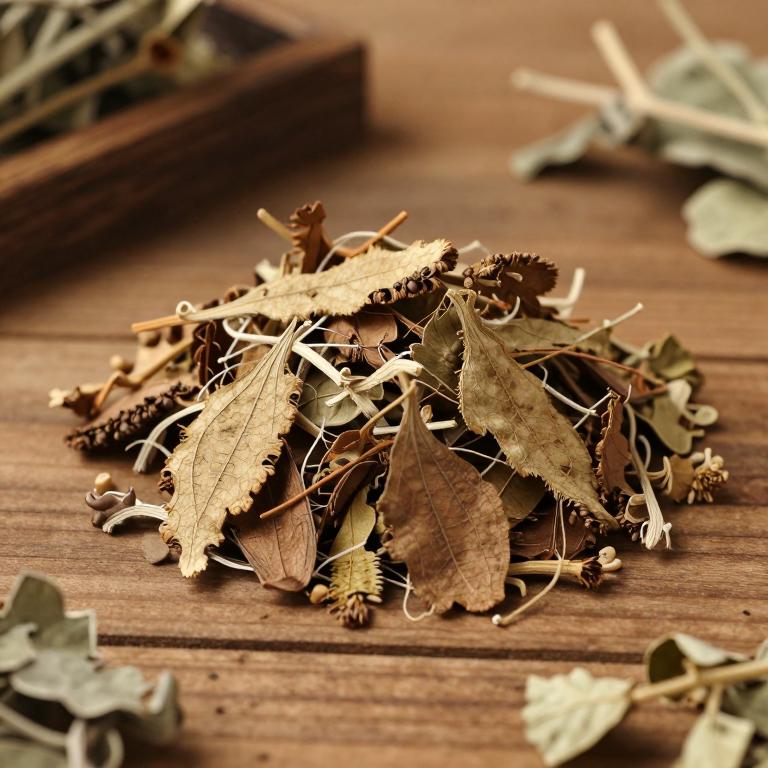
, scientifically known as Croton yanhuii, is a significant medicinal plant valued in traditional pharmacology. Renowned for its diverse bioactive compounds, it is frequently utilized for its anti-inflammatory, antimicrobial, and antioxidant properties. Research continues to explore its therapeutic potential in treating various ailments, highlighting its importance in natural medicine.
- Family
- Euphorbiaceae
- Native range
- Asia-Temperate
- Parts used
- Leaf
- Common names
- Not available
- Scientific synonyms
- Not available
Names and Synonyms
Scientific Names
Accepted name
Croton yanhuiiSources: Wikidata
Taxonomical Classification
This plant belongs to the kingdom Plantae and the phylum Streptophyta, falling under the class Equisetopsida and subclass Magnoliidae. It is further classified within the order Malpighiales and the family Euphorbiaceae. Finally, it is categorized under the genus Croton as the species Croton yanhuii.
| Rank | Classification |
|---|---|
| Kingdom | Plantae |
| Phylum | Streptophyta |
| Class | Equisetopsida |
| Subclass | Magnoliidae |
| Order | Malpighiales |
| Family | Euphorbiaceae |
| Genus | Croton |
Sources: The World Checklist of Vascular Plants (WCVP)
Distribution
This plant is specifically found within a limited geographical range. Its natural habitat is located primarily in the South-Central region of China. Because of this localized presence, it is considered a regional species within that specific area. This distribution pattern highlights its reliance on the particular environmental conditions found in South-Central China. Consequently, understanding its specific niche is essential for its conservation and study.
| Region | Area |
|---|---|
| China | China South-Central |
Sources: The World Checklist of Vascular Plants (WCVP)
Botanical Identification
Life history
The life history of Croton yanhuii is characterized by its structural growth habits, primarily functioning as a phanerophyte, which indicates that its perennating buds are located well above the ground on aerial shoots. Depending on the specific environmental conditions and developmental stages within its habitat, its life form can also be classified as a nanophanerophyte, signifying a smaller stature where the reproductive or survival buds remain elevated but at a more reduced height compared to larger woody species. This physiological framework allows the plant to navigate its ecological niche by maintaining its vital structures above the soil surface, ensuring survival through seasonal changes and environmental stressors.
- Life form :
- nanophanerophyte
- Life form :
- phanerophyte
Morphology
The morphology of Croton yanhuii is characterized by its distinct growth habit and structural composition. It functions as a self-supporting climber, exhibiting characteristics of both a liana and a vine that can maintain its structure without external host reliance. While it possesses a climbing nature, it is classified as a self-supporting entity rather than an obligatory or facultative climber dependent on other structures for stability. The plant is non-parasitic, maintaining an independent lifestyle, and is strictly terrestrial rather than acting as an epiphyte. In terms of its physical texture and stem development, Croton yanhuii is characterized by its woody composition, providing the necessary rigidity for its developmental form.
- Climber :
- self-supporting
- Epiphyte :
- terrestrial
- Parasite :
- independent
- Woodiness :
- woody
Sources: Global Inventory of Floras and Traits (GIFT)
Plant Parts
Croton yanhuii has 1 reported plant parts identified across 1 scientific publications and several other databases that are studied for medicinal purposes. The most consistently reported plant part include leaf.
| Plant part | Supporting sources | Consensus |
|---|---|---|
| Leaf | 1 supporting sources | ★☆☆☆☆ |
Leaf
- Frontiers in chemistry
Chemicals
Croton yanhuii has 1 reported phytochemicals identified across 1 scientific publications and several other databases. The most consistently reported chemicals include Clerodane Diterpenes.
| Chemical | Supporting sources | Consensus |
|---|---|---|
| Clerodane Diterpenes | 1 supporting sources | ★☆☆☆☆ |
Clerodane Diterpenes
- Fitoterapia
Conditions
Croton yanhuii has 2 reported investigations on conditions identified across 1 scientific publications and several other databases. The most consistently reported conditions include Alzheimer's disease, neuron degeneration.
| Condition | Supporting sources | Consensus |
|---|---|---|
| Alzheimer's disease | 1 supporting sources | ★☆☆☆☆ |
| Neuron degeneration | 1 supporting sources | ★☆☆☆☆ |
Alzheimer's disease
- Fitoterapia
Neuron degeneration
- Fitoterapia