lobus gonorreus mentirosus
Croton urucurana · Accepted scientific name
Scientific literature: Very Sparse (47 studies) · ★☆☆☆☆
Lobus gonorreus mentirosus, scientifically known as Croton urucurana, is a versatile medicinal plant native to tropical regions. Renowned for its diverse therapeutic properties, it is traditionally utilized in folk medicine to treat skin ailments, inflammation, and digestive issues, offering a rich source of bioactive compounds for pharmacological study.
- Family
- Euphorbiaceae
- Native range
- Southern America
- Parts used
- Not available
- Common names
- Not available
- Scientific synonyms
- Croton Paulinianus · Oxydectes Pauliniana · 5 more
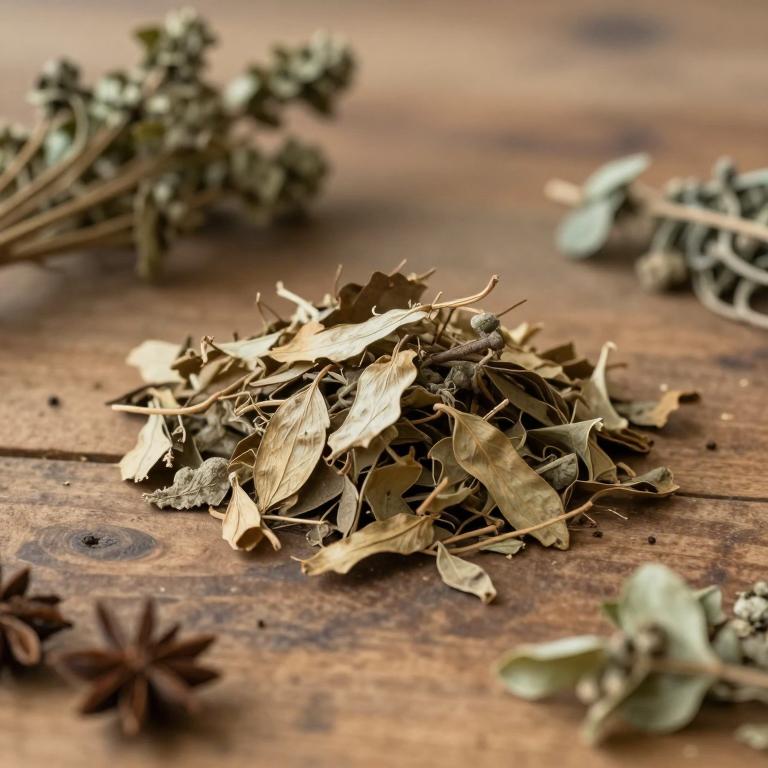
Names and Synonyms
Scientific Names
Accepted name
Croton urucuranaSynonyms
- Croton paulinianus
- Oxydectes pauliniana
- Oxydectes urucurana
- Croton succiruber
- Croton dracona
- Croton urucurana var. albidus
- Croton urucurana var. draconoideus
Regional and Traditional Names
Spanish:
- Sangre de drago
French:
- Croton succiruber
- Oxydectes urucurana
Sources: Wikidata, Catalogue of Life
Taxonomical Classification
This plant belongs to the kingdom Plantae and the phylum Streptophyta, falling under the class Equisetopsida and subclass Magnoliidae. Within the order Malpighiales, it is classified under the family Euphorbiaceae and is specifically identified by the genus Croton.
| Rank | Classification |
|---|---|
| Kingdom | Plantae |
| Phylum | Streptophyta |
| Class | Equisetopsida |
| Subclass | Magnoliidae |
| Order | Malpighiales |
| Family | Euphorbiaceae |
| Genus | Croton |
Sources: The World Checklist of Vascular Plants (WCVP)
Distribution
This plant exhibits a broad presence across the diverse landscapes of Western South America. Its distribution includes significant populations found within the borders of Bolivia and Peru. Moving toward the eastern part of the continent, it is widely documented throughout various regions of Brazil. Specifically, it can be located in the Brazil West-Central, Northeast, and Southeast areas. This wide range highlights the plant's adaptability to different ecological zones across these South American territories.
| Region | Area |
|---|---|
| Western South America | Bolivia |
| Western South America | Peru |
| Brazil | Brazil West-Central |
| Brazil | Brazil Northeast |
| Brazil | Brazil Southeast |
| Brazil | Brazil North |
| Brazil | Brazil South |
| Southern South America | Argentina Northeast |
| Southern South America | Paraguay |
| Southern South America | Uruguay |
Sources: The World Checklist of Vascular Plants (WCVP)
Botanical Identification
Ecology
The ecology of Croton urucurana is characterized by its preference for humid and well-watered environments, typically thriving within riparian forests (Floresta Ciliar), gallery forests (Galeria), or ombrophilous forests (Floresta Ombrófila), which include rain forests. This species occupies a specific altitudinal gradient, ranging from sea level up to a maximum elevation of 600 meters above mean sea level (m AMSL). Its presence in these moisture-rich habitats suggests a dependency on high humidity and consistent water availability provided by forest canopies and riverine systems.
- Elevational range max:
- 600 m AMSL
- Elevational range min:
- 0 m AMSL
- Habitat :
- Floresta Ciliar ou Galeria, Floresta Ombrófila (= Floresta Pluvial)
Life history
The life history of Croton urucuana is characterized by its existence as a perennial species, ensuring its presence in the ecosystem over multiple growing seasons. As a phanerophyte, its regenerative buds are located high above the ground on woody stems or branches, a structural adaptation that defines its growth habit. This plant exhibits a deciduous nature, meaning it undergoes a period of leaf shedding, typically in response to seasonal changes or environmental stressors. Through these physiological traits, the species maintains a stable yet adaptive presence within its natural habitat.
- Deciduousness :
- deciduous
- Life form :
- phanerophyte
- Lifecycle :
- perennial
Morphology
The morphology of Croton urucuana is characterized by a woody growth form, manifesting primarily as a tree. This species is a self-supporting plant that does not function as a climber, vine, or liana, nor does it exhibit parasitic behavior, remaining an independent organism. As a terrestrial species, it does not inhabit aquatic or semiaquatic environments, nor does it act as an epiphyte. In terms of stature, the plant reaches a mean height of approximately 10 meters, though it is capable of attaining a maximum height of up to 22 meters.
- Aquatic :
- terrestrial
- Climber :
- self-supporting
- Epiphyte :
- terrestrial
- Growth form :
- tree
- Parasite :
- independent
- Plant height max:
- 22 m
- Plant height mean:
- 10 m
- Woodiness :
- woody
Physiology
The physiology of Croton urucurana is characterized by a C3 photosynthetic pathway, which dictates its carbon fixation processes and metabolic efficiency under typical environmental conditions. The plant exhibits a highly consistent Specific Leaf Area (SLA), with a recorded minimum, mean, and maximum value of 172 cm²/g, suggesting a uniform leaf structure and resource allocation strategy regarding leaf mass per unit area. Additionally, Croton urucurana does not function as a nitrogen fixer, meaning it relies on the uptake of available nitrogen from the soil rather than through symbiotic nitrogen-fixing relationships.
- Nitrogen fixer :
- no
- Photosynthetic pathway :
- C3
- Specific Leaf Area (SLA) min:
- 172 cm²/g
Reproduction
The reproduction of Croton urucuana is driven by biotic pollination syndromes, characterized by a reliance on living organisms to facilitate pollen transfer. Specifically, the plant utilizes insect-mediated pollination, with a notable emphasis on bees as primary pollinators. The reproductive cycle concludes with the production of seeds that exhibit highly uniform physical characteristics; the seed mass is remarkably consistent, with a mean, maximum, and minimum mass all recorded at 0.009 g.
- Pollination syndrome :
- insect
- Pollination syndrome :
- bee
- Pollination syndrome :
- biotic
- Seed mass mean:
- 0.009 g
Sources: Global Inventory of Floras and Traits (GIFT)
Chemicals
Croton urucurana has 29 reported phytochemicals identified across 0 scientific publications and several other databases. The most consistently reported chemicals include Flavonoids, (+)-Gallocatechin, (+)-catechin, (-)-Epicatechin, (epi)catechin.
| Chemical | Supporting sources | Consensus |
|---|---|---|
| Flavonoids | 2 supporting sources | ★☆☆☆☆ |
| (+)-Gallocatechin | 1 supporting sources | ★☆☆☆☆ |
| (+)-catechin | 1 supporting sources | ★☆☆☆☆ |
| (-)-Epicatechin | 1 supporting sources | ★☆☆☆☆ |
| (epi)catechin | 1 supporting sources | ★☆☆☆☆ |
| (epi)gallocatechin | 1 supporting sources | ★☆☆☆☆ |
| Acetyl aleuritolic acid | 1 supporting sources | ★☆☆☆☆ |
| BETA-SITOSTEROL | 1 supporting sources | ★☆☆☆☆ |
| CAMPESTEROL | 1 supporting sources | ★☆☆☆☆ |
| CATECHIN | 1 supporting sources | ★☆☆☆☆ |
Flavonoids
- Frontiers in pharmacology
- Evidence-based complementary and alternative medicine : eCAM
(+)-Gallocatechin
- Journal of ethnopharmacology
(+)-catechin
- Journal of ethnopharmacology
(-)-Epicatechin
- Journal of ethnopharmacology
(epi)catechin
- Journal of ethnopharmacology
(epi)gallocatechin
- Journal of ethnopharmacology
Acetyl aleuritolic acid
- Journal of ethnopharmacology
BETA-SITOSTEROL
- Journal of ethnopharmacology
CAMPESTEROL
- Journal of ethnopharmacology
CATECHIN
- Journal of ethnopharmacology
Activities
Croton urucurana has 4 reported activities identified across 0 scientific publications and several other databases. The most consistently reported activities include Analgesic, Antinociceptive, Cardioprotective, Hepatoprotective.
| Activity | Supporting sources | Consensus |
|---|---|---|
| Analgesic | 1 supporting sources | ★☆☆☆☆ |
| Antinociceptive | 1 supporting sources | ★☆☆☆☆ |
| Cardioprotective | 1 supporting sources | ★☆☆☆☆ |
| Hepatoprotective | 1 supporting sources | ★☆☆☆☆ |
Analgesic
- Evidence-based complementary and alternative medicine : eCAM
Antinociceptive
- Journal of ethnopharmacology
Cardioprotective
- Evidence-based complementary and alternative medicine : eCAM
Hepatoprotective
- Frontiers in pharmacology
Conditions
Croton urucurana has 12 reported investigations on conditions identified across 0 scientific publications and several other databases. The most consistently reported conditions include cardiovascular diseases, dyslipidemia, endocrine system diseases, gastric ulcers, gastritis.
| Condition | Supporting sources | Consensus |
|---|---|---|
| Cardiovascular diseases | 1 supporting sources | ★☆☆☆☆ |
| Dyslipidemia | 1 supporting sources | ★☆☆☆☆ |
| Endocrine system diseases | 1 supporting sources | ★☆☆☆☆ |
| Gastric ulcers | 1 supporting sources | ★☆☆☆☆ |
| Gastritis | 1 supporting sources | ★☆☆☆☆ |
| Gastrointestinal diseases | 1 supporting sources | ★☆☆☆☆ |
| Hemorrhoids | 1 supporting sources | ★☆☆☆☆ |
| Hypertension | 1 supporting sources | ★☆☆☆☆ |
| Infections | 1 supporting sources | ★☆☆☆☆ |
| Oxidative stress | 1 supporting sources | ★☆☆☆☆ |
Cardiovascular diseases
- Frontiers in pharmacology
Dyslipidemia
- Frontiers in pharmacology
Endocrine system diseases
- Frontiers in pharmacology
Gastric ulcers
- Journal of ethnopharmacology
Gastritis
- Journal of ethnopharmacology
Gastrointestinal diseases
- Frontiers in pharmacology
Hemorrhoids
- Journal of ethnopharmacology
Hypertension
- Frontiers in pharmacology
Infections
- Journal of ethnopharmacology
Oxidative stress
- Frontiers in pharmacology
Preparations
Croton urucurana has 2 reported preparations identified across 0 scientific publications and several other databases. The most consistently reported preparations include extract, gum exudate.
| Preparation | Supporting sources | Consensus |
|---|---|---|
| Extract | 1 supporting sources | ★☆☆☆☆ |
| Gum exudate | 1 supporting sources | ★☆☆☆☆ |
Extract
- Frontiers in pharmacology
Gum exudate
- Journal of natural products