Croton reflexifolius
Croton reflexifolius · Accepted scientific name
Scientific literature: Very Sparse (21 studies) · ★☆☆☆☆
Croton reflexifolius, scientifically known as Croton reflexifolius, is a versatile medicinal shrub renowned for its diverse therapeutic properties. Widely used in traditional medicine, its leaves and stems offer potent anti-inflammatory, antimicrobial, and antioxidant benefits, making it a vital resource for treating skin ailments, digestive issues, and various infections.
- Family
- Euphorbiaceae
- Native range
- Northern America
- Parts used
- Stem
- Common names
- Not available
- Scientific synonyms
- Oxydectes Reflexifolia · Croton Nudus
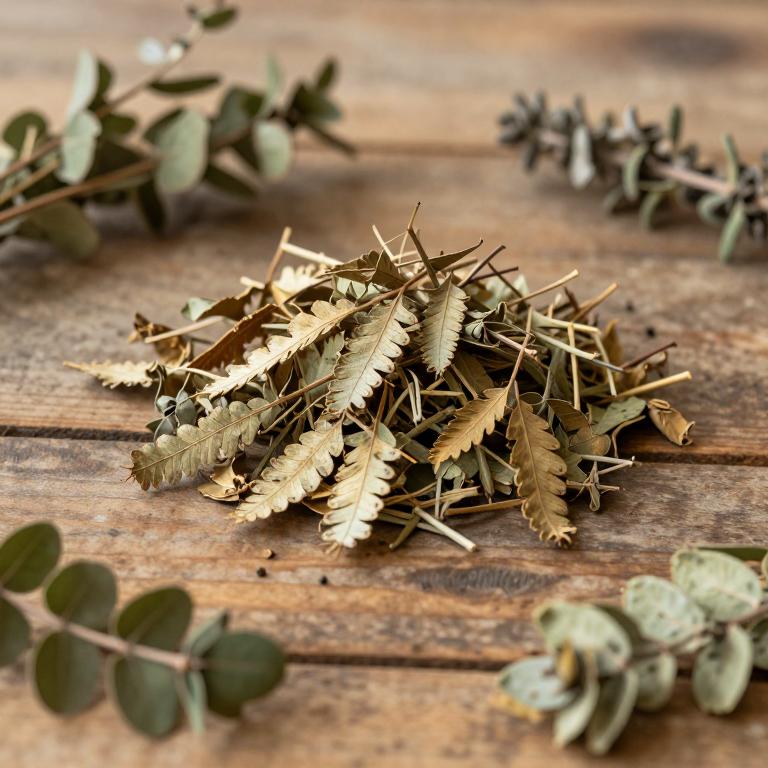
Names and Synonyms
Scientific Names
Accepted name
Croton reflexifoliusSynonyms
- Oxydectes reflexifolia
- Croton nudus
Regional and Traditional Names
Spanish:
- palo santo
French:
- Croton nudus
- Oxydectes reflexifolia
Sources: Wikidata, Catalogue of Life
Taxonomical Classification
This plant belongs to the kingdom Plantae and is classified within the phylum Streptophyta and the class Equisetopsida. It is further categorized under the subclass Magnoliidae and the order Malpighiales. Finally, it is a member of the family Euphorbiaceae and falls under the genus Croton.
| Rank | Classification |
|---|---|
| Kingdom | Plantae |
| Phylum | Streptophyta |
| Class | Equisetopsida |
| Subclass | Magnoliidae |
| Order | Malpighiales |
| Family | Euphorbiaceae |
| Genus | Croton |
Sources: The World Checklist of Vascular Plants (WCVP)
Distribution
This plant exhibits a wide-ranging presence across various regions within Mexico. Specifically, its habitat extends through the central parts of Mexico Central. It can also be found growing in the areas categorized as Mexico Northeast and Mexico Gulf. Furthermore, its distribution continues into the diverse landscapes of Mexico Southwest. Finally, the plant is documented to thrive within the region of Mexico Southeast.
| Region | Area |
|---|---|
| Mexico | Mexico Central |
| Mexico | Mexico Northeast |
| Mexico | Mexico Gulf |
| Mexico | Mexico Southwest |
| Mexico | Mexico Southeast |
| Central America | Belize |
| Central America | El Salvador |
| Central America | Guatemala |
| Central America | Honduras |
Sources: The World Checklist of Vascular Plants (WCVP)
Botanical Identification
Life history
The life history of Croton reflexifolius is characterized by its status as a perennial plant, allowing it to persist through multiple growing seasons. In terms of its structural growth and ecological strategy, the species exhibits a dual classification within life form systems, functioning as a phanerophyte due to its elevated woody stems that protect its buds above the ground level. Additionally, it can be described as a nanophanerophyte, reflecting a specific growth habit where the woody structure remains relatively low or compact.
- Life form :
- nanophanerophyte
- Life form :
- phanerophyte
- Lifecycle :
- perennial
Morphology
The morphology of Croton reflexifolius is characterized by a woody growth habit, exhibiting a structural form that can be classified as both a tree and a herb depending on developmental stages or environmental conditions. It typically reaches a plant height with a mean of approximately 5 m. In terms of its climbing nature, the species is identified as self-supporting, lacking the obligatory or facultative tendencies of a vine or liana. It functions as an independent organism rather than a parasite and maintains a terrestrial lifestyle, growing in soil rather than as an epiphyte.
- Climber :
- self-supporting
- Epiphyte :
- terrestrial
- Growth form :
- tree
- Growth form :
- herb
- Parasite :
- independent
- Plant height mean:
- 5 m
- Woodiness :
- woody
Physiology
The physiology of Croton reflexifolius is characterized by specific leaf economic traits and nutritional strategies that define its resource acquisition efficiency. The plant exhibits a consistent Leaf Dry Matter Content (LDMC) with a mean, minimum, and maximum value of 279.9 mg/g, indicating a stable density of structural and metabolic components within its foliar tissue. Complementing this, the Specific Leaf Area (SLA) remains uniform across its measured range, with a mean, minimum, and maximum value of 147.66 cm²/g, suggesting a specialized leaf morphology optimized for a particular balance between light interception and water-use efficiency. Furthermore, regarding its nutrient cycling capabilities, Croton reflexifolius does not function as a nitrogen fixer, relying instead on external soil nitrogen availability to support its metabolic processes.
- Leaf dry matter content (LDMC) mean:
- 279.9 mg/g
- Nitrogen fixer :
- no
- Specific Leaf Area (SLA) min:
- 147.66 cm²/g
Reproduction
Reproduction in Croton reflexifolius involves a diverse array of dispersal mechanisms that ensure the distribution of its seeds across various environmental niches. The plant exhibits an autochorous dispersal syndrome, meaning it possesses the intrinsic capability to discharge its seeds through its own mechanisms. This reproductive strategy is further characterized by a multi-faceted approach to seed movement, encompassing anemochorous (wind-dispersed), zoochorous (animal-dispersed), and hydrochorous (water-dispersed) modes. Additionally, the plant utilizes an unspecialized dispersal method, allowing it to adapt to varying ecological conditions by leveraging both biotic and abiotic vectors for seed propagation.
- Dispersal syndrome :
- autochorous
Sources: Global Inventory of Floras and Traits (GIFT)
Plant Parts
Croton reflexifolius has 1 reported plant parts identified across 2 scientific publications and several other databases that are studied for medicinal purposes. The most consistently reported plant part include stem.
| Plant part | Supporting sources | Consensus |
|---|---|---|
| Stem | 2 supporting sources | ★☆☆☆☆ |
Stem
- Journal of ethnopharmacology
- Frontiers in pharmacology
Chemicals
Croton reflexifolius has 12 reported phytochemicals identified across 2 scientific publications and several other databases. The most consistently reported chemicals include Anthraquinones, DICHLOROMETHANE, Flavonoids, HEXANE, Hardwickiic acid.
| Chemical | Supporting sources | Consensus |
|---|---|---|
| Anthraquinones | 1 supporting sources | ★☆☆☆☆ |
| DICHLOROMETHANE | 1 supporting sources | ★☆☆☆☆ |
| Flavonoids | 1 supporting sources | ★☆☆☆☆ |
| HEXANE | 1 supporting sources | ★☆☆☆☆ |
| Hardwickiic acid | 1 supporting sources | ★☆☆☆☆ |
| Lignan | 1 supporting sources | ★☆☆☆☆ |
| Polyalthic acid | 1 supporting sources | ★☆☆☆☆ |
| Sterols | 1 supporting sources | ★☆☆☆☆ |
| Tannins | 1 supporting sources | ★☆☆☆☆ |
| Terpenoids | 1 supporting sources | ★☆☆☆☆ |
Anthraquinones
- Asian Pacific journal of tropical medicine
DICHLOROMETHANE
- Pharmaceutical biology
Flavonoids
- Asian Pacific journal of tropical medicine
HEXANE
- Pharmaceutical biology
Hardwickiic acid
- Frontiers in pharmacology
Lignan
- Asian Pacific journal of tropical medicine
Polyalthic acid
- The Journal of pharmacy and pharmacology
Sterols
- Asian Pacific journal of tropical medicine
Tannins
- Asian Pacific journal of tropical medicine
Terpenoids
- Asian Pacific journal of tropical medicine
Activities
Croton reflexifolius has 3 reported activities identified across 2 scientific publications and several other databases. The most consistently reported activities include Antifungal, Antibacterial, Antioxidant.
| Activity | Supporting sources | Consensus |
|---|---|---|
| Antifungal | 2 supporting sources | ★☆☆☆☆ |
| Antibacterial | 1 supporting sources | ★☆☆☆☆ |
| Antioxidant | 1 supporting sources | ★☆☆☆☆ |
Antifungal
- Asian Pacific journal of tropical medicine
- Pharmaceutical biology
Antibacterial
- Asian Pacific journal of tropical medicine
Antioxidant
- Asian Pacific journal of tropical medicine
Conditions
Croton reflexifolius has 2 reported investigations on conditions identified across 2 scientific publications and several other databases. The most consistently reported conditions include gastric ulcer, gastritis.
| Condition | Supporting sources | Consensus |
|---|---|---|
| Gastric ulcer | 1 supporting sources | ★☆☆☆☆ |
| Gastritis | 1 supporting sources | ★☆☆☆☆ |
Gastric ulcer
- The Journal of pharmacy and pharmacology
Gastritis
- The Journal of pharmacy and pharmacology
Preparations
Croton reflexifolius has 7 reported preparations identified across 2 scientific publications and several other databases. The most consistently reported preparations include aqueous extracts, extracts, herbal medicine, hexane extract, methanol extracts.
| Preparation | Supporting sources | Consensus |
|---|---|---|
| Aqueous extracts | 1 supporting sources | ★☆☆☆☆ |
| Extracts | 1 supporting sources | ★☆☆☆☆ |
| Herbal medicine | 1 supporting sources | ★☆☆☆☆ |
| Hexane extract | 1 supporting sources | ★☆☆☆☆ |
| Methanol extracts | 1 supporting sources | ★☆☆☆☆ |
| Stem bark of croton sylvaticus | 1 supporting sources | ★☆☆☆☆ |
| Stembark | 1 supporting sources | ★☆☆☆☆ |
Aqueous extracts
- Skin pharmacology and physiology
Extracts
- Pharmaceutical biology
Herbal medicine
- Asian Pacific journal of tropical medicine
Hexane extract
- The Journal of pharmacy and pharmacology
Methanol extracts
- Skin pharmacology and physiology
Stem bark of croton sylvaticus
- Journal of ethnopharmacology
Stembark
- Frontiers in pharmacology