mulangu
Croton macrostachyus · Accepted scientific name
Scientific literature: Sparse (96 studies) · ★★☆☆☆
Mulaングu, scientifically known as Croton macrostachyus, is a versatile medicinal plant highly valued in traditional healing practices. Renowned for its diverse pharmacological properties, it is frequently utilized to treat various ailments, including inflammation and infections. This study explores its bioactive compounds and therapeutic potential in modern herbal medicine.
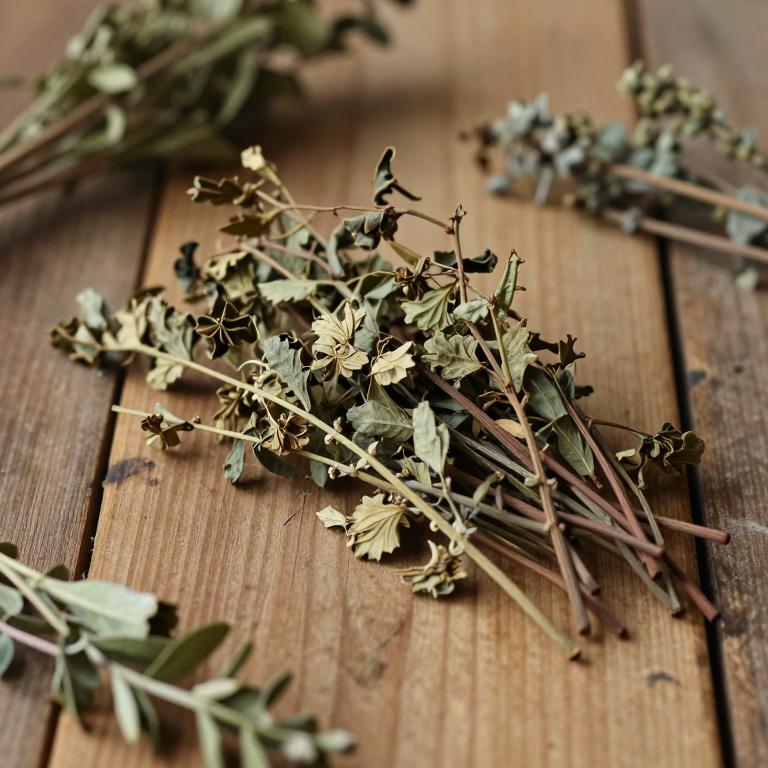
Names and Synonyms
Common Names
- mulangu
- mulugu
- mutundu
Scientific Names
Accepted name
Croton macrostachyusSynonyms
- Oxydectes macrostachya
- Rottlera schimperi
- Croton macrostachyus var. mollissimus
- Croton butaguensis
- Croton guerzesiensis
Regional and Traditional Names
Spanish:
- Croton acuminatus
- Croton butaguensis
- Croton guerzesiensis
- Croton macrostachyus var. mollissimus
- Oxydectes macrostachya
- Rottlera schimperi
French:
- Croton butaguensis
- Croton guerzesiensis
- Oxydectes macrostachya
- Rottlera schimperi
Sources: Wikidata, Catalogue of Life
Taxonomical Classification
This plant belongs to the kingdom Plantae and is classified under the phylum Streptophyta and the class Equisetopsida. Within the subclass Magnoliidae, it follows the order Malpighiales and is a member of the family Euphorbiaceae. Specifically, its taxonomic identity is defined by the genus Croton, which includes the species Croton macrostachyus.
| Rank | Classification |
|---|---|
| Kingdom | Plantae |
| Phylum | Streptophyta |
| Class | Equisetopsida |
| Subclass | Magnoliidae |
| Order | Malpighiales |
| Family | Euphorbiaceae |
| Genus | Croton |
Sources: The World Checklist of Vascular Plants (WCVP)
Distribution
This plant is primarily located within the West Tropical Africa region. Specifically, its range includes the country of Ghana, where it can be found growing in native habitats. It is also distributed across the coastal and inland areas of Guinea. Furthermore, the species extends its presence into the Ivory Coast and Liberia. Finally, its geographical reach concludes with documented occurrences in Nigeria.
| Region | Area |
|---|---|
| West Tropical Africa | Ghana |
| West Tropical Africa | Guinea |
| West Tropical Africa | Ivory Coast |
| West Tropical Africa | Liberia |
| West Tropical Africa | Nigeria |
| West-Central Tropical Africa | Burundi |
| West-Central Tropical Africa | Central African Republic |
| West-Central Tropical Africa | Cameroon |
| West-Central Tropical Africa | Rwanda |
| West-Central Tropical Africa | DR Congo |
Sources: The World Checklist of Vascular Plants (WCVP)
Botanical Identification
Life history
The life history of Croton macrostachys is characterized by its status as a perennial plant, allowing it to persist through multiple growing seasons. As a phanerophyte, its regenerative buds are located high above the ground on woody stems, a structural adaptation that defines its primary life form. This species exhibits a deciduous nature, shedding its foliage periodically as part of its seasonal developmental cycle.
- Deciduousness :
- deciduous
- Life form :
- phanerophyte
- Lifecycle :
- perennial
Morphology
The morphology of Croton macrostachyus is characterized by its robust growth form, primarily existing as a woody tree. This species is a terrestrial plant that functions as an independent organism, rather than acting as a parasite or an epiphyte. In terms of stature, it is a significant structural component of its environment, with a plant height that typically ranges from a minimum of 3 m to a maximum of approximately 15.24 m, maintaining an average height of around 17.5 m. Although it possesses a sturdy, woody structure, it is categorized as a self-supporting plant rather than a climber, liana, or vine.
- Aquatic :
- terrestrial
- Climber :
- self-supporting
- Epiphyte :
- terrestrial
- Growth form :
- tree
- Parasite :
- independent
- Plant height max:
- 15.24018532 m
- Plant height mean:
- 17.5 m
- Plant height min:
- 3 m
- Woodiness :
- woody
Physiology
The physiology of Croton macrostachyus is characterized by a standard C3 photosynthetic pathway, meaning it utilizes the Calvin cycle to fix carbon dioxide through the enzyme Rubisco without the specialized anatomical adaptations found in C4 or CAM plants. In terms of nutrient cycling and metabolic processes, this species does not function as a nitrogen fixer, lacking the symbiotic relationship with diazotrophic bacteria required to convert atmospheric nitrogen into usable forms for the plant.
- Nitrogen fixer :
- no
- Photosynthetic pathway :
- C3
Reproduction
The reproduction of Croton macrostachyus is characterized by a biotic pollination strategy, specifically relying on insect vectors, with bees playing a significant role in the process. The plant exhibits an absence of self-fertilization, necessitating cross-pollination to ensure genetic diversity. Following successful fertilization, the plant produces fruits categorized under the "other" type, which maintain a consistent average dimension of 1 cm in both length and width. The resulting seeds vary in mass, ranging from a minimum of 0.04 g to a maximum of 0.086 g, with an overall mean seed mass of approximately 0.0607 g. For dispersal, the species utilizes a zoochorous syndrome, specifically employing endozoochory, where seeds are dispersed through the internal passage of animals to facilitate colonization of new habitats.
- Dispersal syndrome :
- zoochorous
- Dispersal syndrome :
- endozoochorous
- Fruit length mean:
- 1 cm
- Fruit type :
- other
- Fruit width mean:
- 1 cm
- Pollination syndrome :
- insect
- Pollination syndrome :
- bee
- Pollination syndrome :
- biotic
- Seed mass max:
- 0.086 g
- Seed mass mean:
- 0.060706667 g
- Seed mass min:
- 0.04 g
- Self fertilization :
- absent
Sources: Global Inventory of Floras and Traits (GIFT)
Plant Parts
Croton macrostachyus has 3 reported plant parts identified across 14 scientific publications and several other databases that are studied for medicinal purposes. The most consistently reported plant part include leaf, root, seed.
| Plant part | Supporting sources | Consensus |
|---|---|---|
| Leaf | 8 supporting sources | ★★★★☆ |
| Root | 5 supporting sources | ★★★☆☆ |
| Seed | 1 supporting sources | ★☆☆☆☆ |
Leaf
- BMC complementary and alternative medicine
- TheScientificWorldJournal
- Evidence-based complementary and alternative medicine : eCAM
- Journal of parasitology research
- Chemistry & biodiversity
View 3 additional sources
- BMC veterinary research
- Malaria journal
- Heliyon
Root
- Evidence-based complementary and alternative medicine : eCAM
- BMC chemistry
- Journal of experimental pharmacology
- Heliyon
- Biometals : an international journal on the role of metal ions in biology, biochemistry, and medicine
Seed
- Scientific reports
Chemicals
Croton macrostachyus has 28 reported phytochemicals identified across 14 scientific publications and several other databases. The most consistently reported chemicals include Flavonoids, Tannins, Terpenoids, FE, MN.
| Chemical | Supporting sources | Consensus |
|---|---|---|
| Flavonoids | 3 supporting sources | ★★☆☆☆ |
| Tannins | 3 supporting sources | ★★☆☆☆ |
| Terpenoids | 3 supporting sources | ★★☆☆☆ |
| FE | 2 supporting sources | ★☆☆☆☆ |
| MN | 2 supporting sources | ★☆☆☆☆ |
| Anthraquinones | 1 supporting sources | ★☆☆☆☆ |
| Ash | 1 supporting sources | ★☆☆☆☆ |
| CA | 1 supporting sources | ★☆☆☆☆ |
| CHROMIUM | 1 supporting sources | ★☆☆☆☆ |
| COPPER | 1 supporting sources | ★☆☆☆☆ |
Flavonoids
- BMC chemistry
- Evidence-based complementary and alternative medicine : eCAM
- Journal of parasitology research
Tannins
- TheScientificWorldJournal
- Journal of parasitology research
- Evidence-based complementary and alternative medicine : eCAM
Terpenoids
- Evidence-based complementary and alternative medicine : eCAM
- Chemistry & biodiversity
- Journal of parasitology research
FE
- BMC plant biology
- Biometals : an international journal on the role of metal ions in biology, biochemistry, and medicine
MN
- BMC plant biology
- Biometals : an international journal on the role of metal ions in biology, biochemistry, and medicine
Anthraquinones
- Evidence-based complementary and alternative medicine : eCAM
Ash
- BMC plant biology
CA
- Biometals : an international journal on the role of metal ions in biology, biochemistry, and medicine
CHROMIUM
- Biological trace element research
COPPER
- Biological trace element research
Activities
Croton macrostachyus has 11 reported activities identified across 14 scientific publications and several other databases. The most consistently reported activities include Antioxidant, Antibacterial, Anthelmintic, Anticancer, Anticonvulsant.
| Activity | Supporting sources | Consensus |
|---|---|---|
| Antioxidant | 3 supporting sources | ★★☆☆☆ |
| Antibacterial | 2 supporting sources | ★☆☆☆☆ |
| Anthelmintic | 1 supporting sources | ★☆☆☆☆ |
| Anticancer | 1 supporting sources | ★☆☆☆☆ |
| Anticonvulsant | 1 supporting sources | ★☆☆☆☆ |
| Antidiabetic | 1 supporting sources | ★☆☆☆☆ |
| Antifungal | 1 supporting sources | ★☆☆☆☆ |
| Antiplasmodial | 1 supporting sources | ★☆☆☆☆ |
| Bacteriostatic | 1 supporting sources | ★☆☆☆☆ |
| Hepatoprotective | 1 supporting sources | ★☆☆☆☆ |
Antioxidant
- BMC chemistry
- Evidence-based complementary and alternative medicine : eCAM
- Journal of experimental pharmacology
Antibacterial
- BMC chemistry
- Evidence-based complementary and alternative medicine : eCAM
Anthelmintic
- Evidence-based complementary and alternative medicine : eCAM
Anticancer
- Evidence-based complementary and alternative medicine : eCAM
Anticonvulsant
- Epilepsy & behavior : E&B
Antidiabetic
- Evidence-based complementary and alternative medicine : eCAM
Antifungal
- Evidence-based complementary and alternative medicine : eCAM
Antiplasmodial
- Evidence-based complementary and alternative medicine : eCAM
Bacteriostatic
- TheScientificWorldJournal
Hepatoprotective
- Journal of experimental pharmacology
Conditions
Croton macrostachyus has 21 reported investigations on conditions identified across 14 scientific publications and several other databases. The most consistently reported conditions include malaria, wounds, Escherichia coli, HIV, Klebsiella pneumoniae.
| Condition | Supporting sources | Consensus |
|---|---|---|
| Malaria | 5 supporting sources | ★★★☆☆ |
| Wounds | 2 supporting sources | ★☆☆☆☆ |
| Escherichia coli | 1 supporting sources | ★☆☆☆☆ |
| Hiv | 1 supporting sources | ★☆☆☆☆ |
| Klebsiella pneumoniae | 1 supporting sources | ★☆☆☆☆ |
| Mycobacterium tuberculosis | 1 supporting sources | ★☆☆☆☆ |
| Pseudomonas aeruginosa | 1 supporting sources | ★☆☆☆☆ |
| Staphylococcus aureus | 1 supporting sources | ★☆☆☆☆ |
| Abdominal pains | 1 supporting sources | ★☆☆☆☆ |
| Cancer | 1 supporting sources | ★☆☆☆☆ |
Malaria
- FEMS microbes
- Evidence-based complementary and alternative medicine : eCAM
- BMC research notes
- Journal of ethnopharmacology
- Malaria journal
Wounds
- Evidence-based complementary and alternative medicine : eCAM
- Chemistry & biodiversity
Escherichia coli
- Scientific reports
Hiv
- Current HIV research
Klebsiella pneumoniae
- Scientific reports
Mycobacterium tuberculosis
- BMC complementary and alternative medicine
Pseudomonas aeruginosa
- Scientific reports
Staphylococcus aureus
- Evidence-based complementary and alternative medicine : eCAM
Abdominal pains
- Evidence-based complementary and alternative medicine : eCAM
Cancer
- Evidence-based complementary and alternative medicine : eCAM
Preparations
Croton macrostachyus has 24 reported preparations identified across 14 scientific publications and several other databases. The most consistently reported preparations include aqueous fraction, chloroform fraction, crude extract, 80% methanolic extracts, Croton macrostachyus honey.
| Preparation | Supporting sources | Consensus |
|---|---|---|
| Aqueous fraction | 2 supporting sources | ★☆☆☆☆ |
| Chloroform fraction | 2 supporting sources | ★☆☆☆☆ |
| Crude extract | 2 supporting sources | ★☆☆☆☆ |
| 80% methanolic extracts | 1 supporting sources | ★☆☆☆☆ |
| Croton macrostachyus honey | 1 supporting sources | ★☆☆☆☆ |
| Decoctions | 1 supporting sources | ★☆☆☆☆ |
| Methanol crude extract/fractions of leaves | 1 supporting sources | ★☆☆☆☆ |
| Absolute methanol | 1 supporting sources | ★☆☆☆☆ |
| Aqueous methanol/ethanol (1 : 1) leaf extracts | 1 supporting sources | ★☆☆☆☆ |
| Crude methanolic extract of leaves | 1 supporting sources | ★☆☆☆☆ |
Aqueous fraction
- BMC complementary and alternative medicine
- Journal of experimental pharmacology
Chloroform fraction
- BMC complementary and alternative medicine
- Journal of experimental pharmacology
Crude extract
- BMC complementary and alternative medicine
- Journal of experimental pharmacology
80% methanolic extracts
- BMC complementary and alternative medicine
Croton macrostachyus honey
- Saudi journal of biological sciences
Decoctions
- Epilepsy & behavior : E&B
Methanol crude extract/fractions of leaves
- Malaria journal
Absolute methanol
- Asian Pacific journal of tropical biomedicine
Aqueous methanol/ethanol (1 : 1) leaf extracts
- Chemistry & biodiversity
Crude methanolic extract of leaves
- Journal of parasitology research