Croton heliotropiifolius
Croton heliotropiifolius · Accepted scientific name
Scientific literature: Very Sparse (3 studies) · ★☆☆☆☆
, scientifically known as Croton heliotropiifolius, is a remarkable medicinal plant valued in traditional herbalism. Renowned for its unique phytochemical properties, it is frequently utilized to treat various ailments, including skin conditions and inflammatory issues. Understanding its therapeutic potential offers fascinating insights into the diverse world of botanical medicine.
- Family
- Euphorbiaceae
- Native range
- Northern America
- Parts used
- Not available
- Common names
- Not available
- Scientific synonyms
- Croton Rhamnifolius Var. Boliviensis · Croton Rhamnifolius F. Ovatus · 7 more
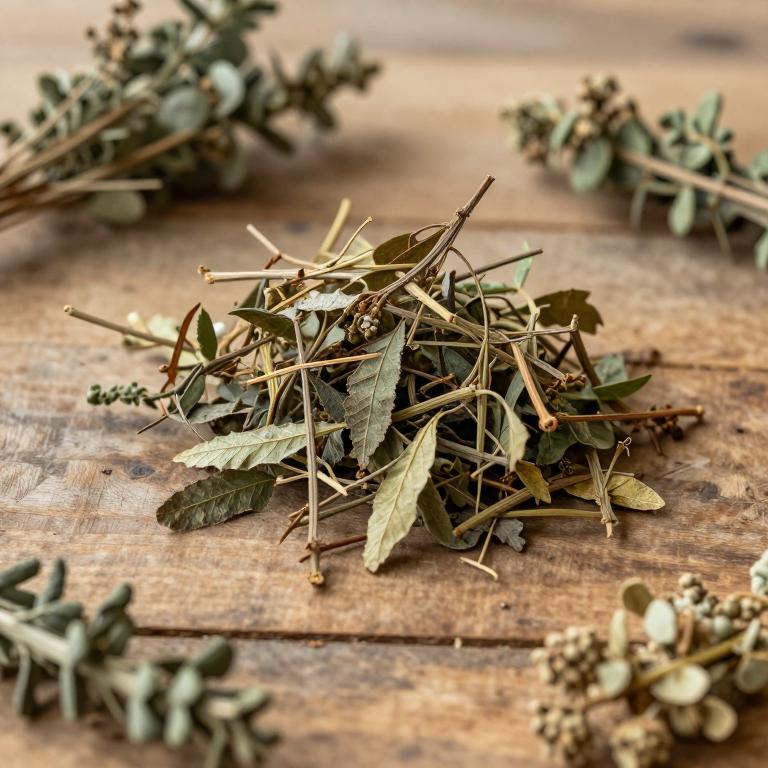
Names and Synonyms
Scientific Names
Accepted name
Croton heliotropiifoliusSynonyms
- Croton rhamnifolius var. boliviensis
- Croton rhamnifolius f. ovatus
- Croton rhamnifolius var. apaensis
- Croton casarettoanus
- Croton moritibensis
- Croton rhamnifolius var. casarettoanus
- Croton rhamnifolius var. alagoensis
- Croton rhamnifolius var. heliotropiifolius
- Croton rhamnifolius var. moritibensis
Regional and Traditional Names
French:
- Croton albicans
- Croton moritibensis
- Croton salviifolius
- Croton casarettianus
- Croton casarettoanus
- Croton conduplicatus
Sources: Wikidata, Catalogue of Life
Taxonomical Classification
This plant belongs to the kingdom Plantae and is classified under the phylum Streptophyta within the class Equisetopsida. It is further categorized under the subclass Magnoliidae and the order Malpighiales. Finally, it is a member of the family Euphorbiaceae and is placed within the genus Croton.
| Rank | Classification |
|---|---|
| Kingdom | Plantae |
| Phylum | Streptophyta |
| Class | Equisetopsida |
| Subclass | Magnoliidae |
| Order | Malpighiales |
| Family | Euphorbiaceae |
| Genus | Croton |
Sources: The World Checklist of Vascular Plants (WCVP)
Distribution
This plant is widely distributed across several key regions throughout the country of Mexico. It can be found growing within the central parts of Mexico, establishing a presence in Mexico Central. Additionally, the species extends its range into the northeastern territories, specifically throughout Mexico Northeast. Its geographical reach also covers the coastal and inland areas of Mexico Gulf. Finally, the plant is documented in both the southwest and southeast regions, spanning across Mexico Southwest and Mexico Southeast.
| Region | Area |
|---|---|
| Mexico | Mexico Central |
| Mexico | Mexico Northeast |
| Mexico | Mexico Gulf |
| Mexico | Mexico Southwest |
| Mexico | Mexico Southeast |
| Central America | Honduras |
| Central America | Panamá |
| Western South America | Peru |
| Brazil | Brazil West-Central |
| Brazil | Brazil Northeast |
Sources: The World Checklist of Vascular Plants (WCVP)
Botanical Identification
Ecology
The ecology of Croton heliotropiifolius is characterized by its remarkable adaptability across diverse Brazilian biomes, allowing it to occupy a wide range of environmental conditions. This species is distributed throughout the Caatinga (strictu sensu), where it must withstand semi-arid conditions, as well as within the Cerrado (lato sensu), demonstrating resilience to seasonal moisture variations and specific soil compositions. Furthermore, its ecological range extends into more humid and stable environments, including the Floresta de Terra Firme and the Floresta Ombrófila (also known as Floresta Pluvial), where it integrates into the complex structural layers of tropical rainforest ecosystems. This broad distributional pattern suggests a versatile physiological capacity to thrive in both xeric landscapes and high-moisture forest habitats.
- Habitat :
- Caatinga (stricto sensu), Cerrado (lato sensu), Floresta de Terra Firme, Floresta Ombrófila (= Floresta Pluvial)
Life history
The life history of Croton heliotropiifolius is characterized by its classification as a chamaphyte, a growth form where the permanent buds are located close to the soil surface, often just above it. This life strategy allows the plant to navigate environmental stressors by maintaining its regenerative structures within a protective layer of organic matter or near the ground level. Depending on the specific microhabitat and seasonal availability of resources, its development may fluctuate between the characteristics of a nanophanerophyte or a hemicryptophyte, utilizing varying heights of perennial structures to optimize photosynthesis and survival. Throughout its life cycle, the plant navigates seasonal shifts by relying on these low-lying buds to regrow following periods of dormancy or environmental disturbance, ensuring its persistence within its ecological niche.
- Life form :
- chamaephyte
Morphology
The morphology of Croton heliotropiifolius is characterized by a woody growth form, primarily functioning as a subshrub or a small tree. As a terrestrial organism, it is neither aquatic nor semiaquatic, nor does it exhibit epiphytic behavior, maintaining an independent lifestyle without parasitism. The plant is self-supporting in its structure, lacking the climbing habits of lianas or vines, and it does not require external support to maintain its upright posture. In terms of physical dimensions, the plant reaches a maximum height of approximately 4 meters, supported by its robust, woody stems.
- Aquatic :
- terrestrial
- Climber :
- self-supporting
- Epiphyte :
- terrestrial
- Growth form :
- tree
- Growth form :
- subshrub
- Parasite :
- independent
- Plant height max:
- 4 m
- Woodiness :
- woody
Sources: Global Inventory of Floras and Traits (GIFT)
Activities
Croton heliotropiifolius has 1 reported activities identified across 0 scientific publications and several other databases. The most consistently reported activities include Anticonvulsant.
| Activity | Supporting sources | Consensus |
|---|---|---|
| Anticonvulsant | 1 supporting sources | ★☆☆☆☆ |
Anticonvulsant
- ACS omega
Conditions
Croton heliotropiifolius has 2 reported investigations on conditions identified across 0 scientific publications and several other databases. The most consistently reported conditions include Ralstonia solanacearum, epilepsy.
| Condition | Supporting sources | Consensus |
|---|---|---|
| Ralstonia solanacearum | 1 supporting sources | ★☆☆☆☆ |
| Epilepsy | 1 supporting sources | ★☆☆☆☆ |
Ralstonia solanacearum
- Microbial ecology
Epilepsy
- ACS omega
Preparations
Croton heliotropiifolius has 1 reported preparations identified across 0 scientific publications and several other databases. The most consistently reported preparations include aqueous extracts.
| Preparation | Supporting sources | Consensus |
|---|---|---|
| Aqueous extracts | 1 supporting sources | ★☆☆☆☆ |
Aqueous extracts
- Microbial ecology